The Curse of La Llorona (2019) crawls out of the oldest corners of folklore and drags its terror straight into 1970s Los Angeles, transforming a cultural legend into a deeply atmospheric horror tale. It’s a film built on echoes — the echo of a grieving mother, the echo of ancient superstition, and the echo of a cry that chills the blood long before the ghost herself ever appears.
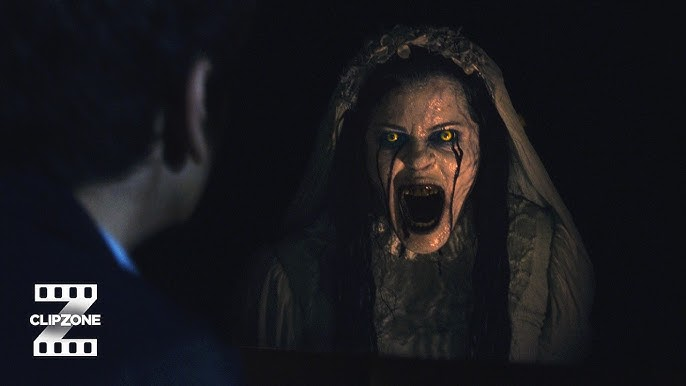
La Llorona — the Weeping Woman — has lived in whispers for generations, a story told to scare children into obedience, a myth cast in fear and sorrow. But in this film, director Michael Chaves reimagines her not as a distant legend but as a force actively reaching across time, hunting, grieving, and punishing in equal measure.
At the heart of the story is Anna Garcia, played with grounded vulnerability by Linda Cardellini. As a social worker juggling the weight of responsibility and the challenge of single motherhood, Anna embodies the emotional core of the film. Her job leads her to a mysterious case involving a distressed mother whose children have vanished under chilling circumstances. What at first seems like neglect spirals into a disturbing revelation: something ancient has claimed them.
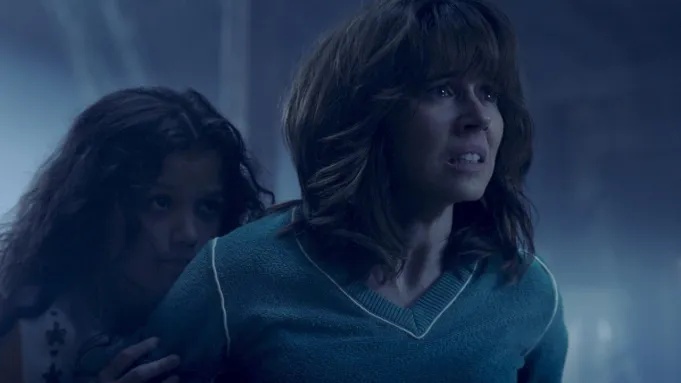
The film’s tension grows not just from jump scares, but from the slow unraveling of Anna’s disbelief as the haunting becomes impossible to ignore. Shadows move with intention. Doors creek open in empty rooms. Tears — not hers — appear on blankets and windowsills. La Llorona’s presence is felt long before she is seen, making each moment drip with dread.
Patricia Velásquez offers a tragic and haunting performance as the tormented mother whose grief first opens the door to the curse, grounding the fantastical in painful emotional truth. Her scenes echo the idea that loss itself can become a haunting, shaping the film’s central theme: when sorrow lingers long enough, it becomes something else entirely.
Raymond Cruz enters the story as Rafael, a former priest turned folk-healer, whose stern calmness cuts through the supernatural chaos. His character introduces a welcome layer of mysticism and tradition, guiding Anna into a world where faith, ritual, and folklore collide. His presence becomes a reminder that the strongest weapon against ancient evil is not denial, but understanding.
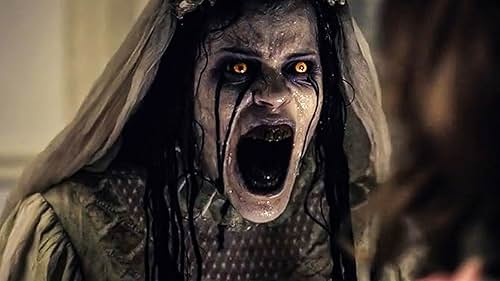
As the supernatural attacks escalate — waterlogged footprints on bedroom floors, spectral attacks in hallways, and a terrifying baptism gone violently wrong — the film finds its rhythm in the dance between suspense and mythology. La Llorona herself appears with striking, horrifying imagery: sunken eyes, haunted tears, and a presence that fills every frame with a suffocating sense of grief. She doesn’t just haunt — she mourns, and her mourning is lethal.
The climax brings Anna, her children, and Rafael into a battle that feels both spiritual and primal. It’s a confrontation not only with a ghost but with the very nature of maternal love twisted into something monstrous. The resolution is tense, emotional, and steeped in the message that grief must be faced, not fled from.
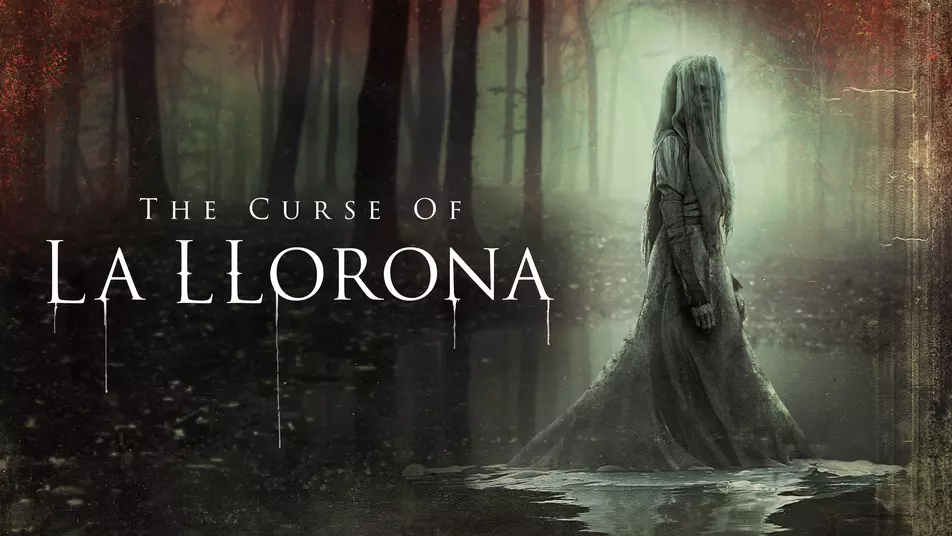
In the end, The Curse of La Llorona stands as a film that blends ghostly chills with a tragic human story, reminding us why legends endure — because somewhere, hidden beneath the fear, lies a truth about love, loss, and the impossible choices that haunt us.
Her cries echo still. And we are left wondering what sorrow might sound like in the dark, when no one is listening.