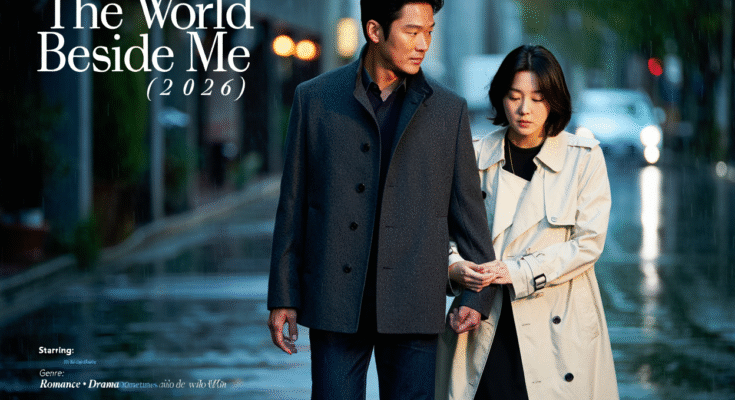
The World Beside Me (2026) is a quiet, emotionally immersive romance that understands love not as a grand rescue, but as a gentle presence that makes survival easier. Rather than relying on dramatic twists, the film builds its power through stillness, silence, and emotional honesty. It is a story about two people who are not searching for love—but find it standing patiently beside them.
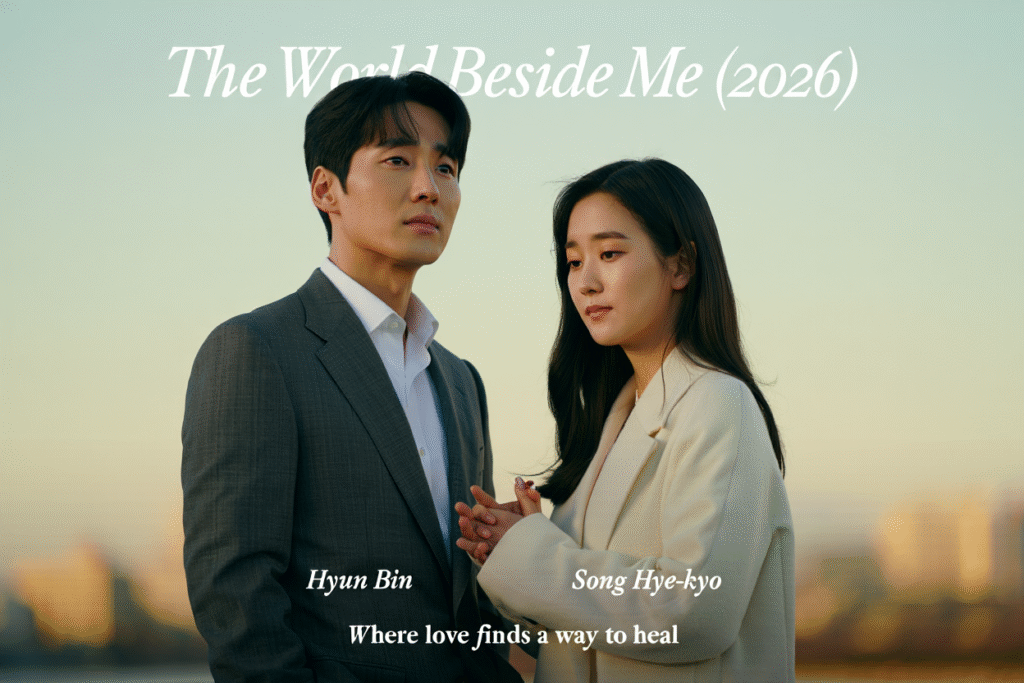
Hyun Bin gives a deeply restrained performance as Jae-min, an architect whose life is structurally perfect and emotionally hollow. His success feels intentional yet empty, as if every building he designs replaces a part of himself he no longer knows how to access. Hyun Bin plays him with minimal dialogue, allowing body language and pauses to speak louder than words. Jae-min is not cold—he is tired of feeling.
Song Hye-kyo’s Ha-eun is the soul of the film. Gentle, guarded, and quietly resilient, she embodies the kind of pain that doesn’t demand attention but never disappears. Her performance is delicate without being fragile. Every smile feels earned, every moment of vulnerability feels costly. She doesn’t ask the world to heal her—she’s simply learning how to live alongside the damage.
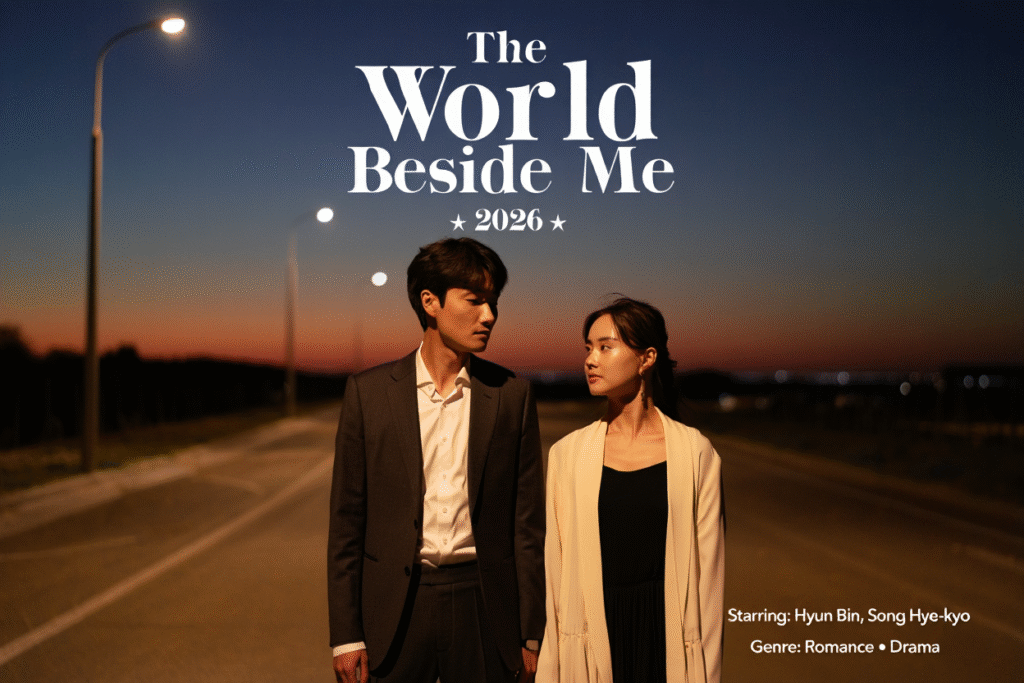
Their first meeting is understated, almost forgettable on the surface, yet emotionally charged underneath. The film wisely avoids romantic clichés, allowing their bond to grow organically through shared silences, small gestures, and moments of mutual understanding. What draws them together isn’t attraction—it’s recognition. They see something familiar in each other’s loneliness.
What makes The World Beside Me especially moving is how it portrays healing. Love is not presented as a cure, but as a companion. Jae-min and Ha-eun do not fix each other; they create space for each other to breathe. The film understands that sometimes the most profound intimacy is simply being allowed to exist without explanation.
Visually, the film is soft and contemplative. Muted colors, natural light, and carefully framed empty spaces mirror the emotional states of the characters. Architecture and environment are used symbolically—structures represent control, while open spaces reflect emotional vulnerability. The cinematography never distracts; it listens.
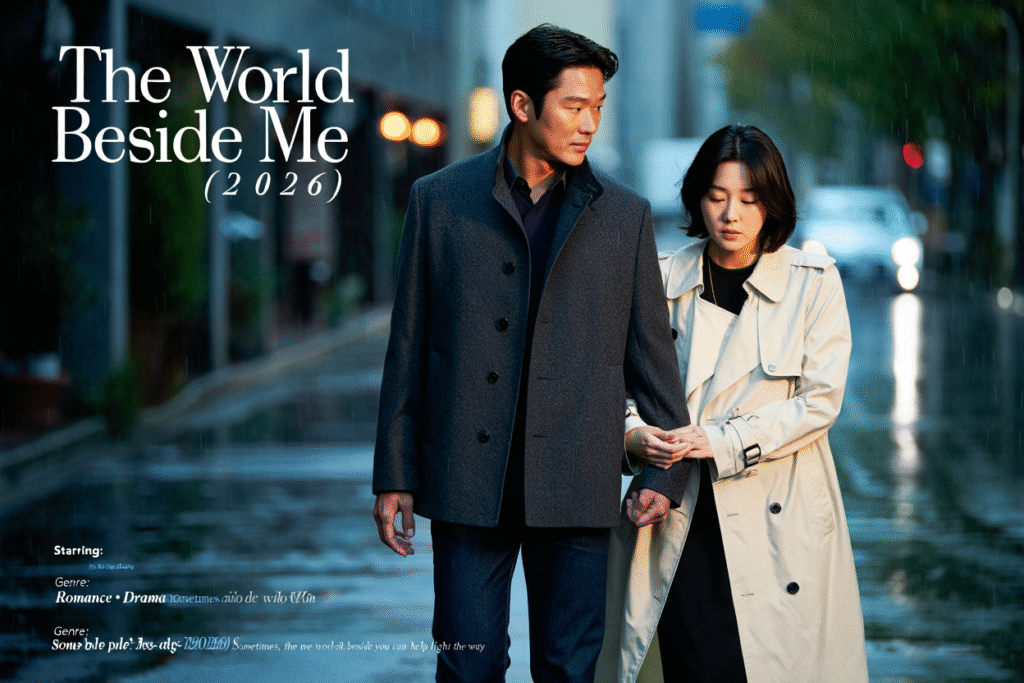
The screenplay excels in emotional restraint. Conversations feel real—unfinished, hesitant, and layered with unspoken meaning. Conflicts arise not from misunderstanding, but from fear of repeating old pain. The film respects its audience by trusting them to feel what isn’t explicitly stated.
Music is used sparingly, allowing silence to carry emotional weight. When the score does appear, it feels like a quiet exhale rather than a dramatic cue. This choice reinforces the film’s central theme: healing doesn’t arrive loudly—it settles in slowly.
As the story unfolds, the question is never will they fall in love? but can they allow themselves to stay? The film’s tension lies in emotional courage, not circumstance. Choosing love here means choosing vulnerability—and that choice is portrayed as genuinely terrifying.
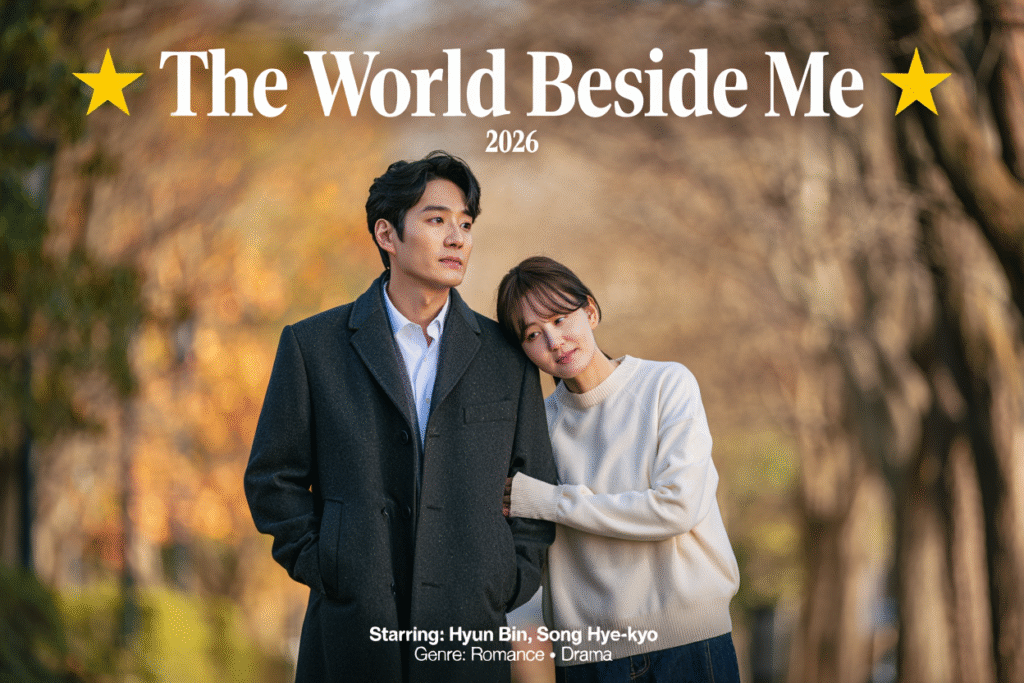
As the story unfolds, the question is never will they fall in love? but can they allow themselves to stay? The film’s tension lies in emotional courage, not circumstance. Choosing love here means choosing vulnerability—and that choice is portrayed as genuinely terrifying.
By the end, The World Beside Me leaves you with a sense of calm rather than closure. It doesn’t promise forever; it promises presence. The film reminds us that sometimes love isn’t about changing your world—it’s about realizing you no longer have to face it alone. Quiet, tender, and deeply human, this is a romance that lingers long after it ends. ⭐⭐⭐⭐⭐