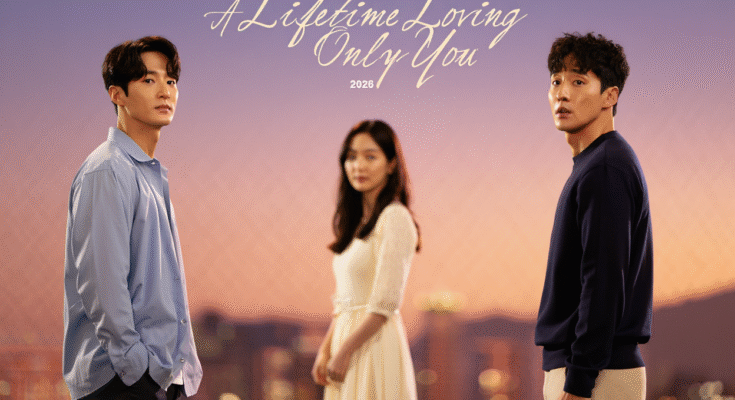
A Lifetime Loving Only You (2026) is a sweeping Korean romantic drama that explores love not as passion alone, but as endurance. Rooted in fate, sacrifice, and emotional loyalty, the film asks a painful question: what happens when loving someone for a lifetime means accepting that you may never be the one they choose? Rather than relying on melodrama, the story unfolds with quiet devastation, allowing emotions to linger long after the final scene fades.
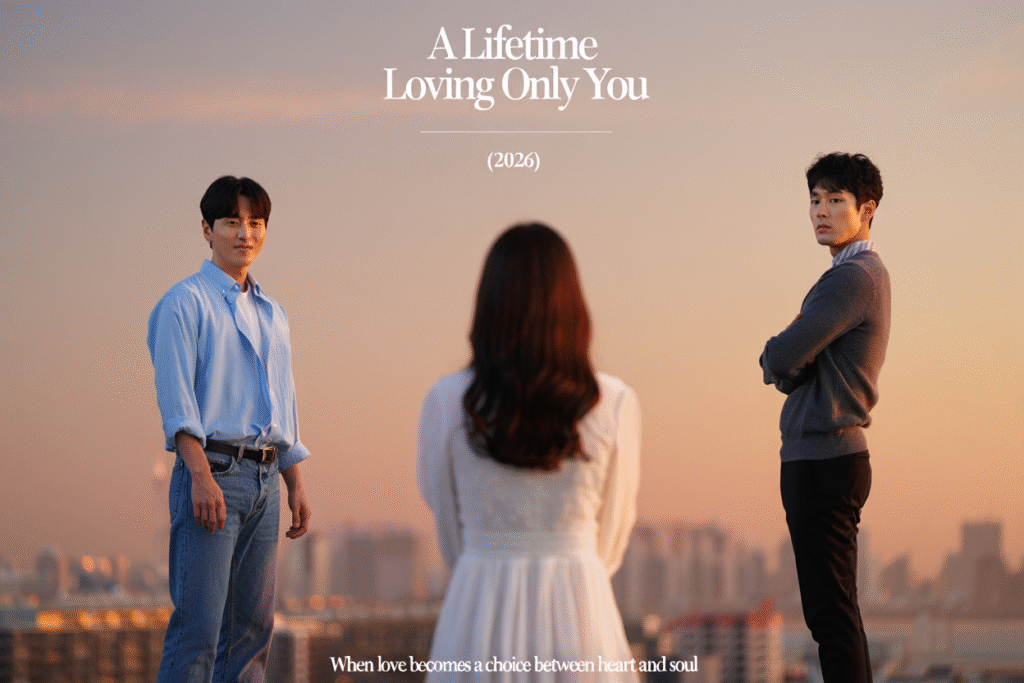
At the center of the film are two men bound by childhood, memory, and unspoken devotion. Lee Jong-suk plays the gentler of the two, a man whose love is patient, selfless, and deeply internalized. His performance is restrained yet emotionally rich—every glance feels weighted with years of unexpressed longing. Lee Jong-suk excels at portraying love as something lived silently, carried like a vow that never needed to be spoken aloud.
Lee Min-ho offers a striking contrast as the more intense and emotionally expressive counterpart. His character loves fiercely, openly, and with a sense of urgency, as if aware that time is always slipping away. There is fire in his performance—anger, jealousy, desperation—but also vulnerability. Lee Min-ho brings complexity to a role that could have easily become possessive or domineering, instead making him achingly human.
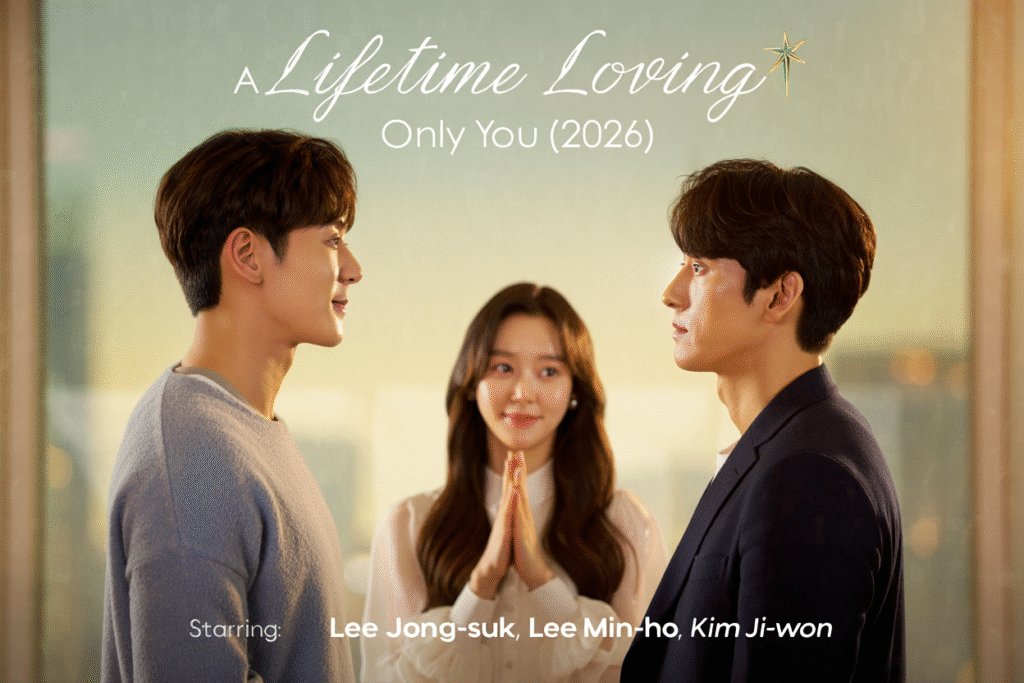
Kim Ji-won stands as the emotional axis of the film. Her character is not a passive object of affection, but a woman caught between two different forms of love—one that feels safe and eternal, and another that feels overwhelming and transformative. Kim Ji-won plays her with quiet intelligence, conveying the burden of being loved so deeply by two people while knowing that choosing one will irrevocably wound the other.
What makes A Lifetime Loving Only You so powerful is its refusal to frame love as a competition. The film never asks who “deserves” her more. Instead, it focuses on how love reshapes identity, forcing each character to confront who they are when love is returned—and who they become when it isn’t. The emotional tension lies not in rivalry, but in restraint.
The bond between the two men is one of the film’s most heartbreaking elements. Their shared past—childhood memories, mutual trust, and silent understanding—adds layers of tragedy to every interaction. As romantic feelings complicate their relationship, the film captures the grief of watching a lifelong bond slowly fracture, not through betrayal, but through inevitability.
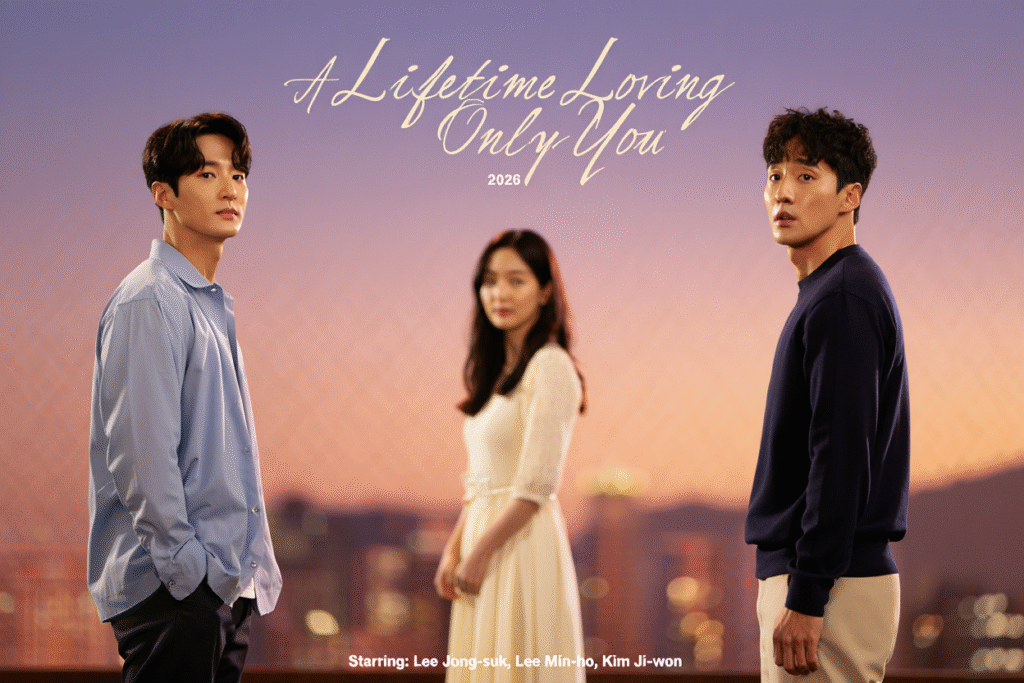
Visually, the film leans into softness and stillness. Muted color palettes, lingering close-ups, and long pauses allow emotions to breathe. Rain, sunsets, and empty spaces are used symbolically, reinforcing themes of impermanence and longing. The cinematography doesn’t overwhelm—it observes, much like the characters themselves, who are often watching life unfold rather than controlling it.
The soundtrack is understated but emotionally precise, rising only when the weight of unspoken emotion becomes too heavy to contain. Silence plays just as important a role as music, emphasizing how love often exists in what is never said. Some of the film’s most devastating moments occur without dialogue at all.
As the story moves toward its resolution, A Lifetime Loving Only You avoids easy closure. There are no villains, no triumphant victories—only acceptance. Love, the film suggests, is not always about being chosen. Sometimes, it is about choosing to love anyway, even when it costs you everything.

In the end, A Lifetime Loving Only You is a meditation on devotion, loss, and emotional maturity. It honors the pain of letting go and the quiet nobility of loving someone without expectation. Deeply melancholic yet profoundly beautiful, the film lingers like a memory you never quite escape—a reminder that some loves are not meant to be lived, only carried. ⭐⭐⭐⭐⭐