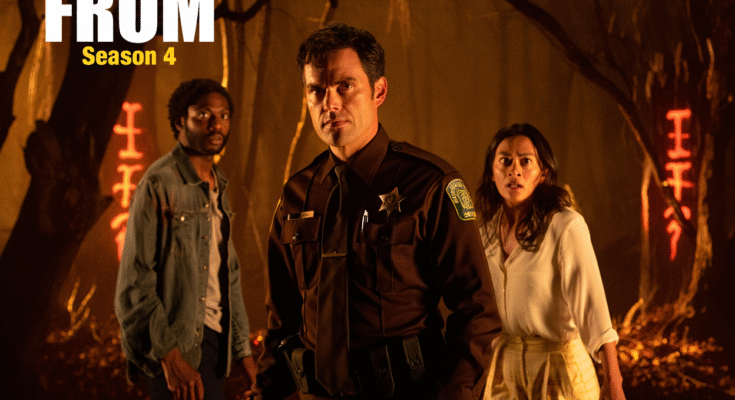
FROM Season 4 doesn’t ease its audience back into the nightmare — it drags them in screaming. This latest chapter deepens the show’s oppressive mythology, shifting the story from survival horror into something far more unsettling: revelation. The town is no longer just a prison; it is a living wound, and Season 4 begins peeling it open.
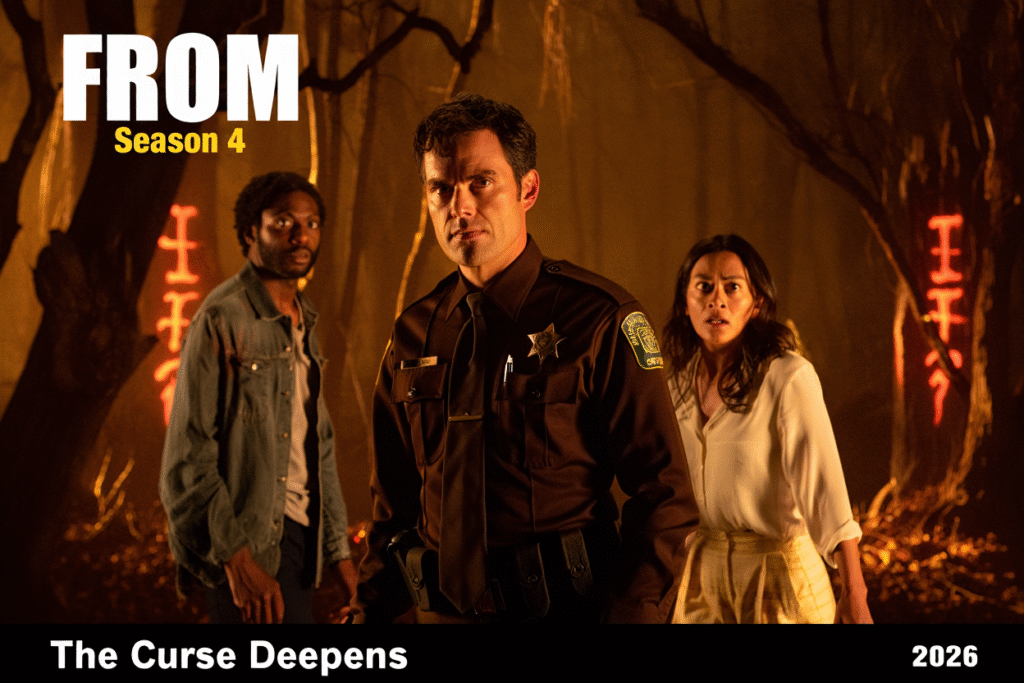
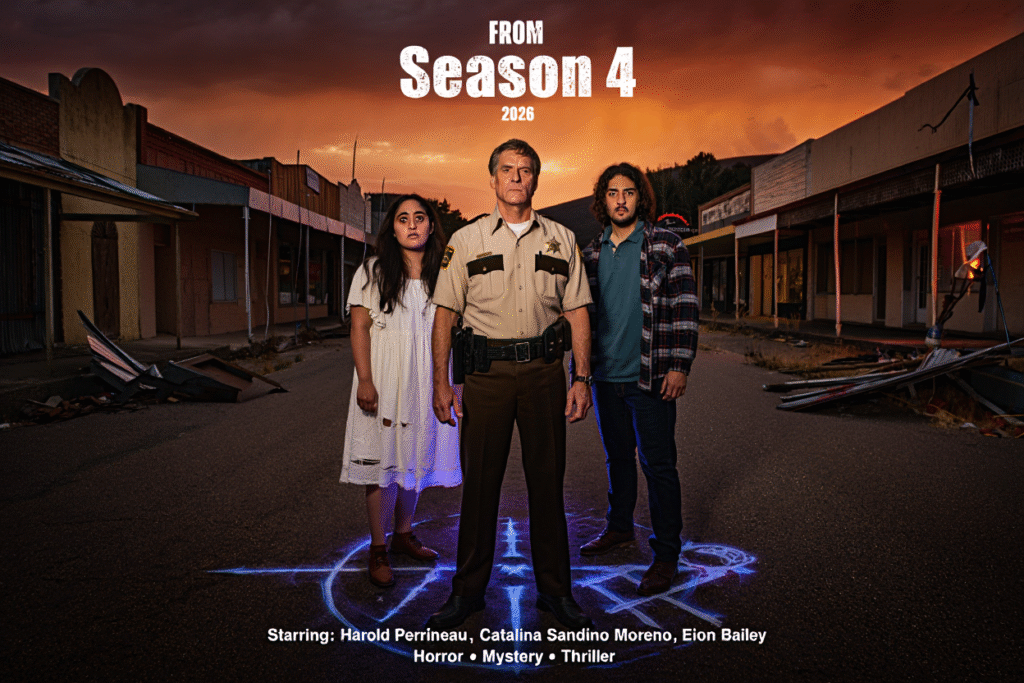
At the center of the storm is Sheriff Boyd Stevens, portrayed with devastating intensity by Harold Perrineau. Boyd is no longer simply fighting monsters — he’s fighting erosion. His authority, his faith in himself, and even his grip on reality begin to crack under the weight of impossible choices. Perrineau delivers one of the strongest performances of the series, portraying leadership not as strength, but as endurance in the face of inevitable collapse.
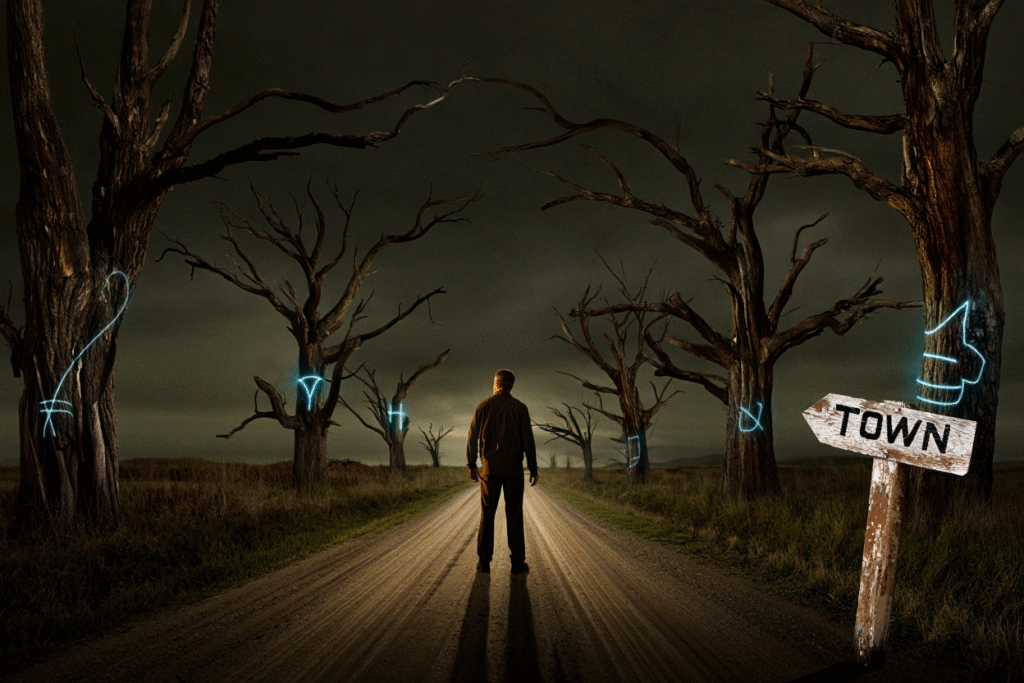
Season 4 introduces ominous new symbols carved into buildings, trees, and even flesh, transforming the town into a map of something ancient and deliberate. These markings are not warnings — they are signatures. The show smartly avoids immediate explanations, allowing dread to grow organically as characters realize the town has always been preparing for something far worse.
Catalina Sandino Moreno’s Tabitha returns as the emotional and mythological backbone of the season. Haunted by her descent beneath the earth, Tabitha carries knowledge she doesn’t yet fully understand. Her trauma is not just psychological — it is connective tissue linking the present nightmare to an ancient evil that predates the town itself. Moreno’s performance is quiet, restrained, and deeply unsettling.
What Season 4 does exceptionally well is shift the horror inward. The monsters remain terrifying, but the real fear comes from doubt: doubt in memory, doubt in leadership, doubt in whether escape is even a meaningful concept anymore. Characters begin questioning not just how to survive, but whether survival is prolonging something worse.
Eion Bailey’s presence adds a layer of tragic inevitability to the unfolding story. His character becomes a mirror for the audience — someone who wants answers desperately, only to realize that knowledge in this world is not a gift, but a curse. Every truth uncovered seems to demand a sacrifice in return.
The pacing this season is deliberate and punishing. Episodes stretch tension until it becomes unbearable, then release it in short, brutal bursts of violence or revelation. There are fewer jump scares, but far more moments of lingering dread — scenes that sit with you long after the screen goes dark.
Visually, FROM Season 4 is its most confident yet. The town feels smaller, more claustrophobic, while the unseen realms feel impossibly vast. Lighting, sound design, and silence are weaponized to remind viewers that something is always watching, always listening, always waiting.
Perhaps the most haunting element of the season is its central question: what if the town doesn’t want to kill its residents — what if it needs them? This idea reframes every past death, every rule, every “escape attempt” as part of a much larger design that is only now becoming visible.
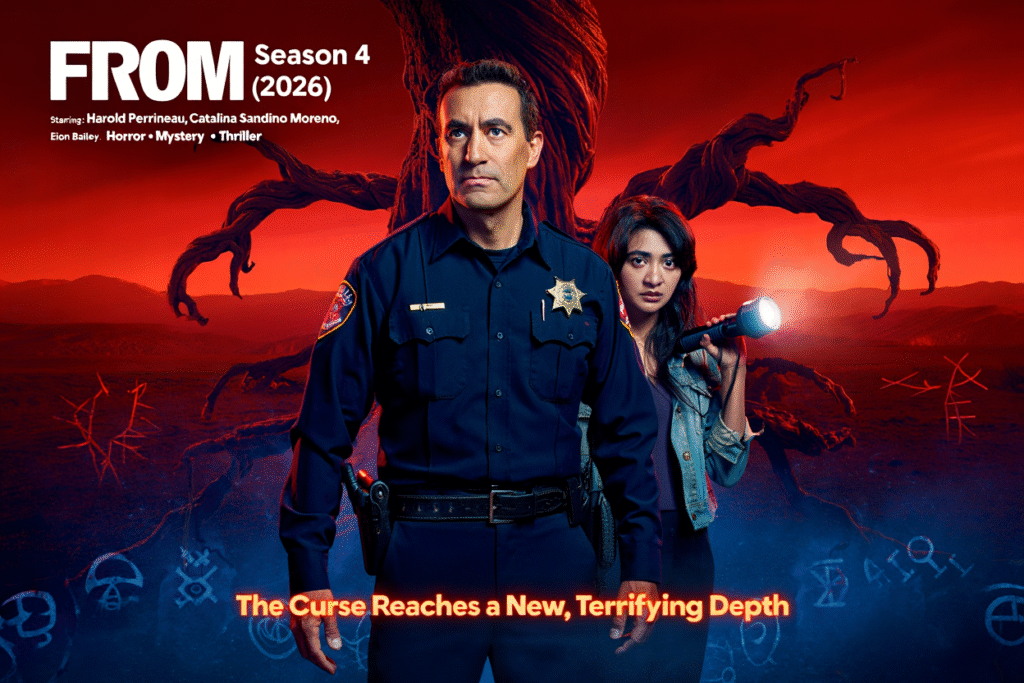
As Boyd attempts to rally the survivors for a final stand, the show strips away any illusion of victory. Survival, Season 4 suggests, is not about winning — it’s about choosing what you’re willing to lose. The cost is no longer hypothetical, and the show doesn’t flinch from making its characters — or its audience — face that reality.
FROM Season 4 is not just darker; it is more honest. It transforms mystery into menace and answers into weapons. By the time the season reaches its devastating conclusion, one truth is clear: the town has always known how this would end — and now, so do we.