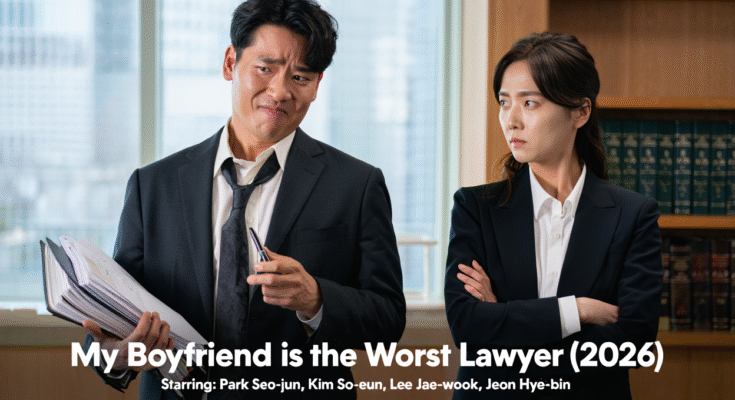
My Boyfriend Is the Worst Lawyer (2026) opens with a premise that sounds like pure romantic comedy chaos, and then quietly surprises by finding emotional truth beneath the laughter. Set against the rigid, high-pressure world of law, the film chooses not to glorify brilliance, but to examine sincerity—and whether kindness can survive in a system built on winning.
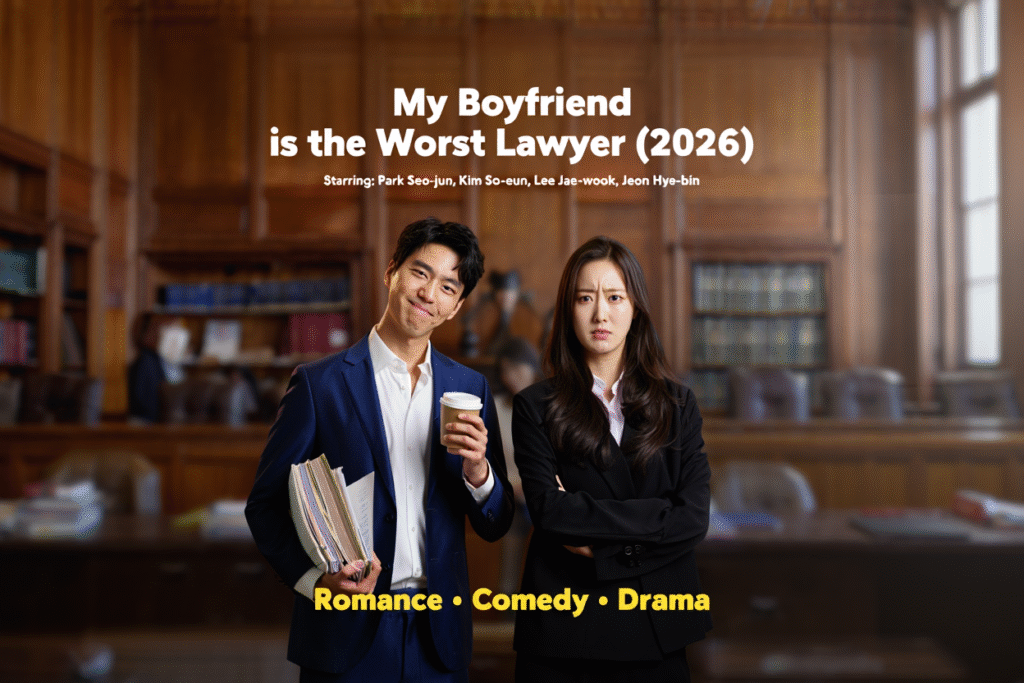
Park Seo-jun is perfectly cast as Jin-woo, a lawyer whose confidence far outweighs his competence. He forgets procedures, misquotes laws, and somehow loses cases that seemed impossible to lose. Yet Park plays him with such warmth and earnestness that it’s impossible to dislike him. Jin-woo isn’t lazy or arrogant—he’s trying, and that effort becomes the heart of the film.
Jin-woo’s legal failures are played for comedy, but the film never turns him into a joke. His mistakes sting because they matter. Careers are on the line, clients are disappointed, and his colleagues’ resentment feels earned. This balance keeps the humor grounded and the stakes real.

Kim So-eun’s Ji-eun is the film’s emotional spine. Calm, sharp, and relentlessly practical, she is everything Jin-woo is not. So-eun gives her character quiet authority, making Ji-eun feel capable without being cold. Her frustration with Jin-woo is never exaggerated—it’s the exhaustion of someone cleaning up messes that should never exist.
Their romance develops not through grand gestures, but through late nights, shared failures, and small victories. Ji-eun doesn’t fall for Jin-woo because he’s charming—she falls because he listens, learns, and refuses to give up even when he should. Their chemistry feels natural, built on contrast rather than fantasy.
The film’s courtroom scenes are deliberately absurd, poking fun at legal dramas that glorify genius lawyers. Here, success is messy, accidental, and often collaborative. The message is clear: competence can be taught, but integrity cannot.

Lee Jae-wook and Jeon Hye-bin add texture to the story as colleagues who reflect alternate paths—ambition without empathy, and competence without warmth. Their presence forces Jin-woo and Ji-eun to confront uncomfortable truths about success, sacrifice, and what kind of professionals they want to become.
Visually, the film keeps things clean and understated. Offices feel cramped and stressful, reinforcing the sense of pressure closing in. In contrast, quieter personal scenes—cafés, late-night convenience stores, shared meals—feel like moments of oxygen in an otherwise suffocating world.
What elevates My Boyfriend Is the Worst Lawyer is its refusal to “fix” Jin-woo overnight. Growth is slow, frustrating, and incomplete. He doesn’t become the best lawyer—he becomes a better one. And more importantly, a more honest one.
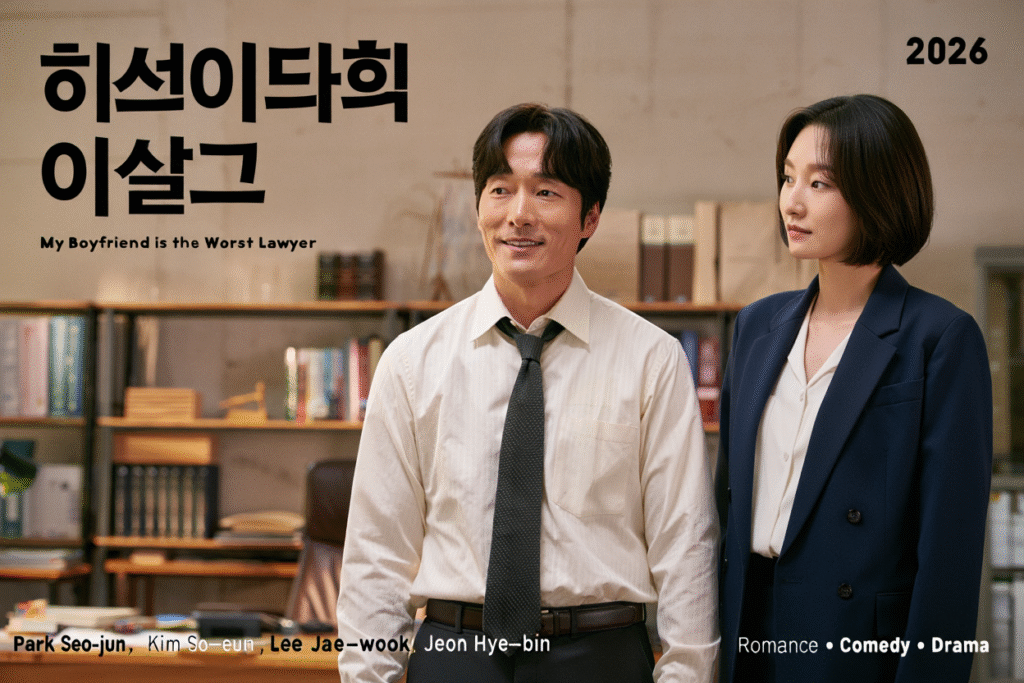
The emotional core of the film asks a simple but powerful question: is being bad at your job a failure, or is giving up the real crime? Through Jin-woo, the story argues that perseverance, humility, and accountability matter more than talent alone.
By the final act, My Boyfriend Is the Worst Lawyer (2026) delivers a resolution that feels earned rather than idealized. It’s funny without being shallow, romantic without being naïve, and sincere without preaching. In the end, this is not a story about winning cases—it’s about choosing the kind of person you want to be, even when you’re losing.