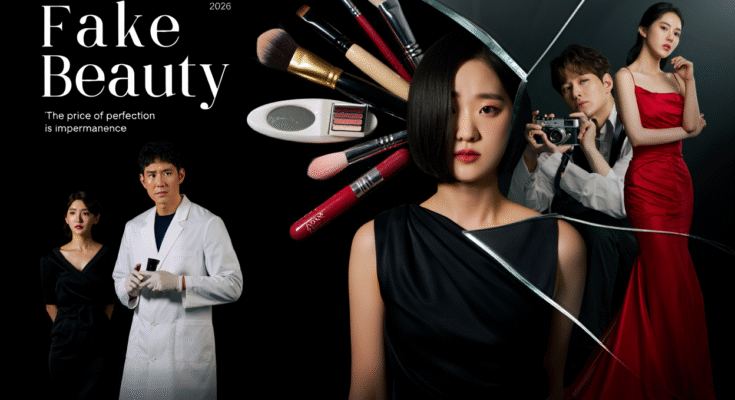
Fake Beauty (2026) is not merely a romance or a psychological drama—it is a quiet, unsettling mirror held up to a society obsessed with appearances. From its first frame, the film establishes a world where beauty is currency, validation is transactional, and identity is something to be edited, filtered, and perfected until it barely resembles the truth.
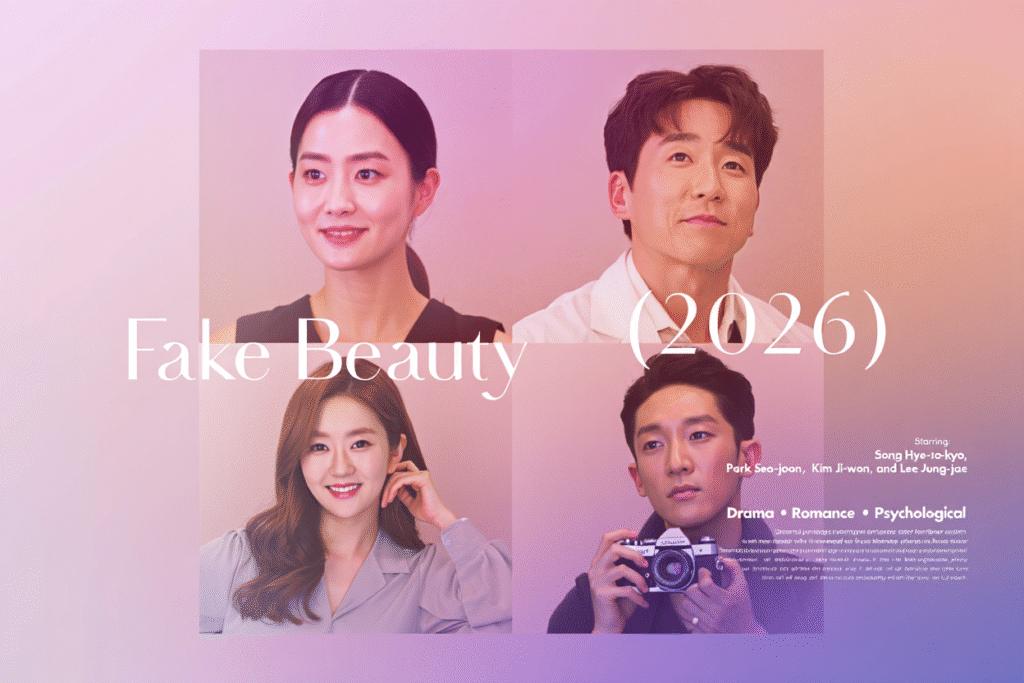
Song Hye-kyo delivers one of her most restrained and haunting performances as Ji-woo, a beauty influencer whose flawless online persona conceals a growing emotional void. Her elegance feels deliberate, almost manufactured, and that artificial calm becomes the film’s most powerful symbol. Ji-woo isn’t unhappy because she lacks love—she’s unhappy because she no longer knows who she is without an audience.
Park Seo-joon’s Joon is the film’s most morally complex figure. As a gifted plastic surgeon, he exists at the intersection of healing and harm, creation and erasure. Park plays him with a subdued intensity, allowing guilt and ambition to coexist in every glance. Joon doesn’t see himself as a villain—but Fake Beauty asks whether intention matters when the consequences are irreversible.
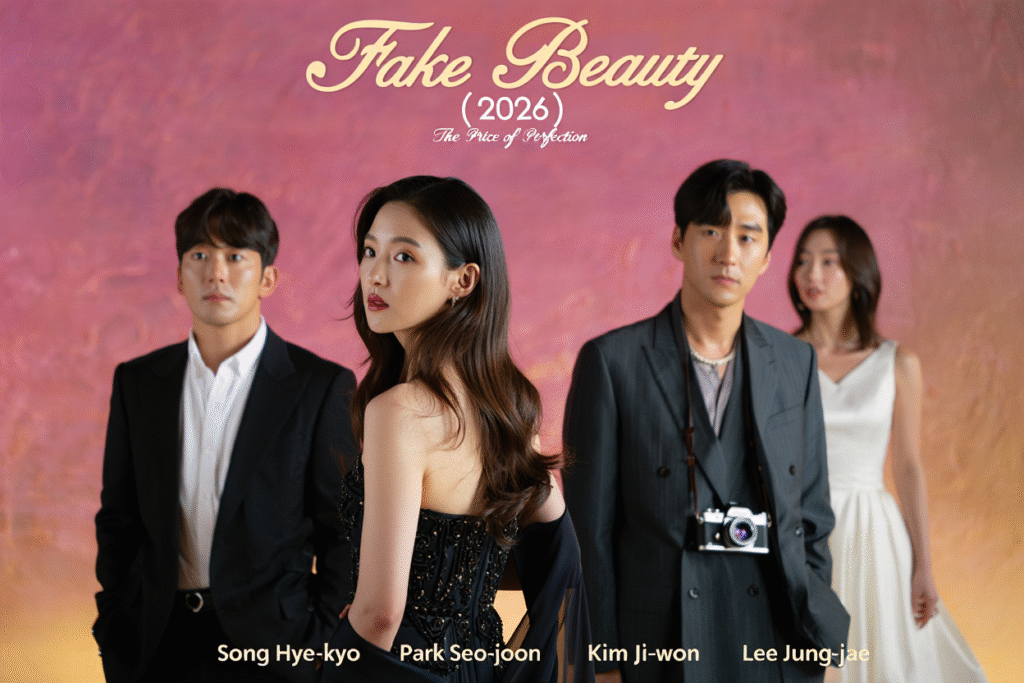
The chemistry between Ji-woo and Joon is deliberately uncomfortable. Their relationship isn’t built on romance alone, but on mutual dependency—she needs validation, he needs justification. Together, they form a dangerous loop, each reflecting the other’s insecurities while pretending to offer salvation.
Kim Ji-won shines as Min-seo, perhaps the film’s most tragic character. A model admired by millions, she carries the quiet exhaustion of someone who has been praised for her appearance her entire life and nothing else. Her storyline is subtle yet devastating, illustrating how emotional neglect can be masked by applause.
Lee Jung-jae’s Hoon functions as the film’s moral anchor. As a photographer, he observes rather than alters, capturing reality instead of reshaping it. His presence challenges the others not through confrontation, but through uncomfortable honesty. Hoon represents the question the film keeps asking: What if being seen is more important than being admired?
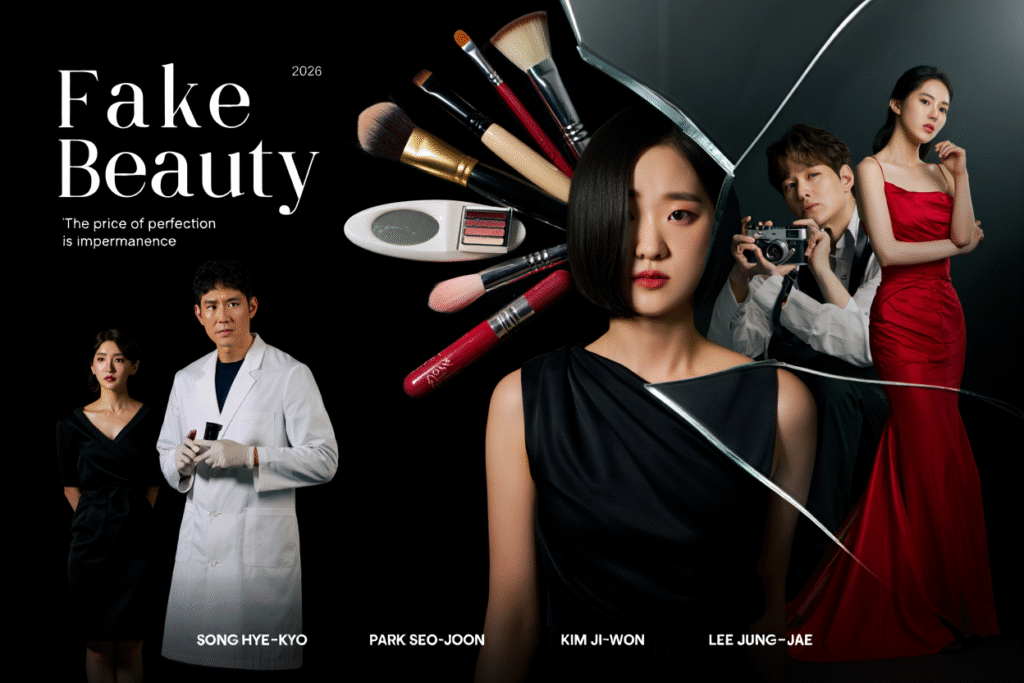
Visually, Fake Beauty is stunning in a cold, controlled way. The cinematography favors clean lines, reflective surfaces, and sterile lighting—creating a world that looks perfect but feels hollow. Every frame reinforces the idea that beauty, when over-curated, becomes isolating.
What elevates the film is its psychological depth. It doesn’t condemn beauty or cosmetic enhancement outright; instead, it interrogates why people feel the need to disappear behind them. The film understands that obsession with perfection is rarely about vanity—it’s about survival in a world that rewards surfaces over souls.
The pacing is deliberate, almost suffocating, allowing discomfort to linger. Silence is used as effectively as dialogue, forcing the audience to sit with unresolved emotions rather than escape them. This restraint makes the eventual emotional confrontations hit harder.
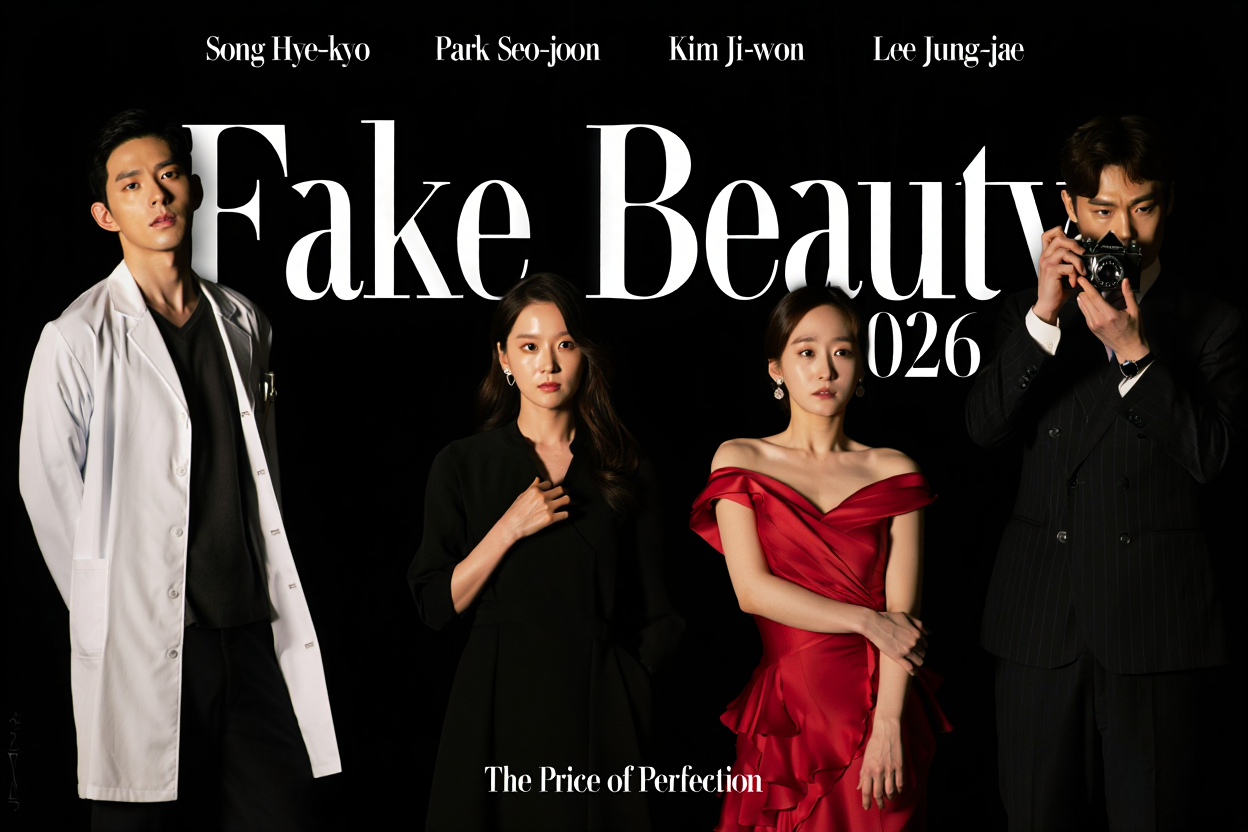
At its core, Fake Beauty is about identity erosion. Each character slowly trades pieces of themselves for approval, success, or love, until they’re left questioning what remains. The film’s greatest strength lies in refusing to offer easy answers or redemptive shortcuts.
By the time the credits roll, Fake Beauty (2026) leaves a quiet ache behind—a reminder that real beauty is not something to be created, fixed, or consumed. It is something fragile, imperfect, and deeply human. And in a world addicted to illusion, choosing authenticity may be the bravest—and most terrifying—act of all.