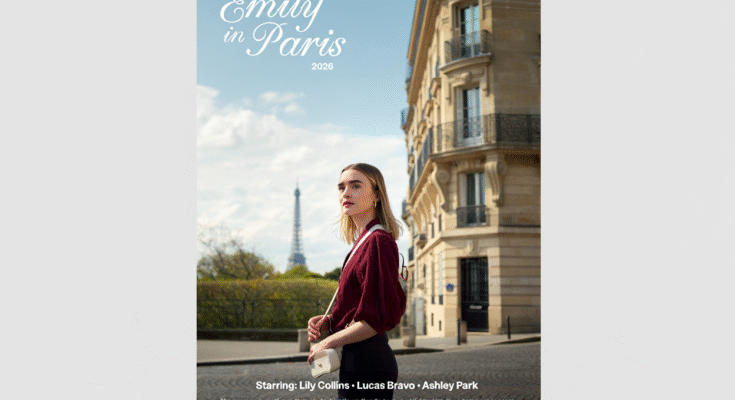
Emily in Paris (2026) returns with a polished confidence that mirrors its heroine’s evolution, trading pure escapist fantasy for something richer, more reflective, and surprisingly grounded. Paris is still dazzling, still dripping in couture and candlelit romance—but this time, the city feels less like a postcard and more like a proving ground.
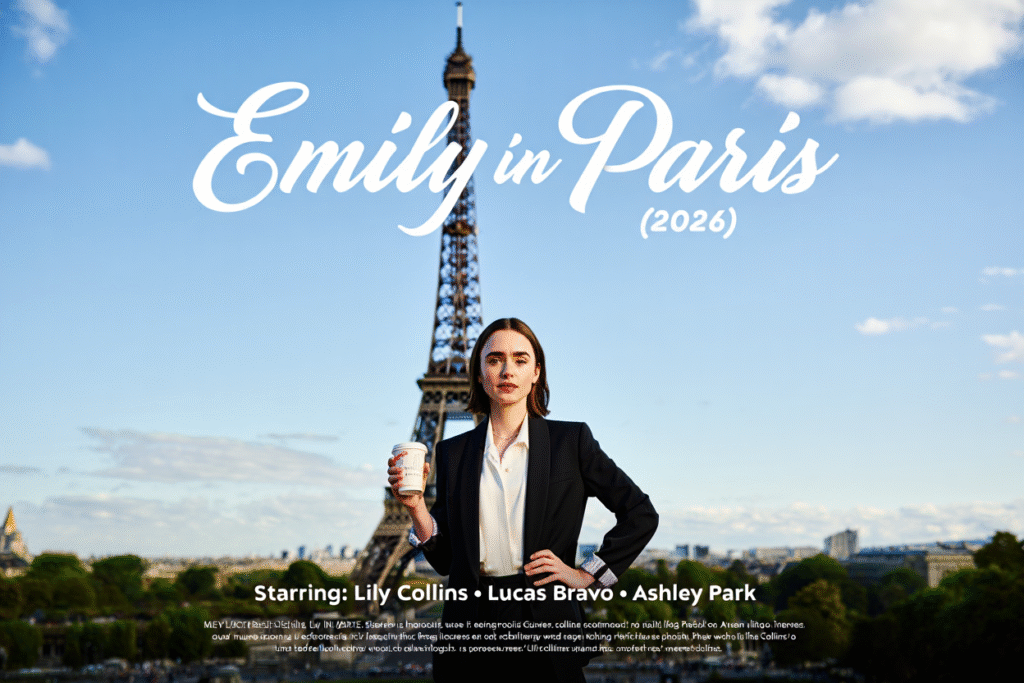
Lily Collins’ Emily is no longer the wide-eyed American stumbling charmingly through cultural faux pas. She has learned the language, the rules, and the unspoken rhythms of Parisian life. Yet with growth comes complication, and the series smartly places Emily at a crossroads where ambition demands clarity, not just enthusiasm.
The fashion remains intoxicating, but it’s no longer just visual candy. Each outfit feels intentional, signaling Emily’s shifting identity as she balances creative instinct with professional credibility. Paris doesn’t merely dress her—it challenges her, asking whether style can coexist with substance in a career built on influence.
Lucas Bravo’s Gabriel continues to embody romantic tension, but their dynamic is more restrained, more mature. Love here isn’t about grand gestures; it’s about timing, compromise, and emotional honesty. The show resists easy resolutions, allowing longing and uncertainty to breathe in a way earlier seasons avoided.
Ashley Park’s Mindy shines brighter than ever, evolving beyond comic relief into a fully realized emotional anchor. Her storyline reflects the cost of chasing passion, especially when dreams collide with reality. Mindy’s resilience and vulnerability add emotional texture, grounding the series in genuine friendship rather than glitter alone.
Career ambition sits at the heart of this season. Emily’s success opens doors—but each opportunity asks something in return. The show cleverly examines the price of visibility, suggesting that professional growth often demands personal sacrifice, whether in relationships, values, or identity.
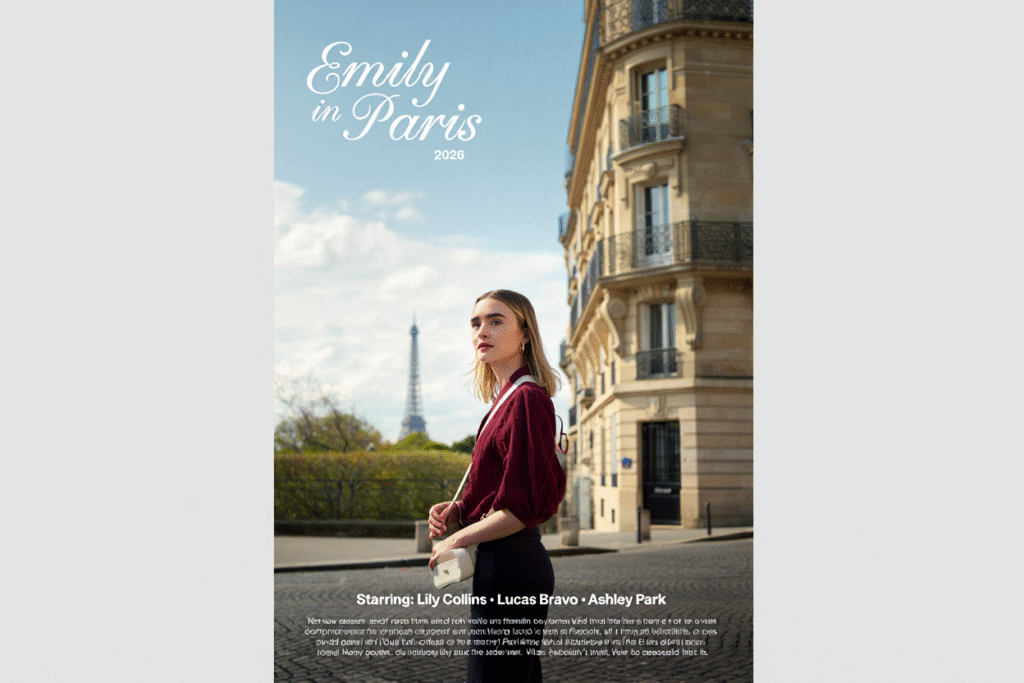
Paris itself feels subtly different this time. The cafés are still warm, the streets still romantic, but there’s an undercurrent of pressure beneath the beauty. The city no longer indulges Emily—it tests her. The fantasy hasn’t disappeared; it’s simply matured.
What makes Emily in Paris (2026) surprisingly compelling is its self-awareness. The show knows its reputation and leans into it while also quietly subverting expectations. It allows Emily to make mistakes that don’t resolve neatly, reinforcing that growth is rarely aesthetic—it’s uncomfortable.
Emotionally, this season carries more weight. Conversations linger longer. Silences matter. The stakes feel real because Emily finally has something to lose—not just a job or a romance, but a version of herself she’s worked hard to become.