Nanny McPhee: The Last Lesson arrives not with a loud spell or grand spectacle, but with a gentle knock on the door — the kind that reminds you why this character mattered in the first place. It’s a film that understands its own legacy and chooses tenderness over excess, wisdom over whimsy, and emotion over nostalgia alone.
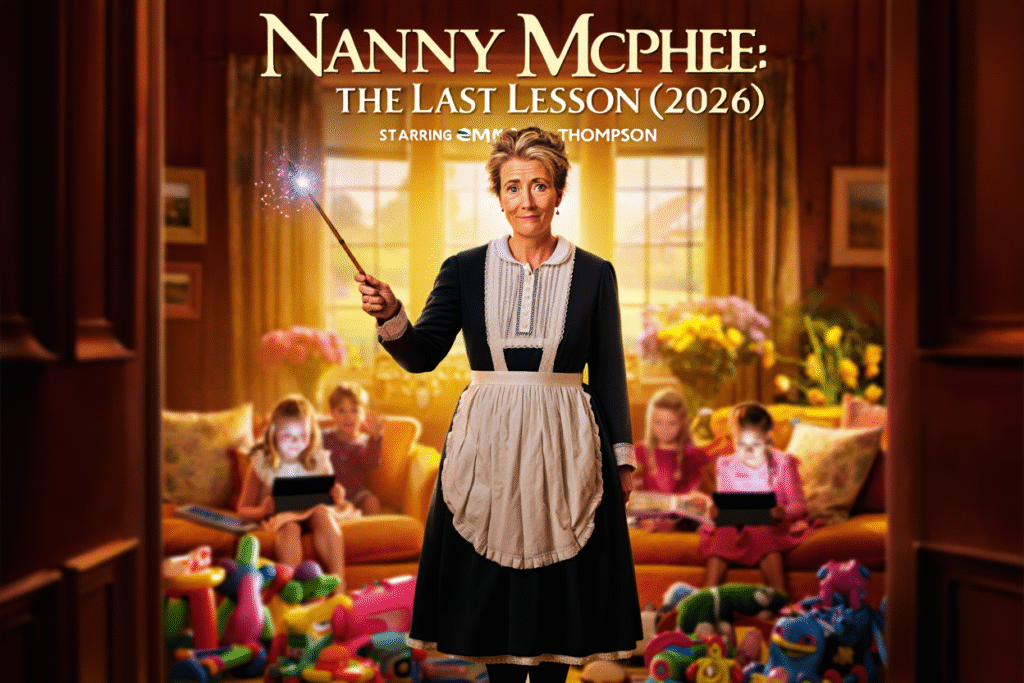
Emma Thompson returns to Nanny McPhee with a performance that feels both familiar and quietly transformed. Her presence still carries authority and magic, but there is a softness now, a sense that time has passed even for someone who once seemed timeless. Thompson plays McPhee not as a figure of power, but as a guide preparing to let go.
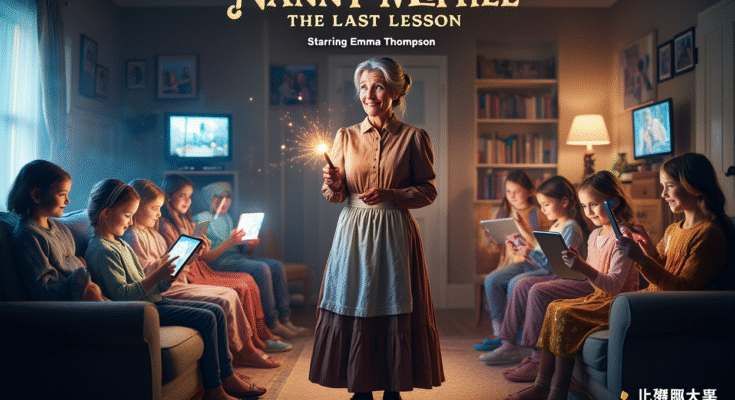
The film’s central family reflects a deeply modern anxiety. These children are not unruly in the traditional sense — they are distant, distracted, and emotionally disconnected. Screens replace conversation, and silence replaces conflict. It’s a clever update that grounds the fantasy in a problem instantly recognizable to today’s families.
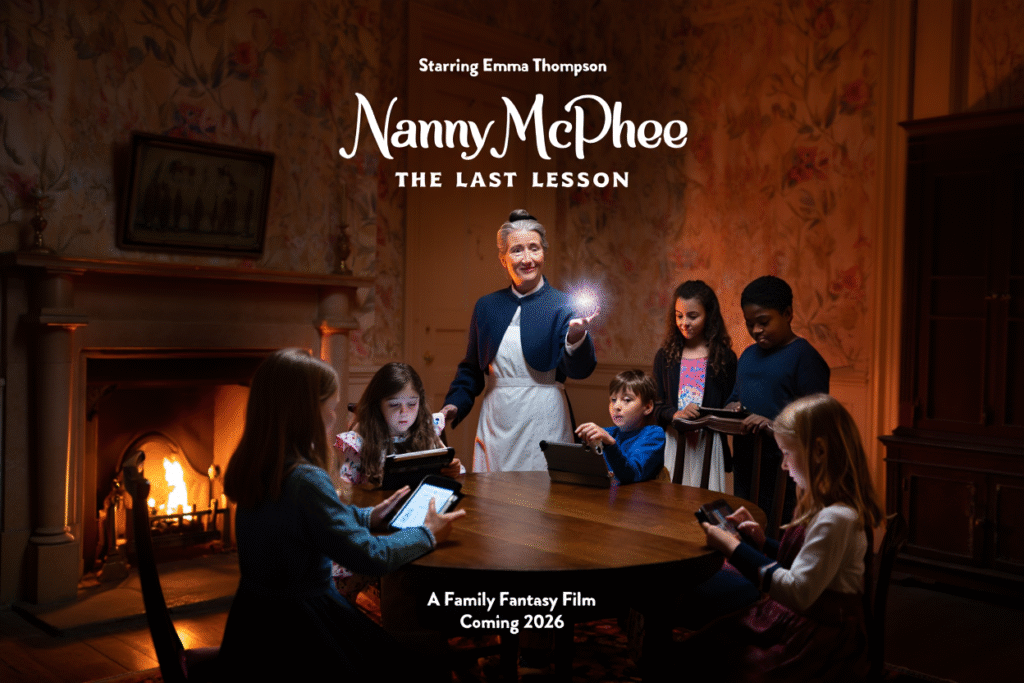
Rather than condemning technology outright, the story focuses on what’s been lost: shared moments, empathy, and attention. Nanny McPhee’s lessons are subtle, sometimes even invisible, unfolding through small magical nudges that push the children back toward one another. The magic here feels quieter, more intentional.
Visually, the film embraces warmth. Soft lighting, lived-in homes, and gentle color palettes create a sense of safety that contrasts beautifully with the emotional distance within the family. When magic appears, it feels earned — never overwhelming, always purposeful.
One of the film’s most powerful threads is Nanny McPhee’s confrontation with her own impermanence. For the first time, she is not just teaching children — she is questioning who she is without her role. The idea that even magic has an expiration date gives the film a surprisingly mature emotional core.
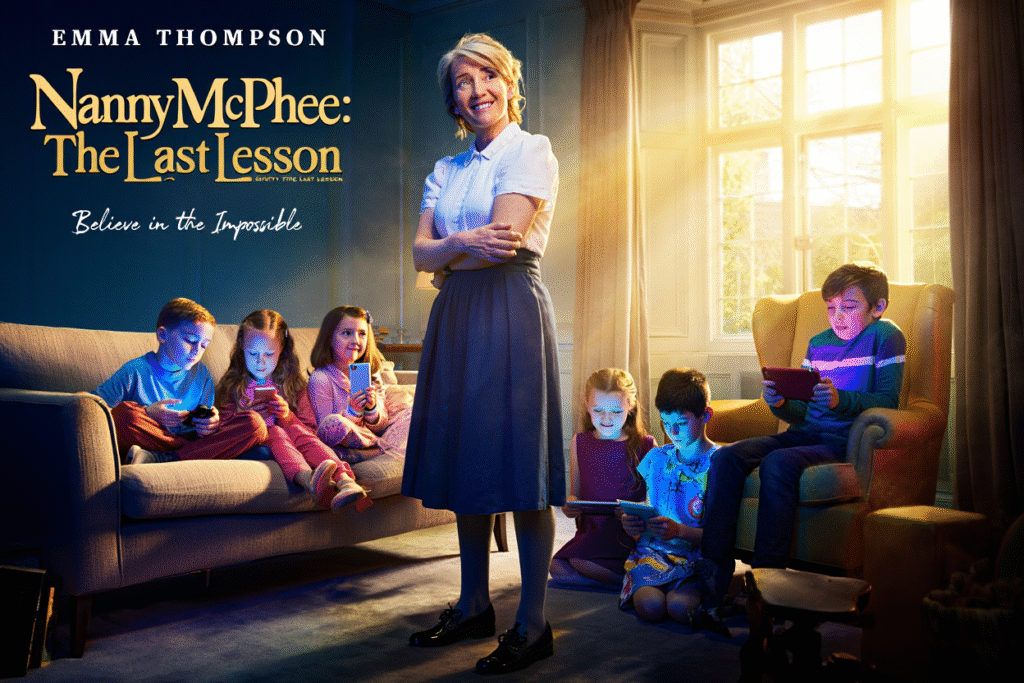
The notion of legacy is handled with grace. Instead of passing on spells or powers, Nanny McPhee seeks to pass on understanding. The film suggests that kindness doesn’t require magic — it requires choice, patience, and courage. This message lands softly, but it lingers.
Humor is present, though more restrained than in previous installments. The laughs are gentle, situational, and character-driven, allowing the emotional moments to breathe. The film trusts its audience, especially its younger viewers, to sit with feeling rather than rush past it.
What makes The Last Lesson resonate is its respect for children’s emotional intelligence. It doesn’t talk down to them or oversimplify pain. Instead, it acknowledges that growing up often means feeling lost, even in a house full of people.
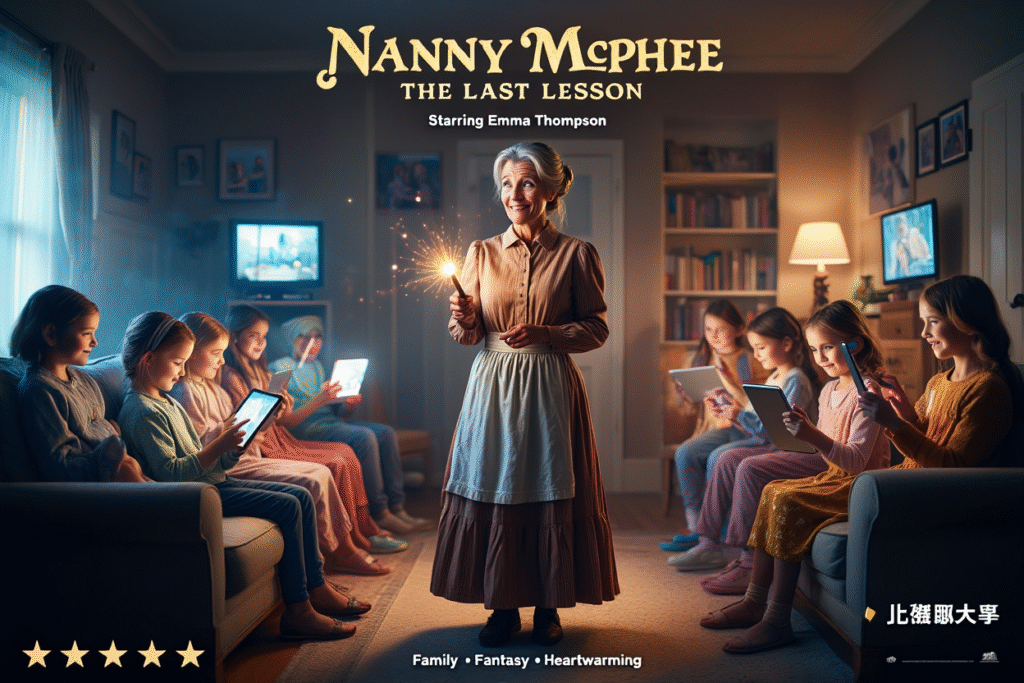
As the story moves toward its conclusion, the film resists spectacle. The final moments are intimate, reflective, and quietly devastating in the best way. When Nanny McPhee prepares to leave, it feels less like an ending and more like a hand gently releasing another.
In the end, Nanny McPhee: The Last Lesson is a farewell that understands what made this character magical wasn’t her wand or her appearance — it was her belief in people. It’s a beautiful reminder that the most powerful lessons don’t fade when the magic does.