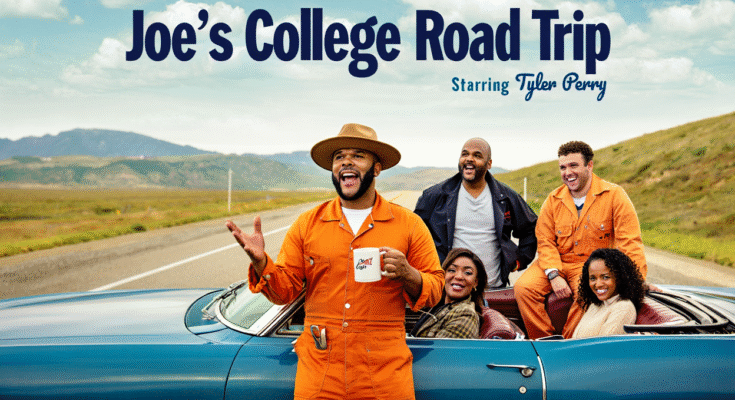
Tyler Perry’s Joe’s College Road Trip takes one of Perry’s most chaotic, unapologetically loud characters and drops him into a setting tailor-made for reflection, conflict, and unexpected growth. What begins as a simple favor quickly becomes a moving classroom on wheels, where lessons are learned not through lectures, but through arguments, breakdowns, and brutally honest conversations delivered at full Joe-volume.
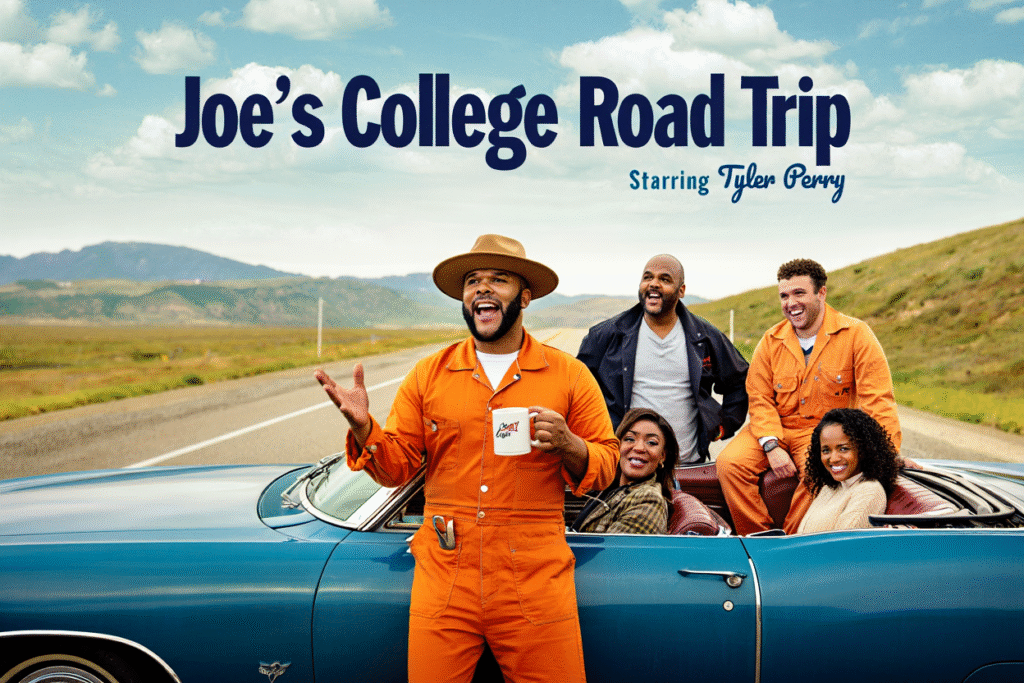
Joe, as always, is a walking contradiction — abrasive yet caring, selfish yet deeply protective. Tyler Perry leans into the character’s outrageousness, but this time there’s a noticeable layer of restraint beneath the noise. Joe isn’t just there to steal scenes or throw insults; he’s there because, in his own crooked way, he understands fear of the future better than anyone else in the car.
Jermaine Harris brings warmth and grounding energy as B.J., a young man standing at the edge of adulthood, paralyzed by expectations he didn’t choose for himself. His performance works because he never overplays the uncertainty. B.J.’s confusion feels real, quiet, and painfully relatable — a perfect contrast to Joe’s thunderous presence.
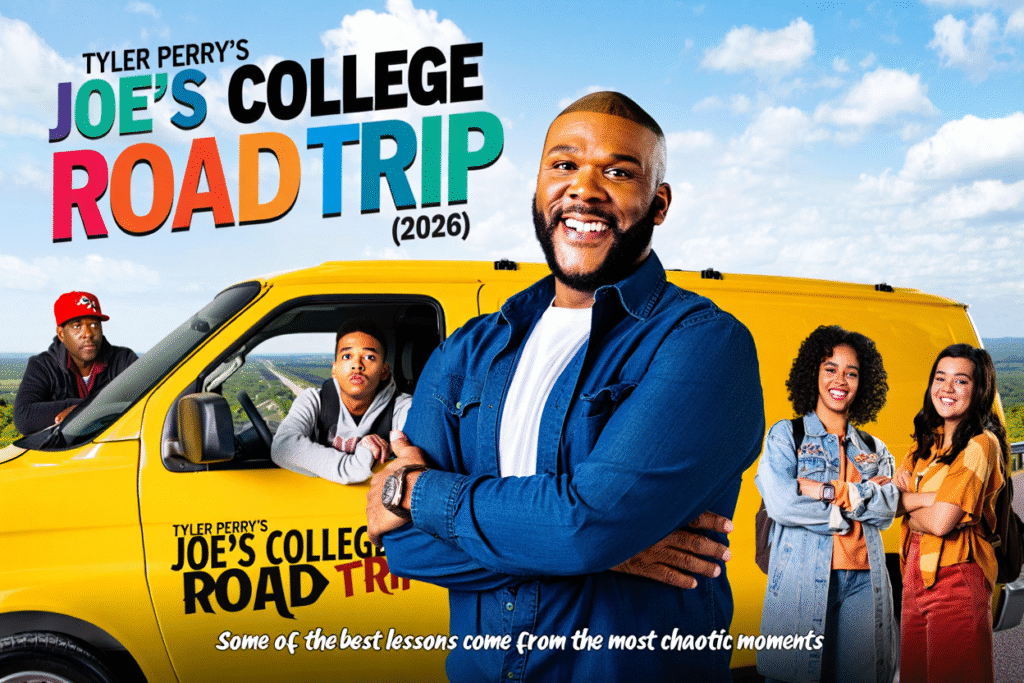
The road trip structure gives the film room to breathe. Each stop along the way becomes a metaphorical checkpoint: unresolved family tension, buried insecurities, and the pressure to become someone impressive rather than someone honest. The humor lands most effectively in these moments, where laughter and discomfort collide.
Amber Reign Smith adds emotional balance to the group, representing the voice of reason Joe constantly ignores but secretly respects. Her character challenges Joe in ways others can’t, forcing him to confront the fact that his loudness often masks unresolved regret. Their exchanges crackle with comedic timing and emotional subtext.
Millie Jackson’s presence brings a sharp, old-school energy that elevates the ensemble. She doesn’t just trade barbs with Joe — she dismantles him, piece by piece, reminding him that age doesn’t automatically equal wisdom. Their scenes feel less like comedy sketches and more like verbal sparring matches rooted in lived experience.
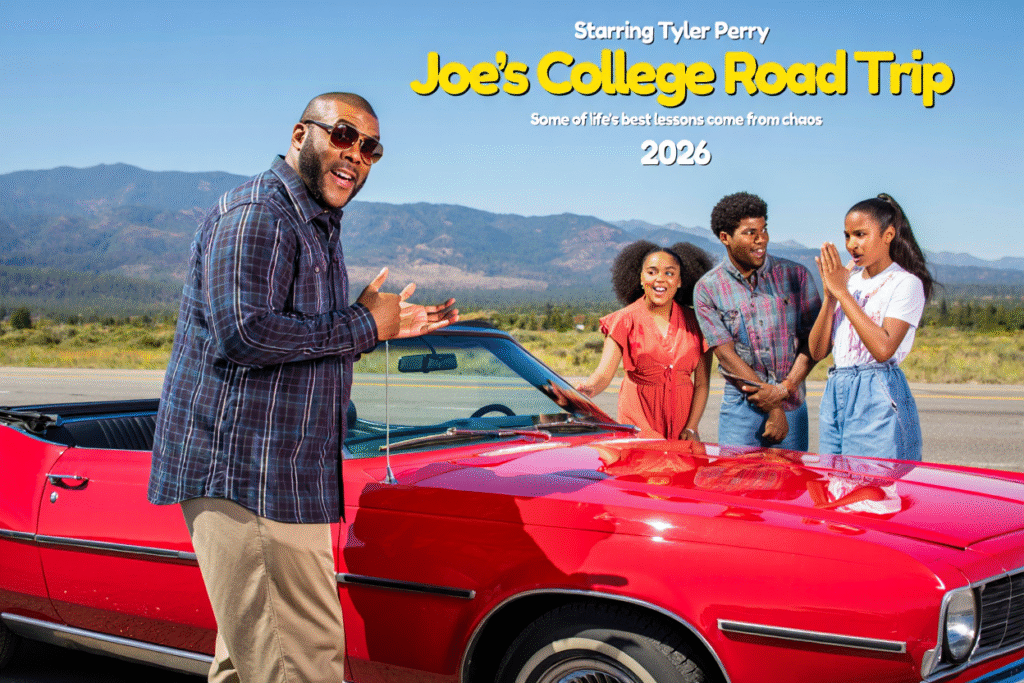
Visually, the film keeps things simple, letting performances carry the weight. The open highways, cramped vans, and anonymous roadside stops mirror the emotional state of the characters — in motion, uncertain, and searching for direction. There’s no glamour here, only movement forward.
What sets Joe’s College Road Trip apart from earlier Joe-centric films is its patience. It allows silence to exist between jokes. It lets discomfort linger. Joe doesn’t magically change, and the film is better for it. Growth comes in inches, not leaps, and sometimes the lesson is simply learning when to shut up.
The humor remains classic Tyler Perry — broad, loud, and occasionally outrageous — but it’s tempered by sincerity. The laughs never completely erase the emotional stakes, and the film knows when to pull back before undercutting its own message.
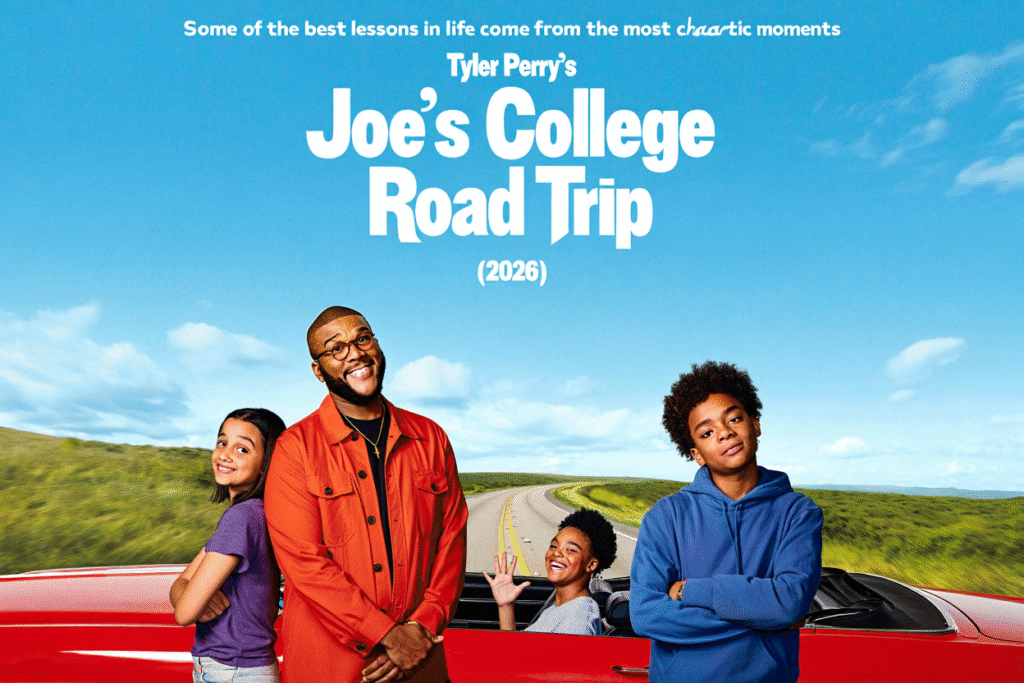
At its core, this is a story about mentorship from the least qualified teacher imaginable. Joe doesn’t offer polished advice or inspirational speeches. He offers honesty, delivered clumsily and without a filter. And somehow, that honesty sticks.
Tyler Perry’s Joe’s College Road Trip proves that even the most chaotic journeys can lead to clarity. It’s funny, messy, and unexpectedly tender — a reminder that growing up doesn’t always mean knowing where you’re going, but knowing who’s willing to ride with you while you figure it out.