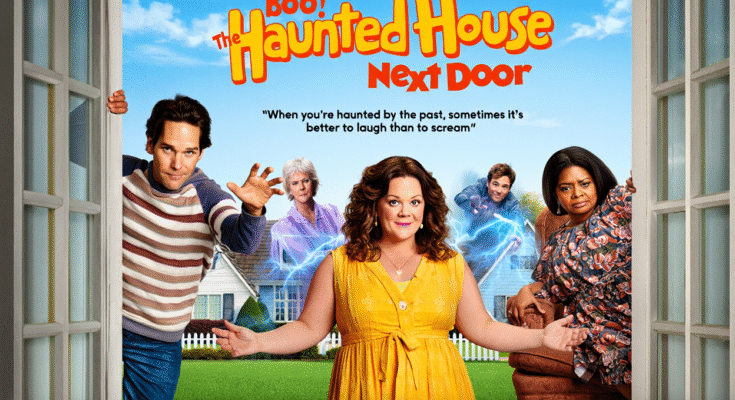
Boo! The Haunted House Next Door floats into the family-comedy space with a premise that feels comfortingly familiar yet refreshingly self-aware. It understands exactly what kind of movie it wants to be: spooky but safe, chaotic but kind, and silly without ever being soulless. This is not a film about defeating ghosts—it’s about learning how to live with them, literally and emotionally.
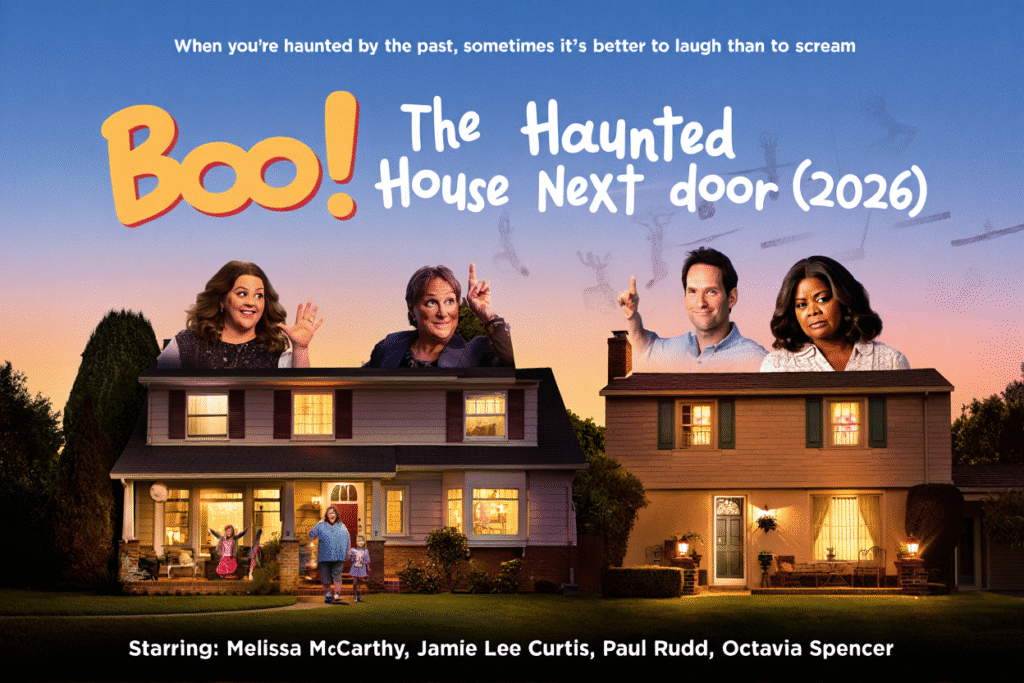
Melissa McCarthy is perfectly cast as Cindy Mitchell, a mother whose practical toughness collides headfirst with the supernatural. McCarthy leans into her physical comedy and sharp timing, but what makes her performance work is restraint. Cindy isn’t loud for the sake of laughs; she’s funny because she reacts like a real person would when faced with floating chairs and passive-aggressive specters.
Jamie Lee Curtis delivers a delightful twist on her horror legacy as Margie, the rule-obsessed ghost who treats haunting like a full-time job. Curtis plays her with crisp precision, channeling the energy of a strict HOA president from beyond the grave. It’s a knowing performance that winks at her past roles while carving out something entirely comedic and new.
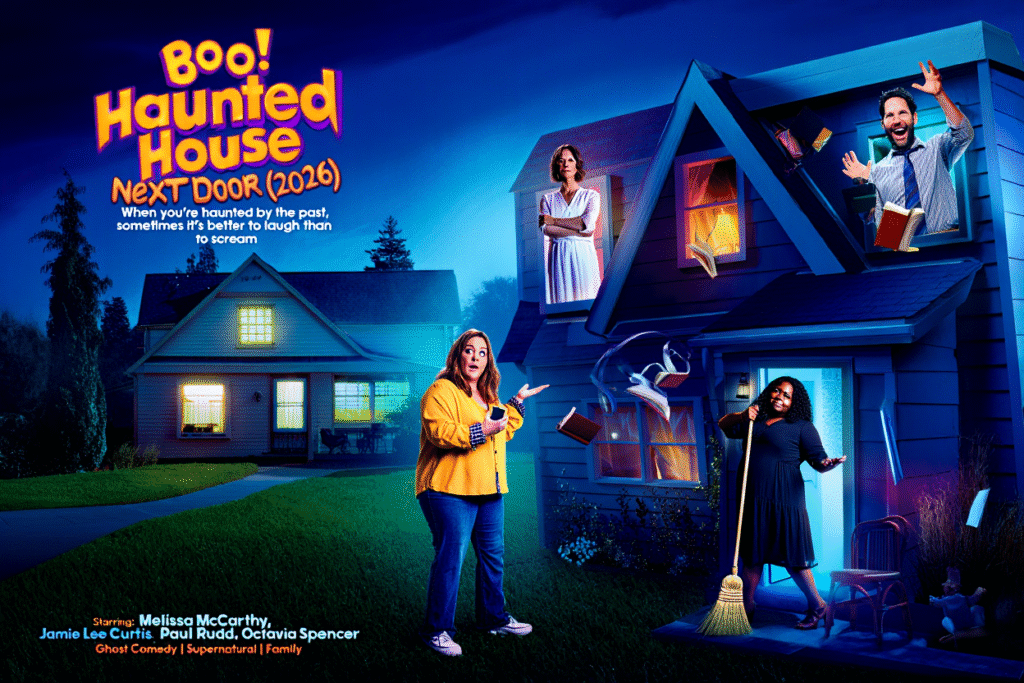
Paul Rudd, unsurprisingly, steals scenes as Charlie, the eternally unserious ghost who treats death like an extended improv exercise. His charm is weaponized here, turning every supernatural disruption into a joke that lands effortlessly. Charlie isn’t malicious—he’s bored, lonely, and desperate to feel relevant again, which gives Rudd’s humor a surprisingly tender edge.
Octavia Spencer rounds out the ghostly quartet as Veronica, the exhausted realist of the afterlife. Her dry delivery and subtle reactions provide balance to the film’s more energetic performances. Veronica feels like the ghost who’s seen it all, done it all, and just wants a quiet eternity—if only everyone else would stop causing problems.
The comedy thrives on contrast. The Mitchell family’s normalcy clashes beautifully with the ghosts’ outdated habits and unresolved drama. Renovation scenes become supernatural battlegrounds, where power tools meet poltergeist tantrums, and the result is a steady stream of visual gags that never overstay their welcome.
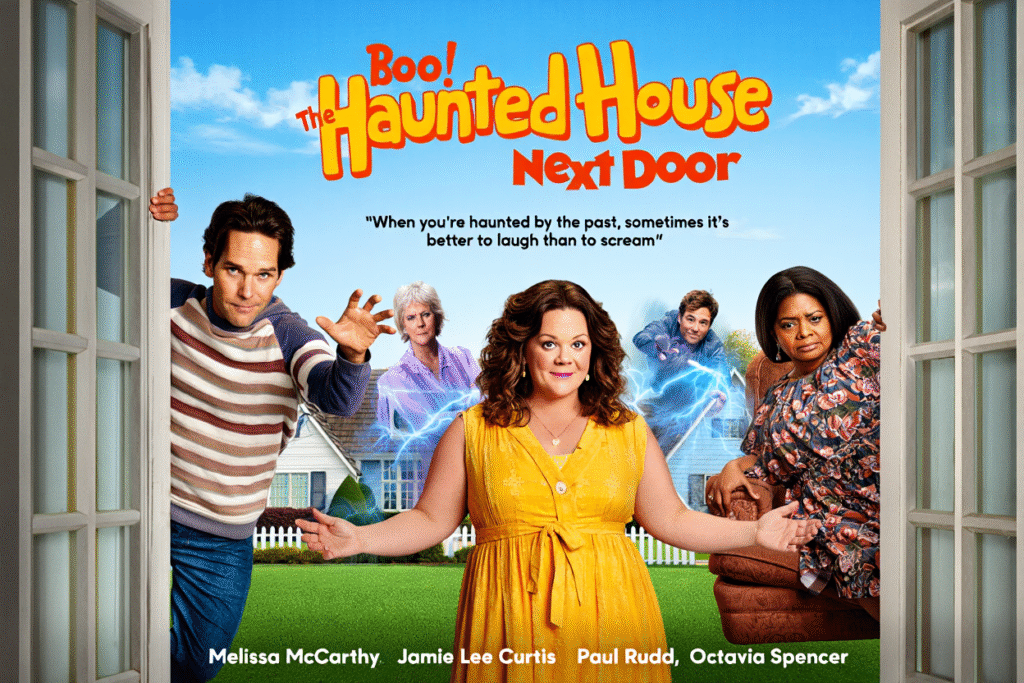
What elevates Boo! above standard ghost comedies is its warmth. The film gradually reveals that the ghosts aren’t haunting out of spite, but stagnation. They’re stuck—not just in houses, but in moments they never moved on from. This emotional layer gives the humor weight, allowing the laughs to coexist with genuine empathy.
Directorally, the film embraces bright colors, cozy interiors, and playful effects rather than darkness and dread. The supernatural elements are whimsical instead of threatening, making the movie accessible for younger audiences while still clever enough to entertain adults.
The script smartly avoids turning the living-versus-dead dynamic into a battle. Instead, it becomes a negotiation—one built on understanding, boundaries, and mutual annoyance. This approach reinforces the film’s central theme: coexistence is messy, but it’s better than isolation.
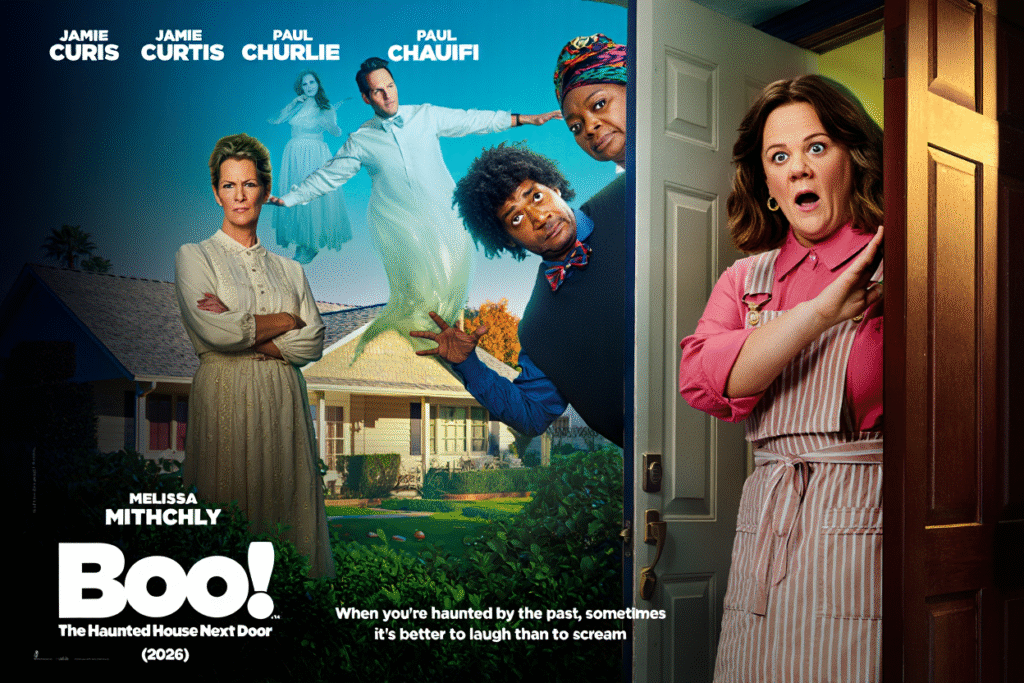
By the final act, Boo! shifts from pure comedy into something quietly heartfelt. The ghosts’ unfinished business intertwines with the Mitchells’ own fears about change, creating a resolution that feels earned rather than forced. The message is clear without being preachy: moving forward doesn’t mean forgetting.
In the end, Boo! The Haunted House Next Door is less about haunted houses and more about haunted people. It’s a light, charming, and emotionally generous film that proves laughter can be the most powerful way to face the unknown. Friendly ghosts, found family, and a lot of noise—sometimes that’s exactly what home is supposed to be.