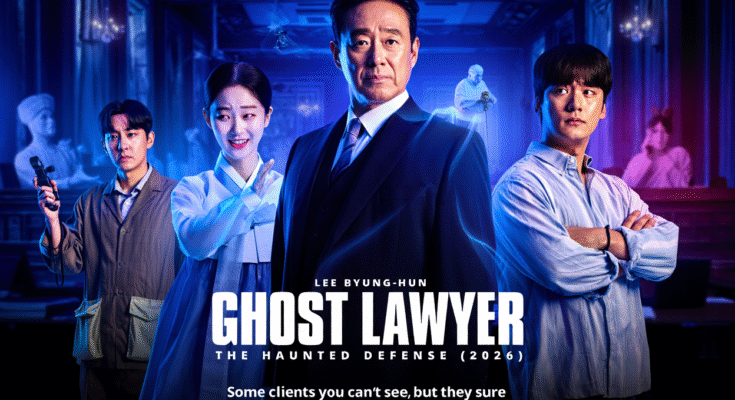
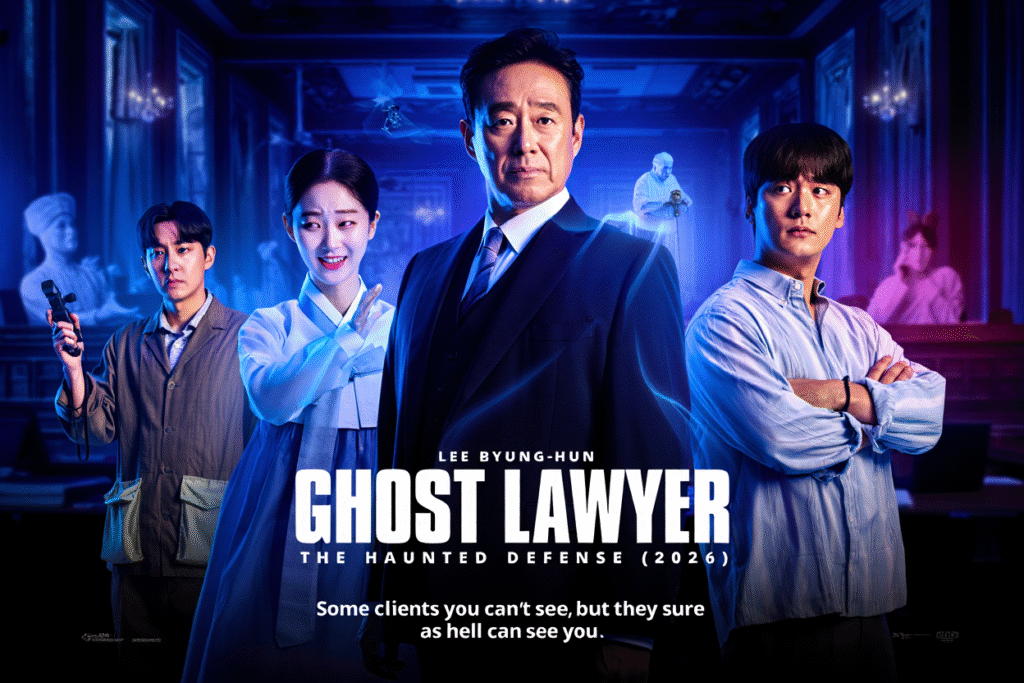
Ghost Lawyer: The Haunted Defense arrives with an irresistibly clever hook, blending supernatural chaos with legal drama in a way that feels both wildly entertaining and unexpectedly thoughtful. It takes the familiar trope of “seeing ghosts” and flips it into something fresh: a courtroom where justice doesn’t end at death, and guilt has a very long afterlife.
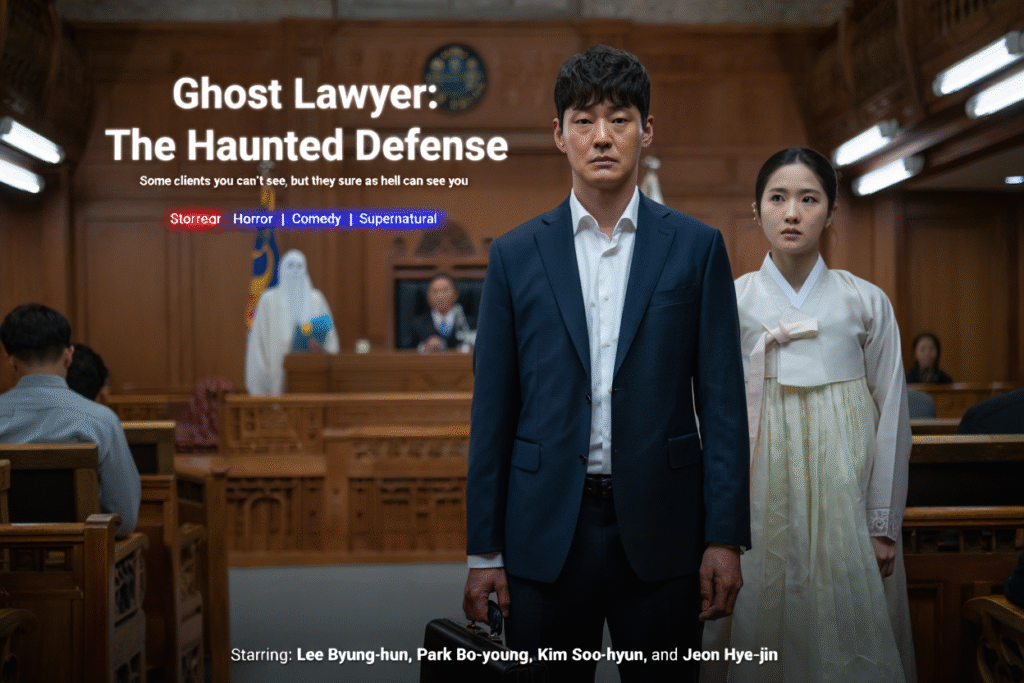
Lee Byung-hun is magnetic as Kim Joon-ho, a retired lawyer who carries the quiet exhaustion of a man who’s already fought too many battles. His return to law isn’t driven by ambition or redemption at first, but sheer inconvenience. Seeing ghosts is less a gift than an intrusion, and Lee plays that frustration with dry humor and subtle humanity.
Park Bo-young shines as Mi-sook, the mischievous ghost who kickstarts the entire premise. She’s playful, sharp-tongued, and emotionally layered, oscillating between comic relief and poignant reminder of unfinished lives. Her chemistry with Lee Byung-hun is the film’s secret weapon, grounding the supernatural antics in genuine emotional stakes.
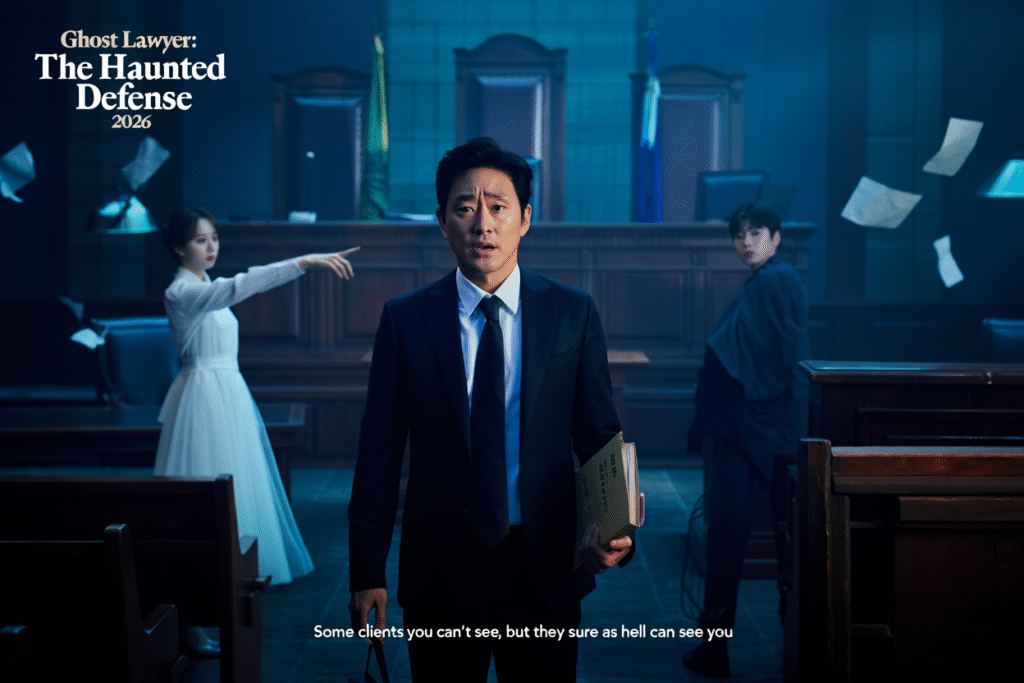
The concept of a supernatural court is where the film truly distinguishes itself. These aren’t gimmicky scenes played only for laughs; they are imaginative, eerie, and surprisingly structured. Rules exist, consequences matter, and justice—while strange—is taken seriously. The film smartly uses legal logic to explore moral gray areas that transcend life and death.
Kim Soo-hyun brings balance as Joon-ho’s skeptical best friend, delivering humor rooted in disbelief rather than exaggeration. His role acts as an audience surrogate, questioning sanity, logic, and whether helping ghosts is noble—or deeply unhealthy. The friendship adds warmth and levity without undercutting the story’s darker moments.
Jeon Hye-jin’s ghost-hunting investigator injects chaotic energy into the narrative. Equal parts brave and terrified, she bridges the worlds of belief and skepticism, turning ghost encounters into comedic set pieces that still maintain an edge of danger. Her presence expands the film’s universe beyond courtrooms and apparitions.
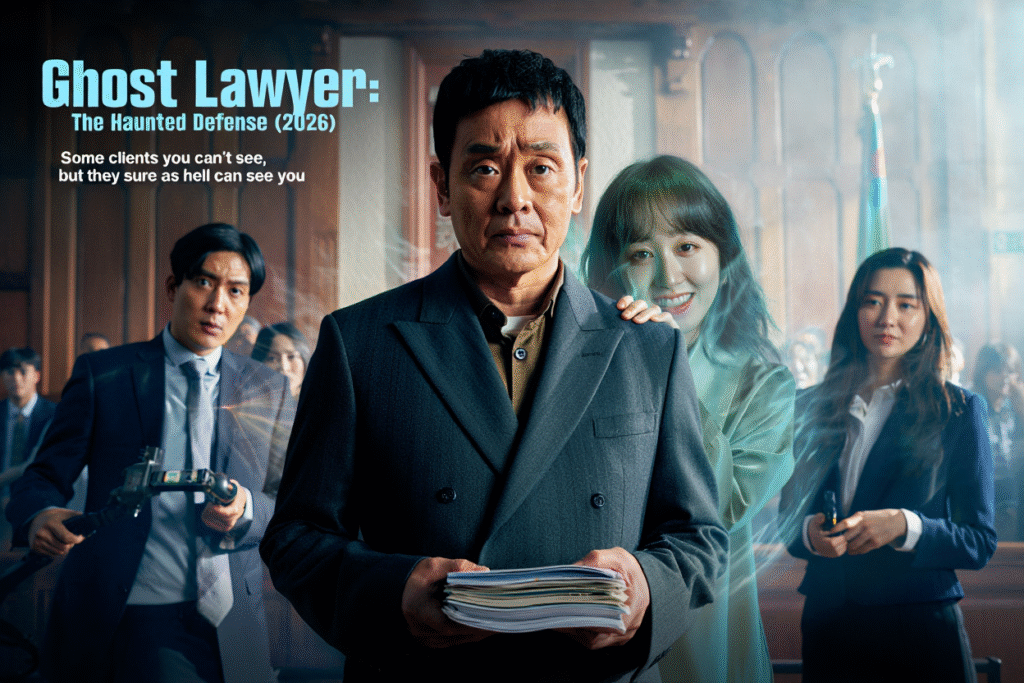
Tonally, Ghost Lawyer walks a tightrope between horror and comedy with impressive control. Jump scares exist, but they’re used sparingly, often punctuated by humor rather than dread. The real unease comes from the stories of the ghosts themselves—betrayals, regrets, and injustices that were never resolved in life.
Visually, the film contrasts warm, mundane human spaces with cold, stylized supernatural realms. Courtrooms of the dead feel surreal yet bureaucratic, reinforcing the film’s core idea: even the afterlife isn’t free from systems, paperwork, and judgment. This aesthetic choice adds texture without overwhelming the narrative.
What elevates the film beyond genre fun is its emotional undercurrent. Each case Joon-ho takes forces him to confront his own past compromises as a lawyer. Defending the dead becomes a way of reclaiming the ideals he once abandoned, turning the film into a quiet story about professional and moral redemption.
The pacing occasionally leans episodic, reflecting the case-by-case structure, but this works in the film’s favor. Each ghost leaves an imprint, building toward a cumulative emotional payoff rather than a single explosive climax. The journey feels purposeful, even when it’s absurd.
By the final act, Ghost Lawyer: The Haunted Defense reveals itself as more than a supernatural comedy. It’s a reflection on justice, memory, and the idea that some truths refuse to stay buried. Funny, eerie, and unexpectedly heartfelt, the film proves that even beyond death, everyone deserves to be heard—and sometimes, all they need is a damn good lawyer.