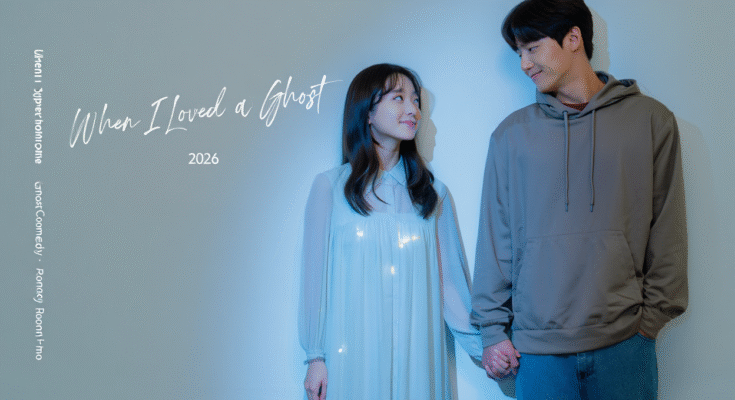
When I Loved a Ghost (2026) is a quietly devastating Korean ghost romance that understands the most painful kind of love isn’t the one that ends badly — it’s the one that ends inevitably. Wrapped in soft comedy and supernatural charm, the film slowly reveals itself as a meditation on impermanence, grief, and the courage it takes to love knowing loss is guaranteed.
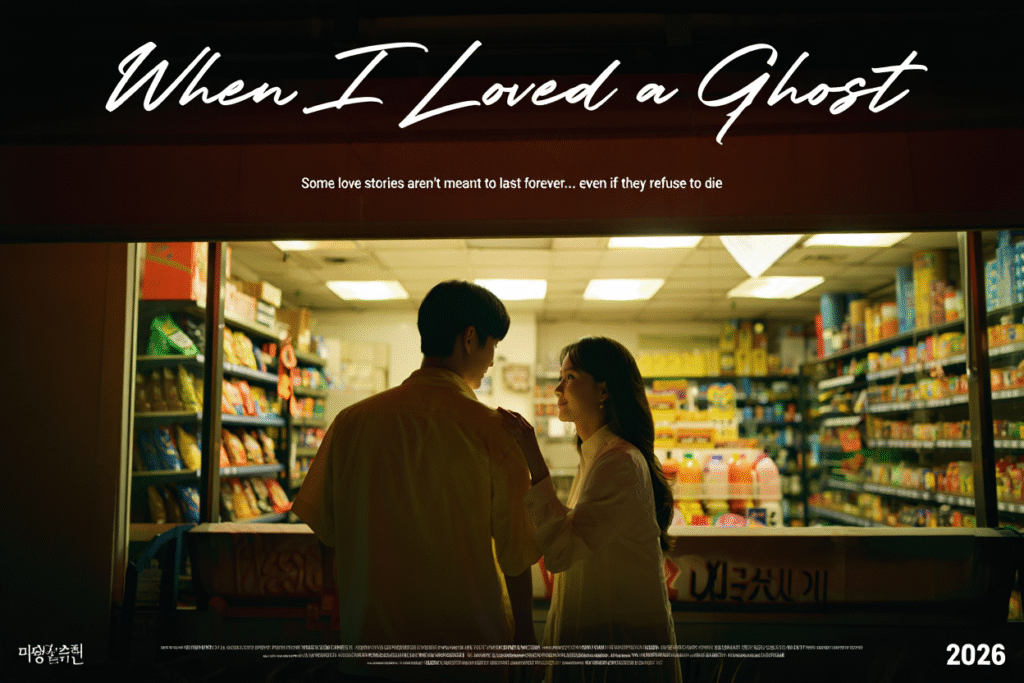
Kim Seon-ho delivers one of his most restrained and emotionally honest performances as Ji-hoon, a man whose life has shrunk into routines and night shifts. There is nothing flashy about him — and that’s the point. His ordinariness becomes the perfect contrast to the extraordinary love that enters his life, grounding the story in quiet realism even as it drifts into the supernatural.
Kim Yoo-jung is luminous as Ara, crafting a ghost who is playful without being childish and tragic without being melodramatic. Her performance balances whimsy and sorrow with remarkable control. The way she laughs too loudly, tilts her head in confusion, or pauses before answering simple questions subtly signals a soul out of sync with the world — someone who doesn’t fully belong anymore.
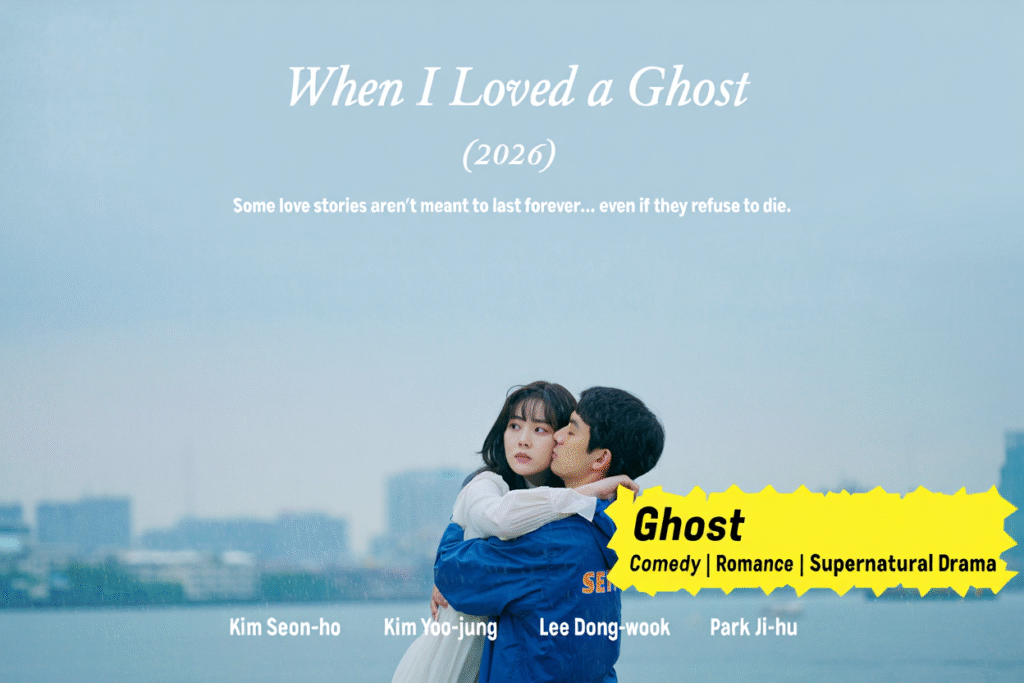
The film’s early half leans into gentle comedy, using familiar K-romance humor to disarm the audience. Ji-hoon pretending to talk on Bluetooth, sneaking Ara into public places, and navigating awkward situations where love looks like madness from the outside all generate warmth without undermining emotional stakes. The humor never mocks the characters — it protects them.
Lee Dong-wook’s paranormal investigator plays a crucial tonal role. He functions as the voice of inevitability, constantly reminding both Ji-hoon and the audience that ghost romances do not have happy endings. His cynicism isn’t cruelty — it’s experience — and every warning he gives lands heavier as the film progresses.
As Ara’s memories begin to return, the film shifts gears with quiet confidence. The story refuses shock twists or sensational reveals. Instead, it allows sorrow to seep in naturally, like condensation forming on glass. The truth of Ara’s death matters less than what it represents: a life interrupted, love postponed, time stolen.
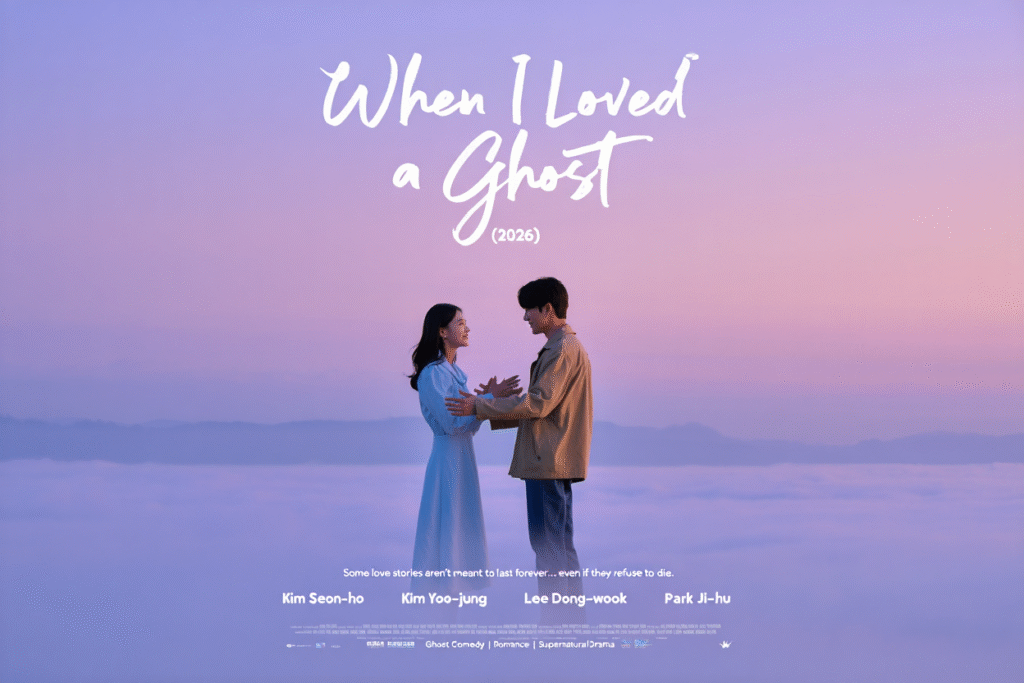
Park Ji-hu’s role as Ara’s younger sister anchors the emotional climax. Their reunion is understated and devastating, capturing the particular grief of those left behind — not the loud kind, but the kind that settles into everyday life. These scenes elevate the film from romantic fantasy into genuine human drama.
Visually, When I Loved a Ghost favors soft lighting, rain-soaked streets, and empty night spaces. Ghostly effects are minimal and tasteful; Ara flickers not as spectacle, but as a reminder that her time is running out. The supernatural elements serve emotion, never the other way around.
The final act is heartbreak without manipulation. Ara fading gradually — voice softening, presence thinning — is far more painful than any dramatic disappearance. Her final request, “Live enough for the both of us,” reframes the entire film as a story not about death, but about choosing life after loss.
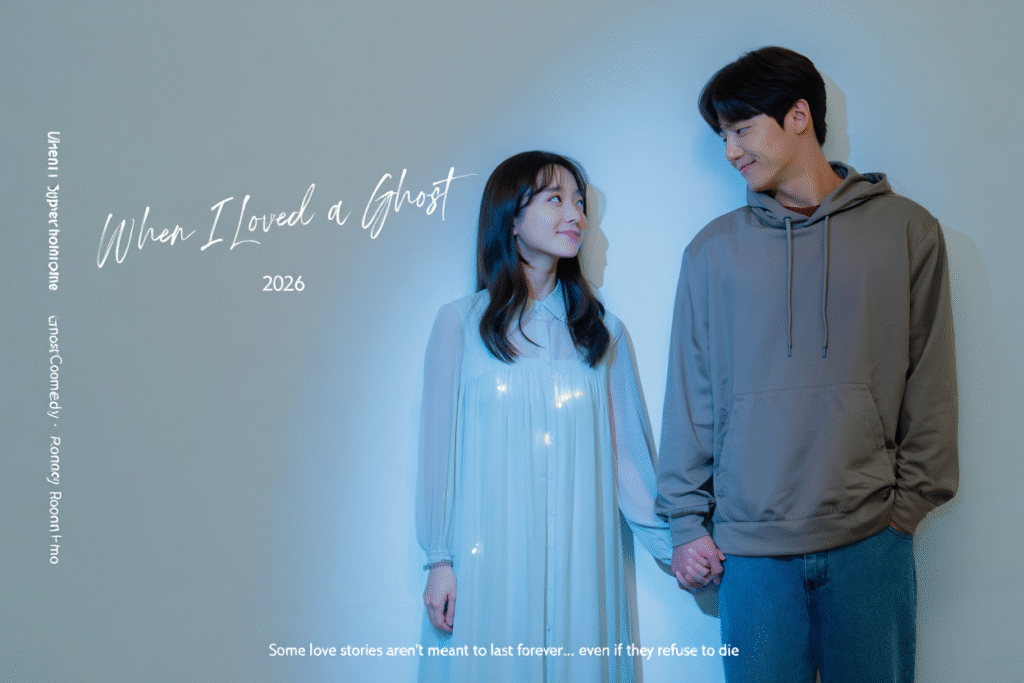
When I Loved a Ghost lingers long after it ends. It doesn’t promise healing without scars, nor does it romanticize grief. Instead, it offers something rarer: the idea that love doesn’t need permanence to be meaningful. Some love stories aren’t meant to last — but they still change everything.