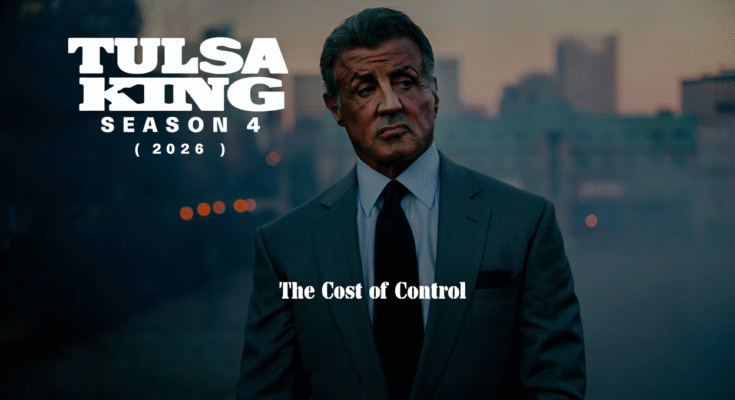
Season 4 of Tulsa King marks a decisive shift in the series’ identity, trading swagger and expansion for paranoia and consequence. Titled The Cost of Control, this chapter understands a brutal truth Dwight Manfredi has been avoiding since day one: building an empire is easy compared to holding it together. From its opening episode, the season moves with a colder, heavier rhythm, signaling that the era of easy wins is over.
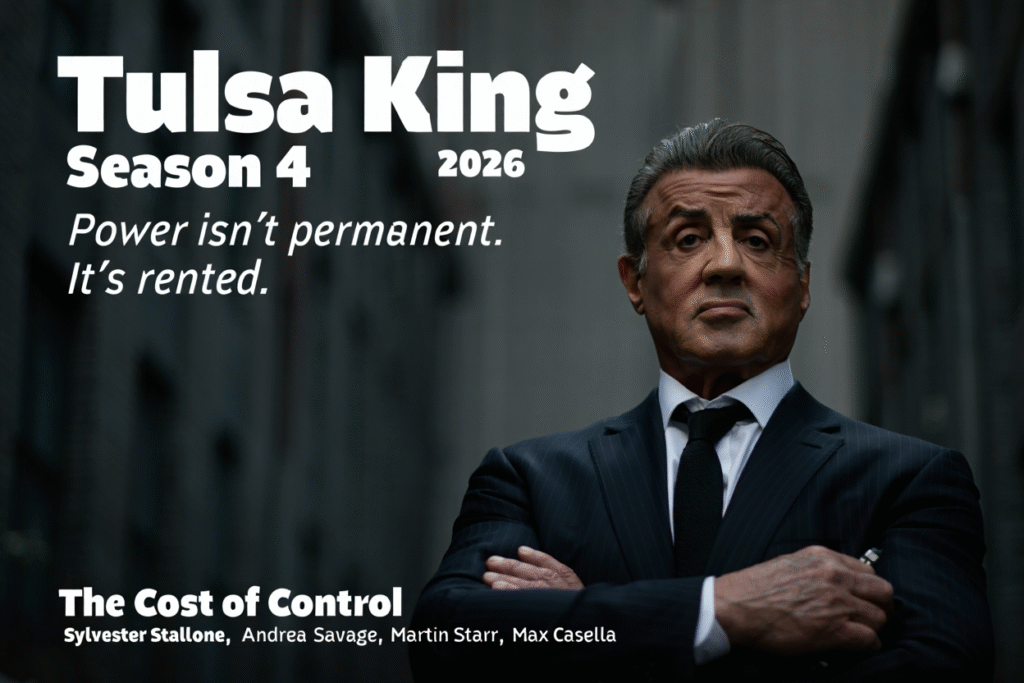
Sylvester Stallone delivers his most restrained and quietly menacing performance yet. Dwight is no longer the fish-out-of-water gangster carving territory with old-school charm; he’s a ruler surrounded by fractures. Stallone plays him like a man who knows every smile could be the last honest one he sees. There’s less humor, fewer speeches, and more silence — and that silence carries weight.
What makes this season compelling is that Dwight’s greatest threat isn’t an external cartel or federal crackdown, but erosion from within. Younger, reckless players circle his operation, impatient with hierarchy and uninterested in loyalty. The generational clash is sharp and intentional, framing Dwight as a relic who still believes respect can be enforced — even as the world proves otherwise.
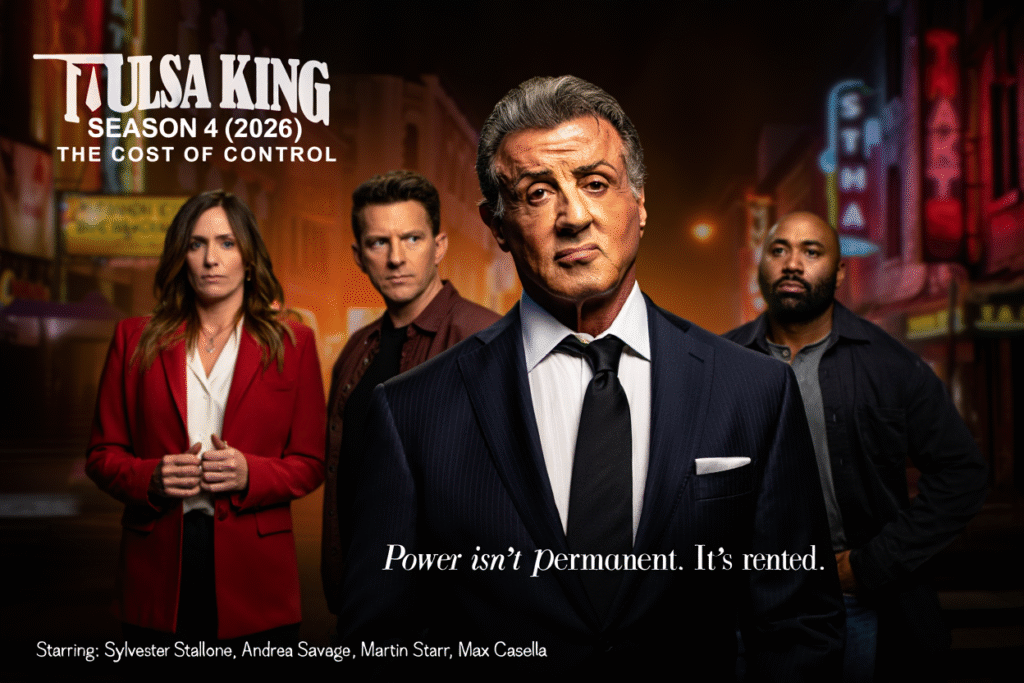
Martin Starr’s character continues to be one of the show’s most quietly tragic figures. Pulled between self-preservation and conscience, his arc in Season 4 is defined by hesitation — and hesitation, in this world, is fatal. Max Casella’s role deepens as well, confronting the reality that survival often demands becoming someone you swore you’d never be.
Andrea Savage’s political storyline becomes far more dangerous this season, shedding any illusion that politics and crime can remain separate. Her ambition is no longer theoretical; it has consequences that bleed directly into Dwight’s operations. The show smartly uses her arc to explore how power wears different faces — and how corruption adapts faster than morality.
The pacing of Season 4 is deliberate, sometimes uncomfortably so. Deals unravel slowly. Trust decays in increments. Every conversation feels like a negotiation where the wrong word could trigger violence. This patience pays off, creating an atmosphere where tension simmers rather than explodes — until it inevitably does.
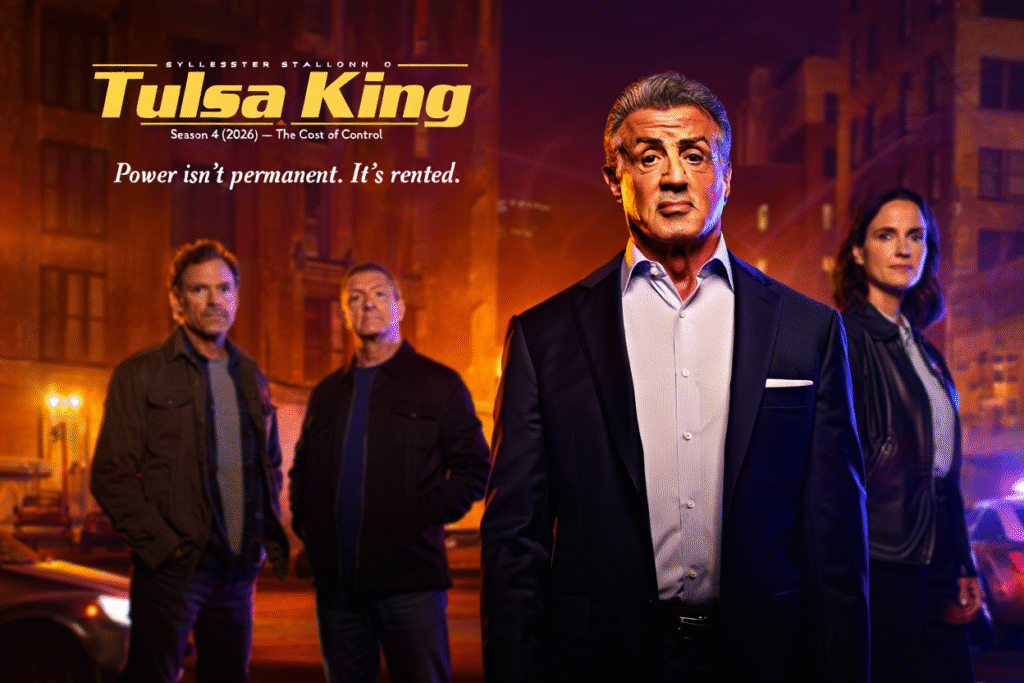
Visually, the series leans into stark compositions and muted tones, reinforcing the theme of control slipping through fingers. Tulsa no longer feels like a playground for reinvention; it feels claustrophobic, watched, and increasingly hostile. The city reflects Dwight’s state of mind — familiar, but no longer safe.
One of the season’s strongest elements is its refusal to romanticize dominance. Wins are temporary. Losses echo. Each decision Dwight makes narrows his options rather than expanding them. The show repeatedly asks whether leadership is worth the isolation it demands — and offers no comforting answers.
Violence, when it arrives, is sudden and unceremonious. There are no triumphant shootouts or clever escapes, only consequences that ripple outward. This grounded approach reinforces the season’s central idea: power doesn’t disappear — it transfers, usually through blood.
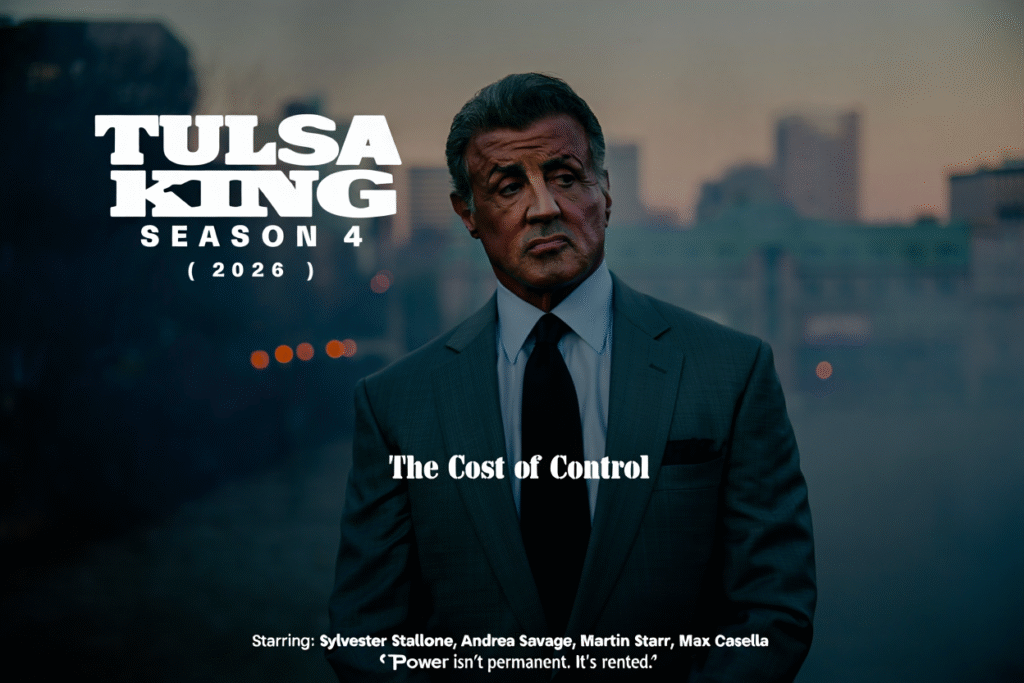
By the final episodes, Dwight is no longer fighting to expand his empire, but to define what survival even means. Is it control? Legacy? Or simply staying alive long enough to choose how it ends? Stallone’s performance in these moments is devastatingly minimal, proving that the character’s greatest battles are now internal.
Tulsa King Season 4 is its most mature and uncompromising chapter yet. It understands that crime dramas don’t stay interesting by getting louder — they stay interesting by getting lonelier. The Cost of Control isn’t about how Dwight Manfredi rose. It’s about what he’s willing to lose to avoid falling.