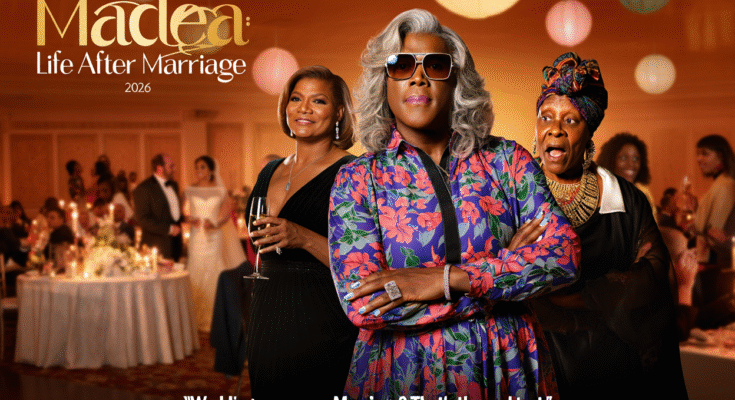
Madea: Life After Marriage takes the familiar comfort of Tyler Perry’s beloved character and drops her into a setting far messier than any wedding ceremony could prepare for. This time, the film wisely skips the fairytale buildup and focuses on what happens after the music fades, the guests leave, and reality shows up uninvited. The result is a comedy that laughs loudly, but cuts surprisingly close to home.
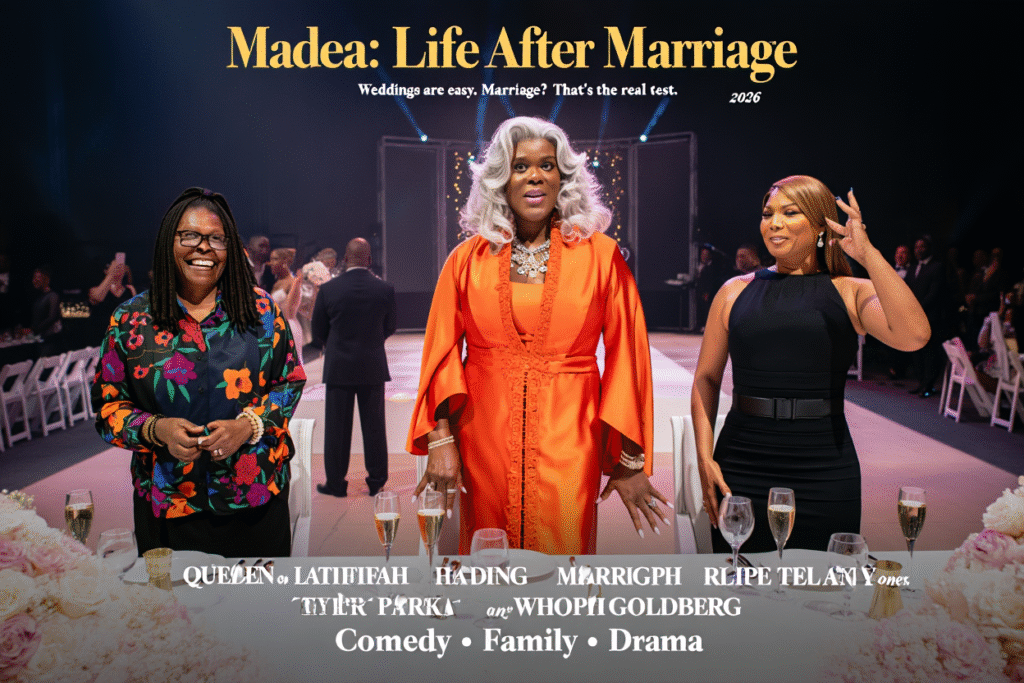
Tyler Perry’s Madea is in peak form here—less concerned with romance and more interested in calling out nonsense wherever it hides. Perry plays her not just as comic relief, but as a blunt instrument of truth, someone who understands that love without honesty is just a performance. Her presence anchors the film, reminding us that laughter can be both a shield and a weapon.
Queen Latifah brings grounded strength to the story as the bride’s fiercely protective mother. Her performance adds emotional gravity, portraying a woman shaped by past disappointments who refuses to let history repeat itself. The tension between her guarded realism and the newlyweds’ optimism creates a compelling emotional undercurrent beneath the humor.
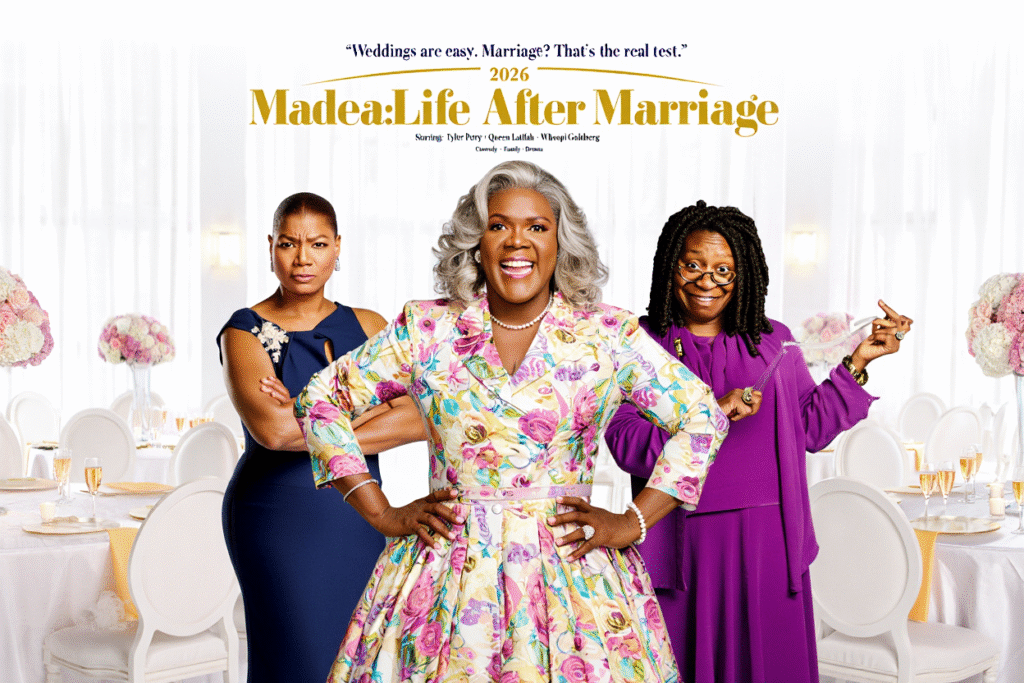
Whoopi Goldberg is a scene-stealer as the unfiltered great-aunt, delivering lines that feel improvised, dangerous, and deeply insightful all at once. Her character exists in that perfect Madea-universe space where wisdom and chaos coexist. Every time she speaks, you’re unsure whether to laugh, flinch, or quietly take notes.
The film’s central conflict—an explosive family secret revealed immediately after the wedding—works because it feels painfully believable. Instead of cartoonish drama, the secret exposes cracks that were always there: unresolved trust issues, financial dishonesty, and emotional immaturity. The comedy lands harder because the problems are real.
One of the film’s strengths is its pacing. Rather than stacking jokes endlessly, Life After Marriage allows scenes to breathe, letting awkward silences, uncomfortable truths, and emotional reactions do as much work as punchlines. The laughter often comes not from exaggeration, but recognition.
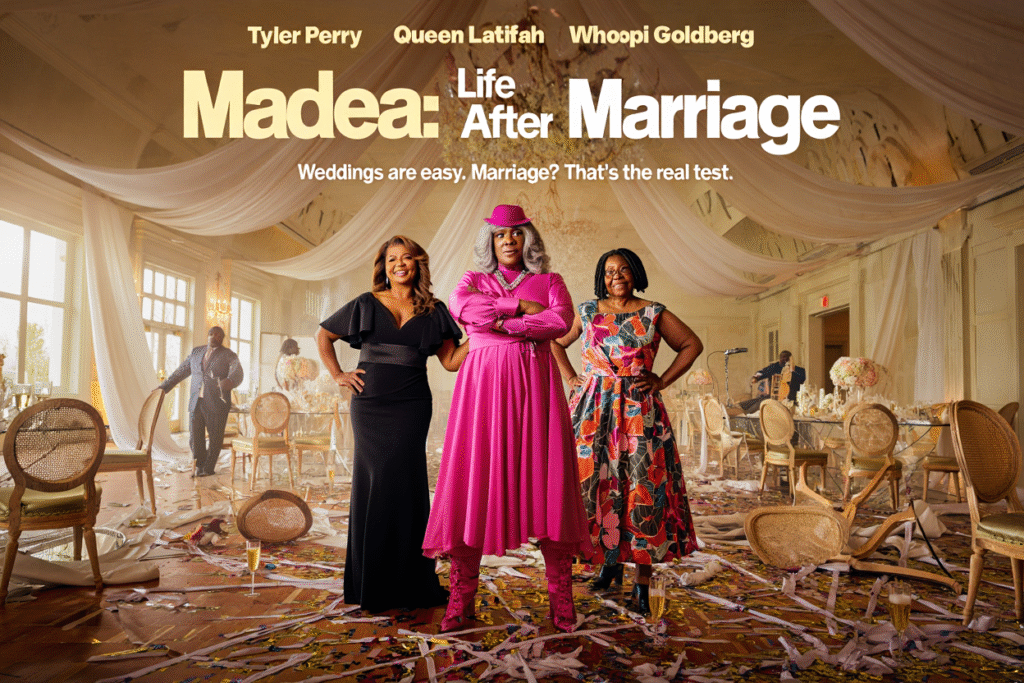
Madea’s impromptu “post-wedding intervention” is the film’s beating heart. What could have been a simple comedic set piece becomes a surprisingly effective group therapy session—albeit one involving yelling, insults, and zero emotional cushioning. It’s here that the film delivers its most honest message: marriage doesn’t fix people; it exposes them.
Visually and tonally, the film keeps things intimate. Most of the story unfolds in homes, kitchens, and living rooms—places where family arguments actually happen. This grounded setting reinforces the idea that the real battles of marriage aren’t dramatic public moments, but private conversations no one wants to have.
While longtime fans will enjoy Madea’s classic no-holds-barred humor, the film also feels more reflective than earlier entries. There’s a noticeable shift toward accountability, communication, and emotional growth, suggesting that even within this outrageous universe, maturity has found its way in.
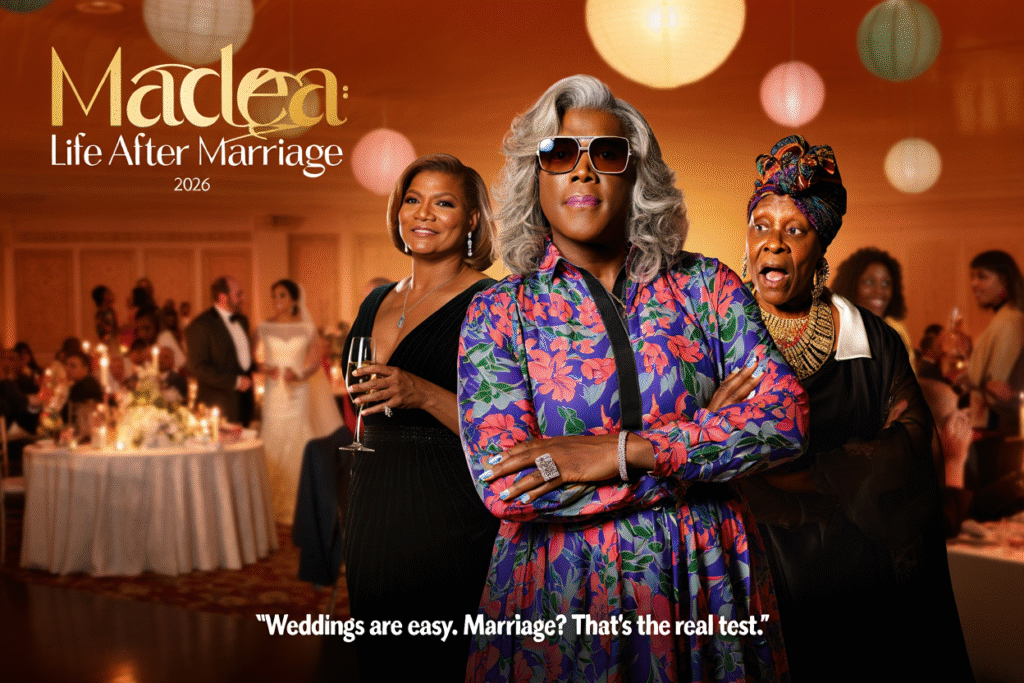
The supporting cast enhances the film without overshadowing its core. Each character represents a different philosophy of love—hopeful, cynical, defensive, or reckless—and the friction between them fuels both comedy and insight. No one leaves the story unchanged, and that evolution feels earned.
In the end, Madea: Life After Marriage succeeds because it understands its audience. It knows people come for laughs, but stay for truth. Beneath the jokes and chaos lies a simple, powerful idea: marriage isn’t about staying in love—it’s about learning how to stay honest. And sometimes, the only person brave enough to tell you that… is Madea.