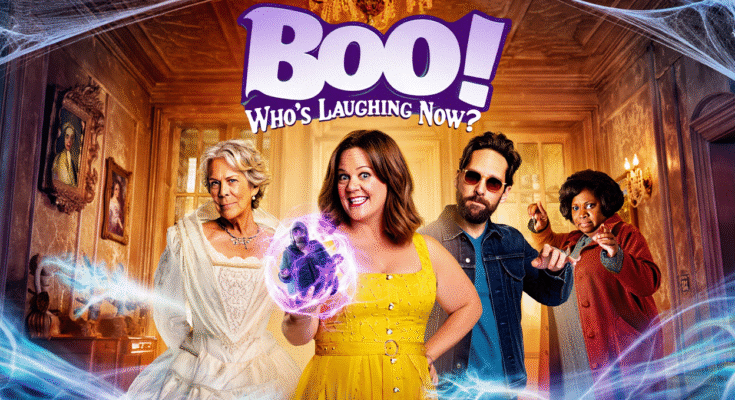
Boo! Who’s Laughing Now? walks into the haunted-house genre with zero interest in whispering quietly. Instead, it kicks the door open, trips over a ghost, and laughs all the way down the hallway. What sounds like a familiar setup quickly becomes a sharp, self-aware horror-comedy that understands the real fear isn’t ghosts — it’s taking life too seriously.
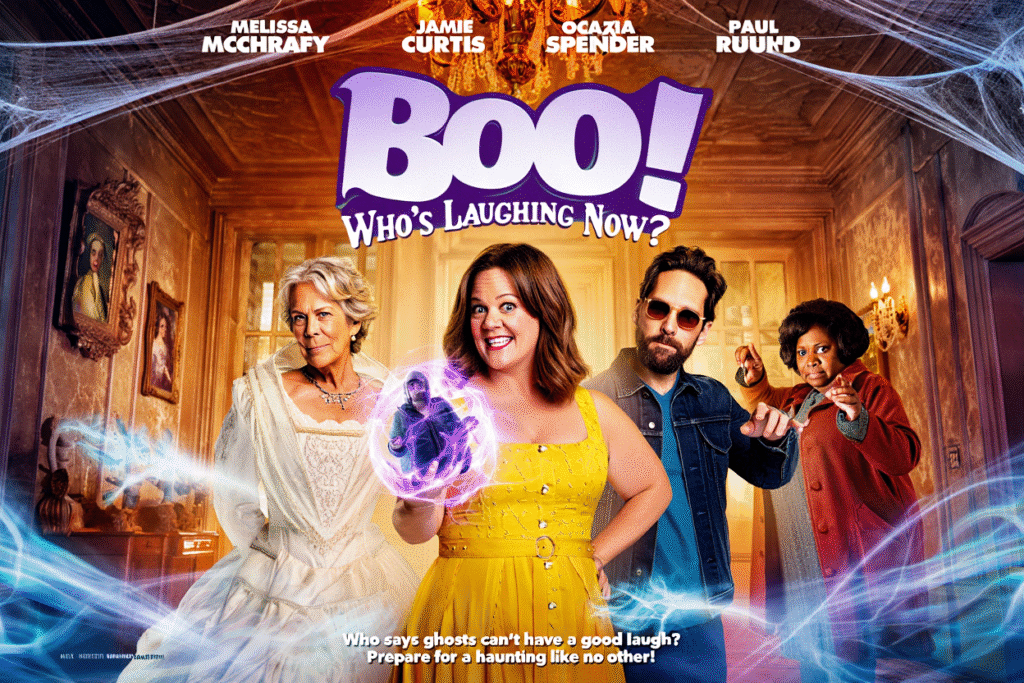
Melissa McCarthy’s Abby is the perfect audience surrogate: skeptical, sarcastic, and completely unimpressed by creaking floors and flying furniture. McCarthy plays her with grounded confidence rather than cartoon chaos, making Abby feel like a real woman who’s seen enough nonsense in life that the supernatural barely registers. Her refusal to be scared becomes the film’s funniest and smartest subversion.
The mansion itself is less a house of horrors and more a dysfunctional afterlife commune. Every room feels lived-in by the dead, layered with personality rather than menace. The film smartly treats haunting as routine — something these ghosts have been doing for so long that even they’re bored of it.
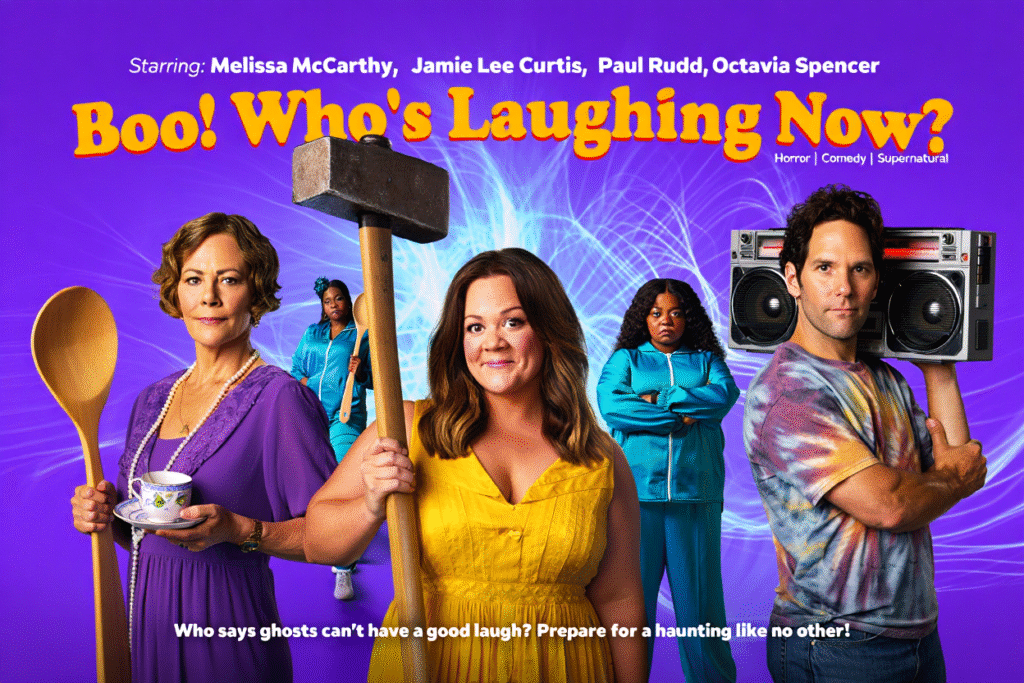
Jamie Lee Curtis shines as Lucille, a ghost who clings to etiquette and social status even in death. Curtis plays her with delicious restraint, letting clipped dialogue and passive-aggressive politeness carry the comedy. Lucille isn’t scary — she’s judgmental, which somehow feels worse and far more relatable.
Paul Rudd’s Bob is chaos in a hoodie, a 90s stoner ghost who treats eternity like one long house party. Rudd leans into charm rather than stupidity, making Bob oddly endearing instead of annoying. Beneath the jokes is a subtle sadness — a man who never quite grew up and now never will.
Octavia Spencer anchors the film emotionally as Ruby, the self-appointed leader of the house. Spencer brings authority without stiffness, humor without exaggeration. Ruby’s tough exterior hides unresolved anger, and the film wisely lets her emotional arc unfold slowly, grounding the absurdity with real feeling.
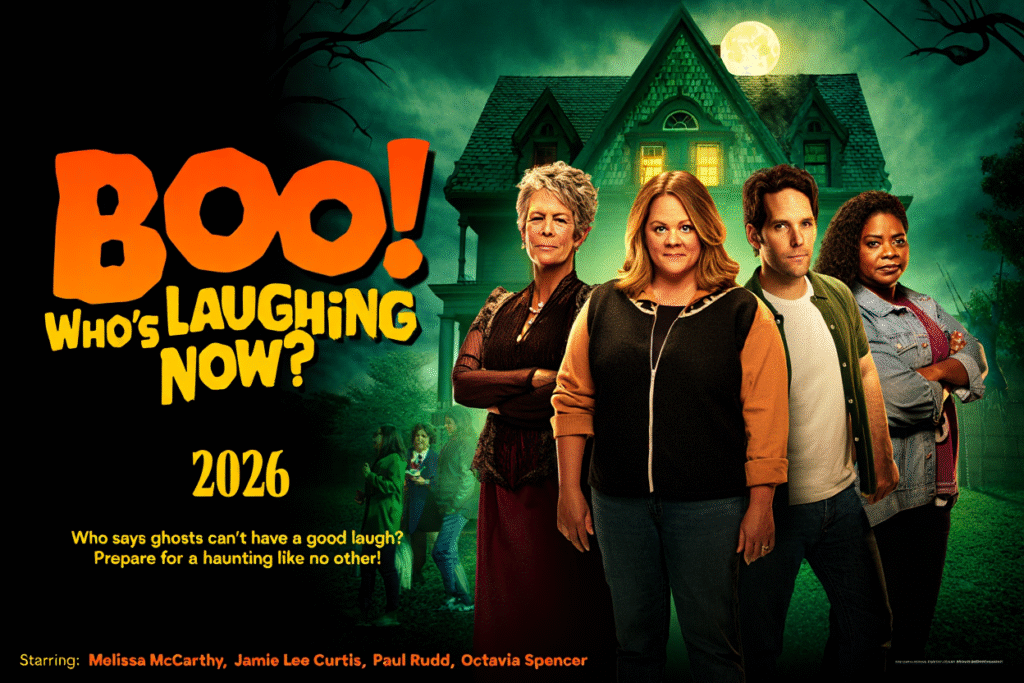
The comedic set pieces — failed jump scares, reversed pranks, and escalating haunt-offs — are inventive without relying on cheap gags. What makes them land is character motivation: everyone involved is trying to protect something, whether it’s a house, a memory, or a sense of belonging.
As Abby begins to learn the ghosts’ backstories, the film quietly shifts gears. The jokes don’t disappear, but they gain weight. Laughter becomes a coping mechanism — for the dead who can’t move on, and for Abby, who’s been running from connection her entire life.
Visually, Boo! Who’s Laughing Now? avoids over-polished effects. The ghosts look tangible, imperfect, almost cozy. The mansion feels warm despite its decay, reinforcing the idea that this isn’t a place of terror, but of unresolved emotion.
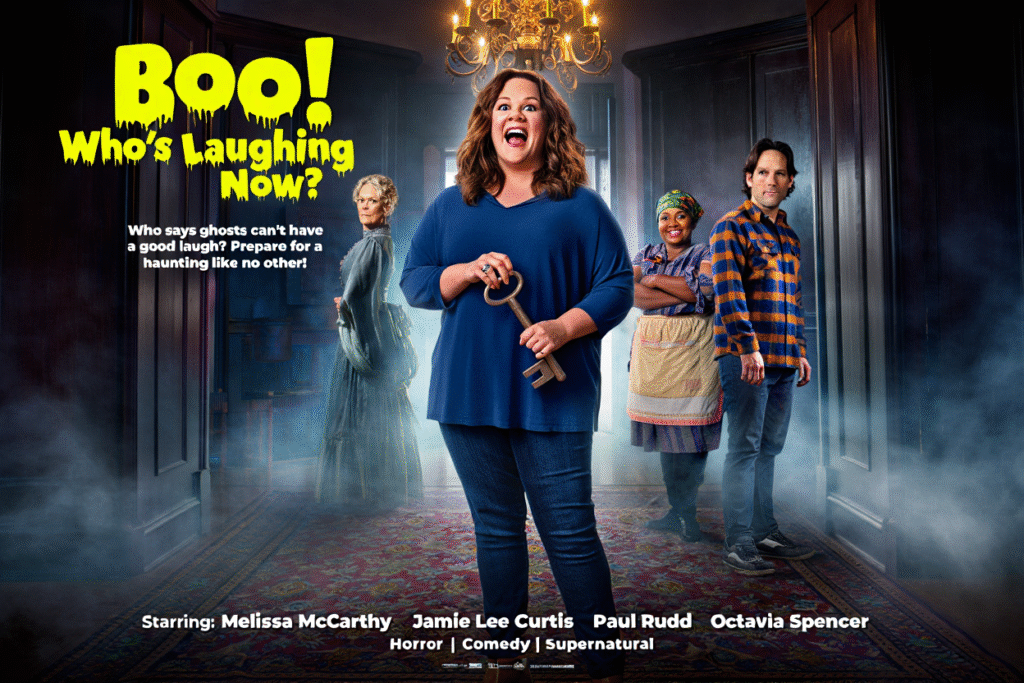
What ultimately sets the film apart is its message: fear loses its power once it’s understood. By refusing to scream, Abby forces the ghosts — and herself — to confront why they’re stuck. The haunting stops being about possession and becomes about permission to let go.
By the time the final act rolls around, Boo! Who’s Laughing Now? has earned its heart. It’s not just a horror-comedy — it’s a story about chosen family, emotional stagnation, and the strange healing power of shared laughter. You come for the jokes, but you stay because, somehow, this haunted house feels like home.