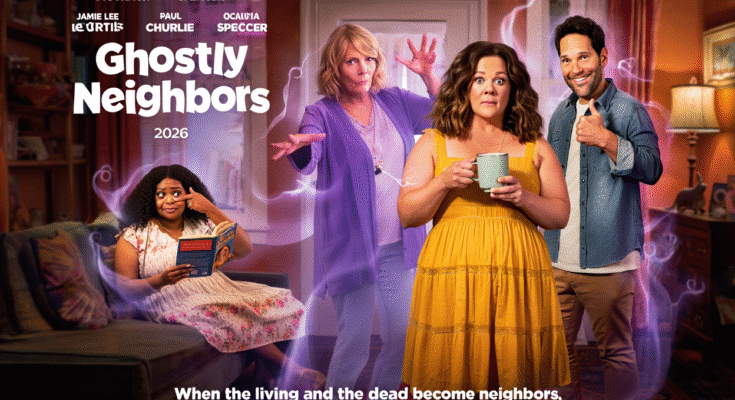
Ghostly Neighbors continues the recent trend of supernatural comedies that prioritize warmth over fear, but what sets it apart is how confidently it blends chaos, heart, and multigenerational humor. Rather than leaning on jump scares or gimmicks, the film builds its laughs from character chemistry and the simple, endlessly funny idea that the afterlife has not kept up with modern living.
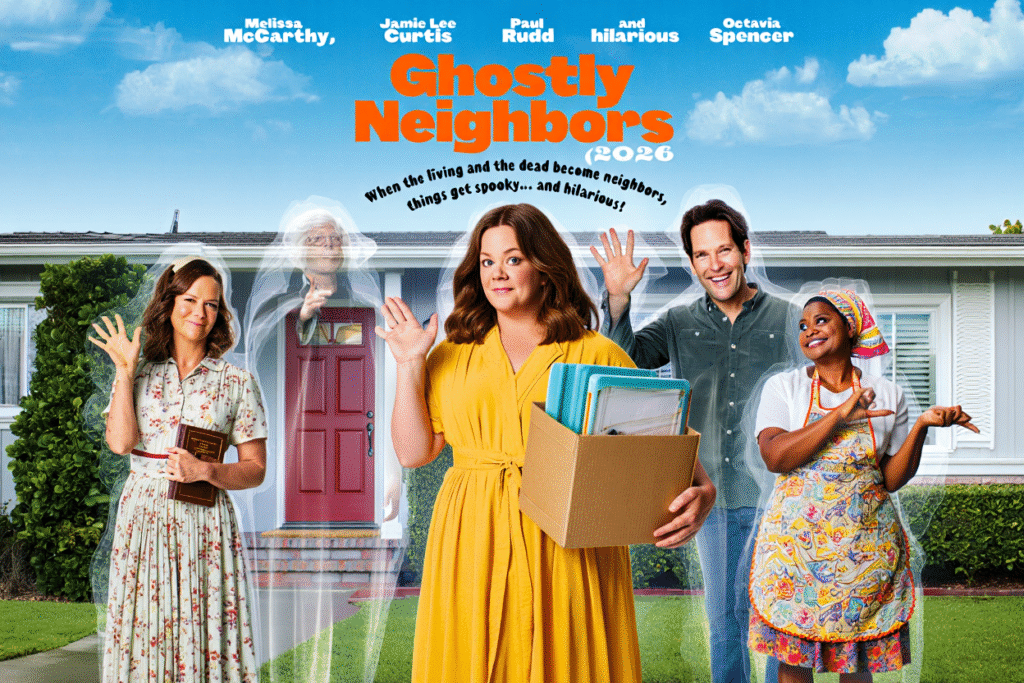
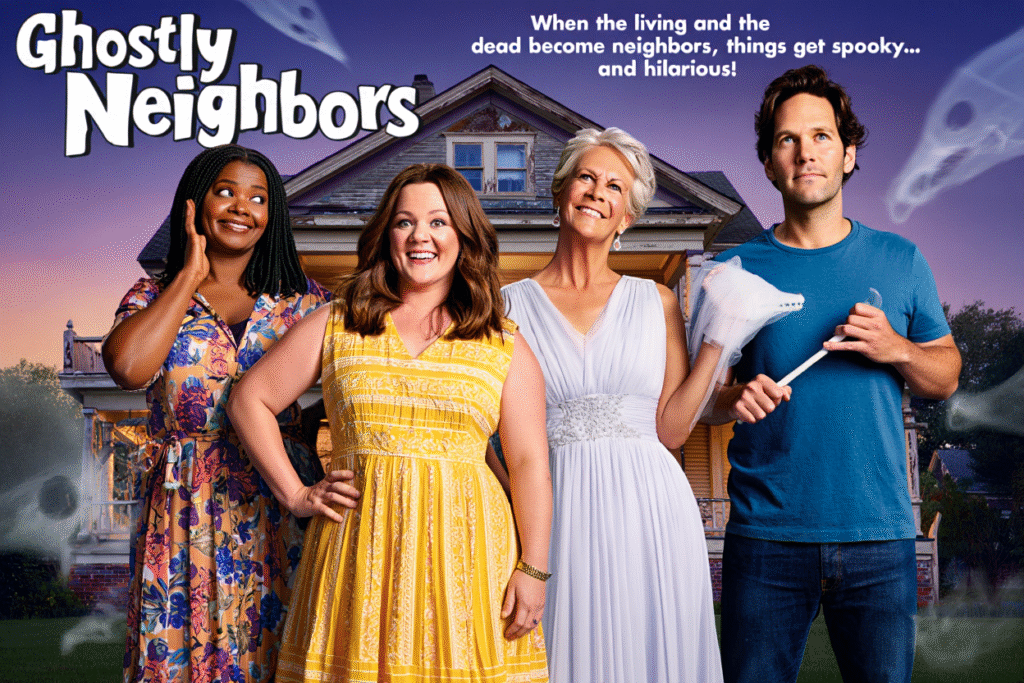
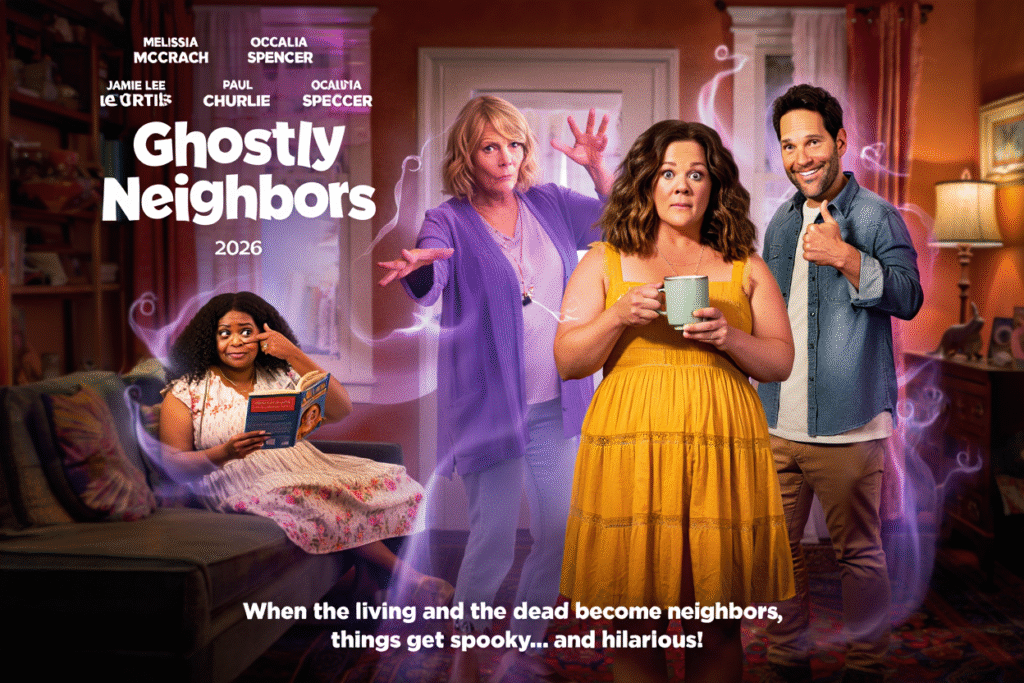
Melissa McCarthy’s Liz is the emotional anchor of the film. As a single mother searching for stability, she grounds the story with sincerity while still delivering her trademark physical comedy and razor-sharp timing. Liz’s exhaustion, resilience, and refusal to be intimidated—even by ghosts—make her instantly likable and deeply relatable. McCarthy plays her not as a caricature, but as someone whose humor is a survival mechanism.
Jamie Lee Curtis shines as Rose, the librarian-turned-ghost who treats haunting like a community outreach program. Rose’s obsession with order, rules, and moral authority clashes beautifully with her inability to control the living world. Curtis balances stern authority with theatrical flair, creating a ghost who is equal parts intimidating, maternal, and absurdly dramatic.
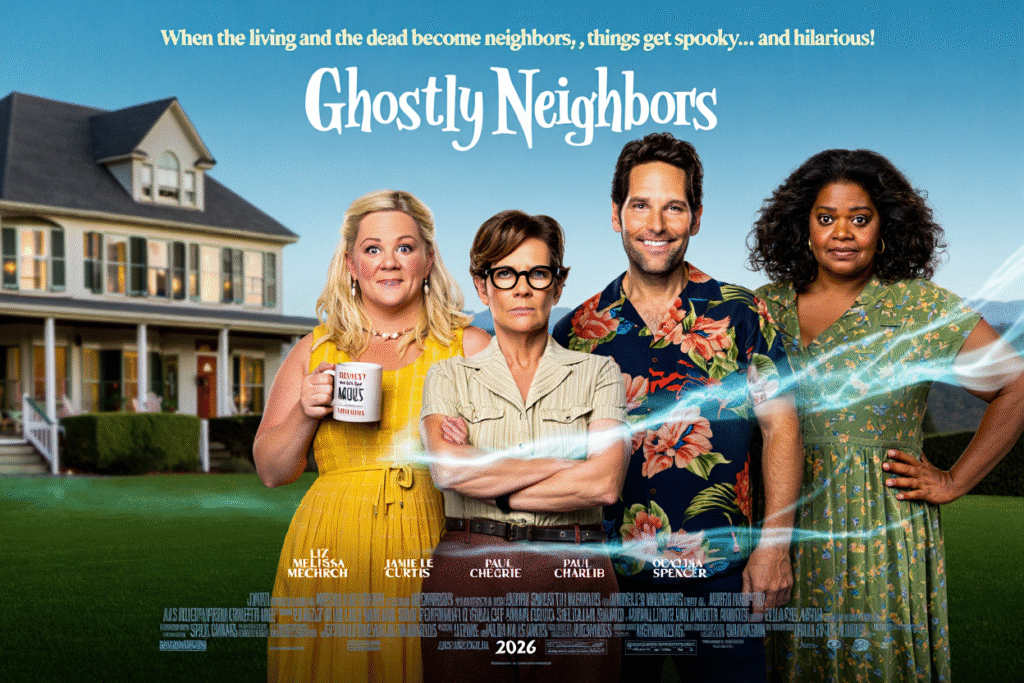
Paul Rudd’s Charlie brings effortless charm to the afterlife. His ghostly pranks never feel mean-spirited; instead, they serve as a reminder that some people refuse to grow up—even in death. Rudd’s performance leans into his natural likability, using understatement rather than slapstick, which makes his scenes quietly hilarious and surprisingly tender.
Octavia Spencer’s Clara is the film’s secret weapon. As the most emotionally intelligent ghost in the house, she observes more than she intervenes, offering dry commentary and subtle wisdom. Spencer gives the character depth beneath the sarcasm, making Clara the connective tissue between the living and the dead—and often the voice of reason when chaos peaks.
One of the film’s strongest elements is its portrayal of Liz’s teenage daughter, who reacts to the ghosts not with terror, but with skepticism, curiosity, and eventual affection. This generational perspective allows the film to explore grief, loneliness, and belonging without becoming heavy-handed. The ghosts aren’t just comedic devices—they’re emotional mirrors.
The humor is situational rather than gross-out, relying on misunderstandings, invisible dinner guests, and bureaucratic haunting rules gone wrong. A standout sequence involving a home inspection spirals into perfectly timed farce, showcasing the ensemble’s chemistry and the film’s commitment to playful absurdity.
Visually, Ghostly Neighbors keeps things cozy rather than gothic. The house feels lived-in, warm, and inviting, reinforcing the idea that this isn’t a horror story—it’s a domestic comedy with paranormal roommates. The ghosts’ presence enhances the home rather than corrupting it, which is a refreshing tonal choice.
At its core, the film is about chosen family. The ghosts’ unfinished business isn’t tied to revenge or trauma, but to connection—the need to matter, to be seen, and to belong somewhere. Liz, unknowingly, provides that purpose simply by letting them exist in her life.
Ultimately, Ghostly Neighbors succeeds because it understands that comedy works best when it’s rooted in empathy. It’s not trying to reinvent the genre, but it executes its premise with confidence, charm, and heart. The result is a feel-good supernatural comedy that reminds us that sometimes the best neighbors are the ones who never really leave.