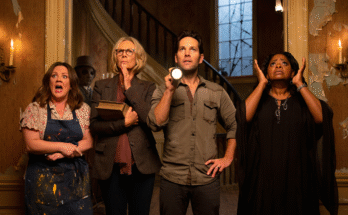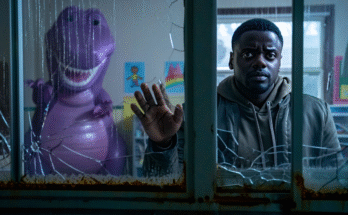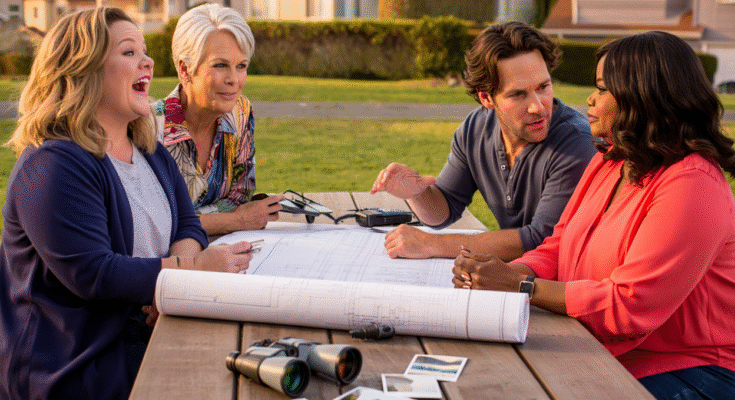
Revenge the Neighbor (2026) takes the familiar nightmare of suburban living—the too-perfect house, the too-friendly smile, the neighbor who knows a little too much—and flips it into a sharp, crowd-pleasing blend of comedy, mystery, and light thriller tension. It’s a film that understands how thin the line is between polite coexistence and all-out war when something feels off next door.
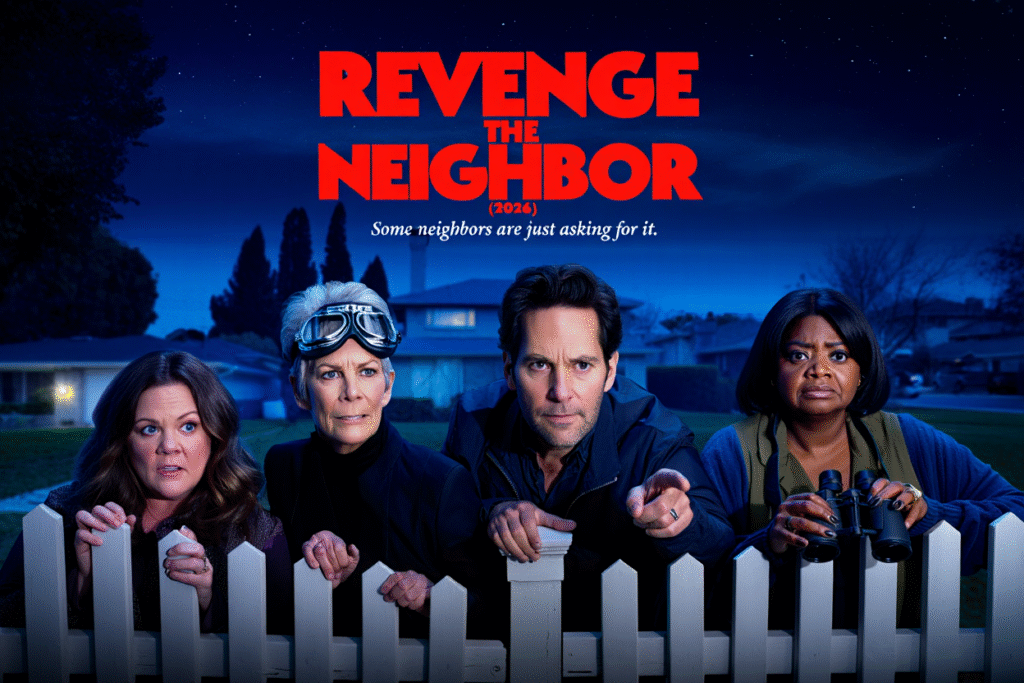
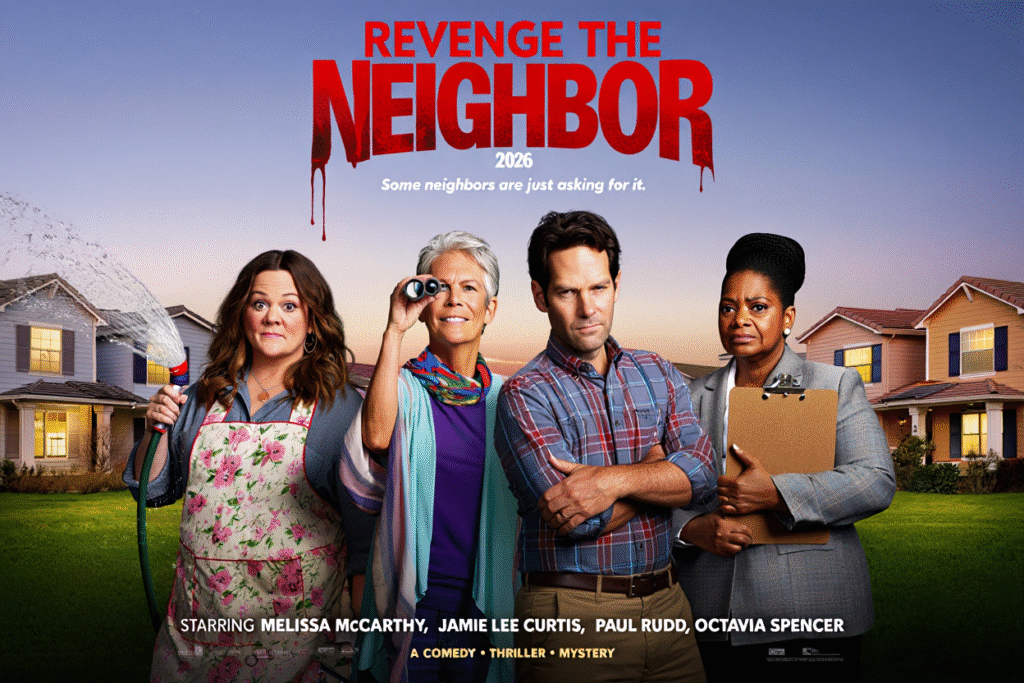
Melissa McCarthy anchors the film as Amanda, a single mom whose instincts are far sharper than anyone gives her credit for. McCarthy balances humor and suspicion beautifully, playing Amanda not as a cartoonish revenge-seeker, but as a woman who slowly realizes that being “nice” won’t protect her family. Her comedic timing lands, but it’s her grounded frustration that gives the story weight.
Jamie Lee Curtis is a standout as Linda, the eccentric best friend who treats neighborhood drama like a competitive sport. Curtis leans into dry wit and barely concealed glee, becoming the film’s chaos catalyst. Every scene she’s in gains momentum, and her chemistry with McCarthy feels effortless, like two women who’ve survived enough nonsense to stop playing nice.
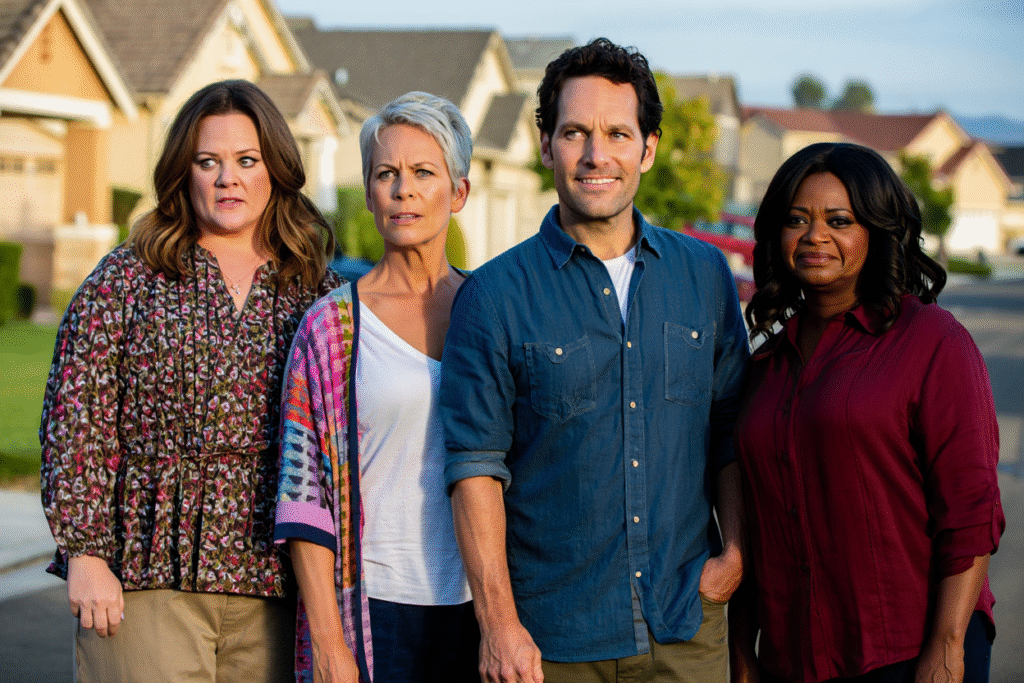
Paul Rudd’s Dave provides the perfect counterbalance. His sarcastic, slightly paranoid neighbor starts as comic relief but gradually becomes essential to the mystery. Rudd excels at playing the guy who jokes to hide anxiety, and as the stakes rise, his shift from observer to participant feels natural and surprisingly satisfying.
Octavia Spencer brings authority and fire as Carol, the neighbor who’s been watching everything unfold long before Amanda notices the cracks. Spencer grounds the ensemble, turning Carol into the group’s moral compass and tactical brain. When she speaks, the film listens—and so does the audience.
The mystery element is deliberately playful rather than dark. Mr. Wilson, the “too-perfect” neighbor, is written as a puzzle box rather than a traditional villain. The film smartly avoids making him overtly menacing at first, letting unease grow through small inconsistencies, half-heard conversations, and escalating suspicion.
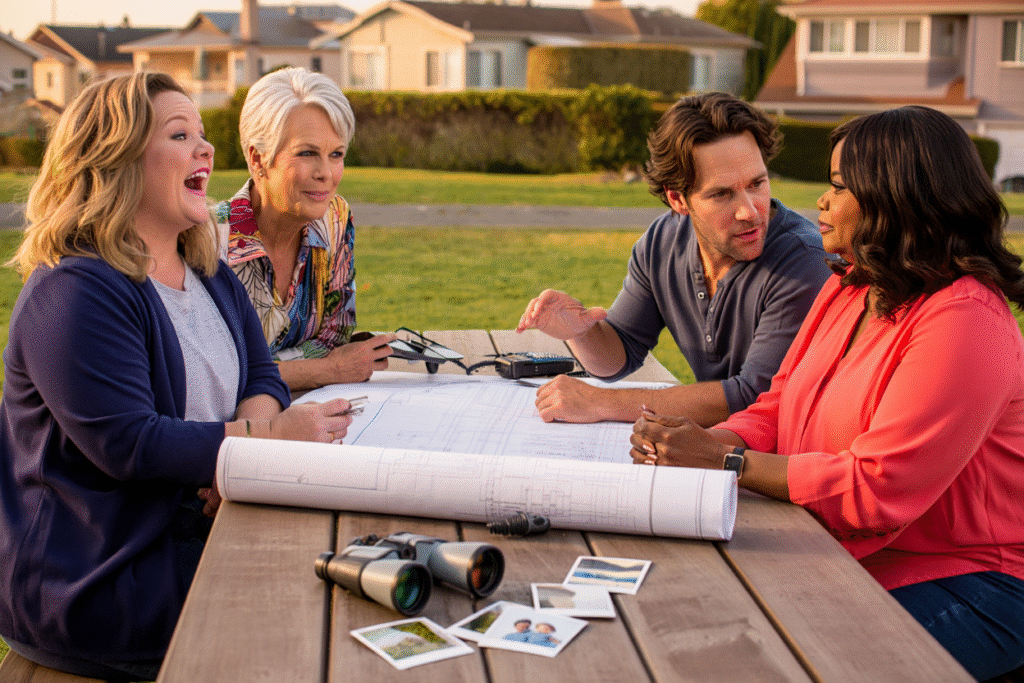
What truly works is how the revenge escalates. The group’s plans start small—petty, almost harmless—but spiral into increasingly elaborate schemes that blur the line between justice and obsession. The comedy comes not just from the antics, but from watching ordinary people realize how much they enjoy pushing back.
Tonally, Revenge the Neighbor walks a careful line. It never becomes mean-spirited, and it resists the urge to turn its characters into caricatures. Even at its most absurd, the film remembers that this is about control, safety, and the fear of being powerless in your own home.
Visually, the film uses pristine suburban imagery to great effect. Bright lawns, clean kitchens, and sunny cul-de-sacs become ironic backdrops for paranoia and plotting. The contrast reinforces the film’s central idea: danger doesn’t always announce itself—it waves from the driveway.
By the time the story reaches its final twist, Revenge the Neighbor has fully embraced its identity as a cathartic ensemble comedy with mystery seasoning. It’s not about winning—it’s about reclaiming agency. Funny, tightly paced, and powered by a cast that clearly enjoys every ridiculous turn, the film proves that sometimes the most satisfying revenge isn’t destruction… it’s exposure.