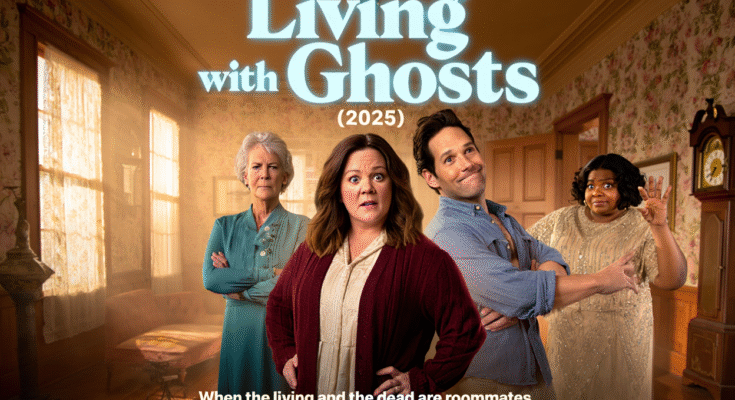
Living with Ghosts takes a familiar supernatural premise and transforms it into a warm, witty exploration of family, healing, and unexpected companionship. Rather than leaning on horror tropes, the film embraces comedy and heart, reminding us that sometimes the spirits who haunt us aren’t there to scare us — they’re there to help us survive.
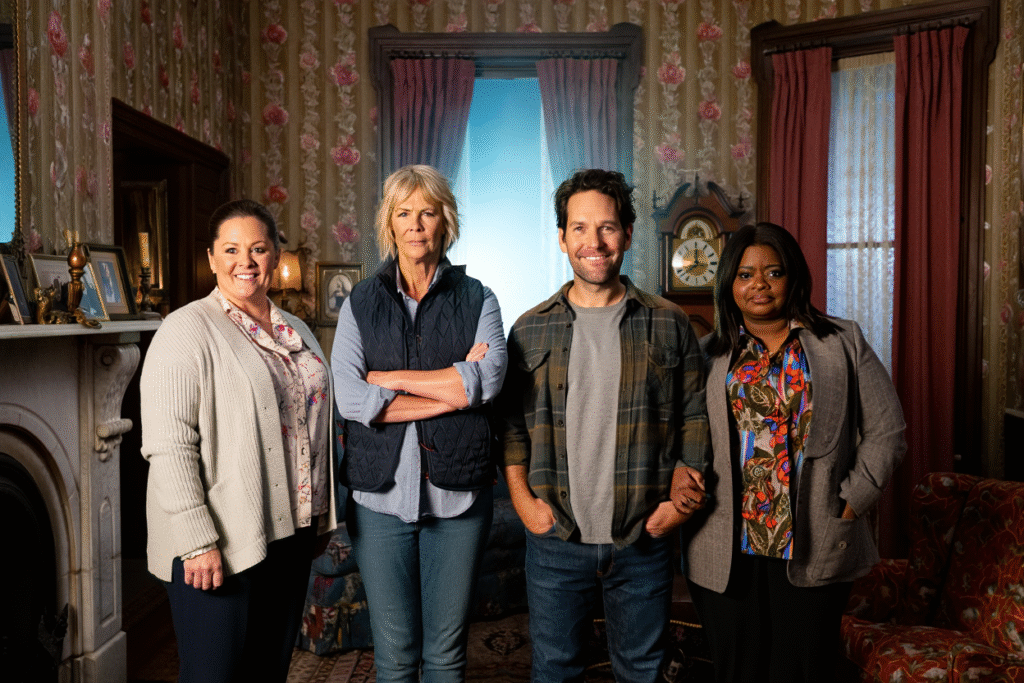
Melissa McCarthy leads the film as Kate, a single mother chasing a fresh start after life has worn her down. McCarthy balances her trademark physical comedy with emotional sincerity, crafting a character who is exhausted, guarded, and quietly hopeful. Kate’s move into the old house isn’t just about changing addresses — it’s about reclaiming stability for herself and her daughter.
The revelation that the house is already occupied sets the tone for the film’s playful charm. These ghosts are not malevolent forces but lingering personalities frozen in unfinished lives. The humor doesn’t come from terror, but from clashing habits, miscommunication, and the awkward reality of sharing space with people who technically no longer exist.
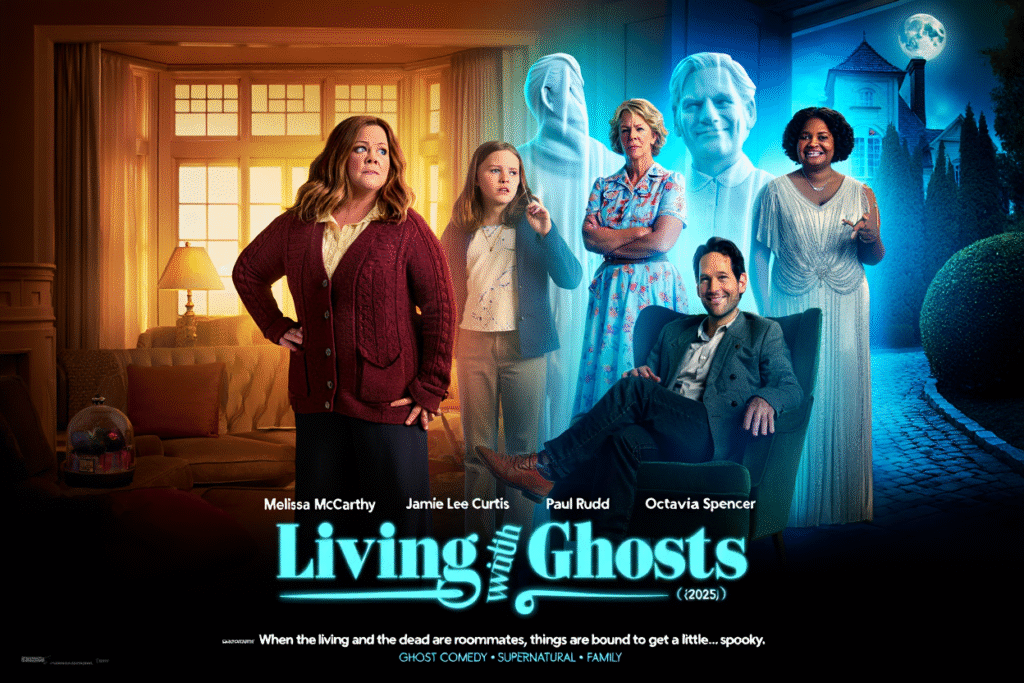
Jamie Lee Curtis shines as Rose, the no-nonsense ghost who has appointed herself guardian of the house. Curtis brings authority and dry wit to the role, making Rose feel less like a haunting presence and more like an overly strict landlord from beyond the grave. Her refusal to be sentimental adds sharp comedic contrast to the film’s softer moments.
Paul Rudd’s Dave is the embodiment of charming laziness, a ghost who drifts through eternity with zero urgency and endless sarcasm. Rudd’s natural likability makes Dave instantly endearing, and his inability to commit to anything — even in death — becomes one of the film’s funniest running gags.
Octavia Spencer’s Clara provides the film’s emotional backbone beneath the sarcasm. As the house’s protective spirit, she is suspicious of Kate’s presence for reasons that slowly unfold. Spencer delivers her trademark blend of humor and depth, turning Clara into a character whose toughness masks old wounds and unresolved loyalty.
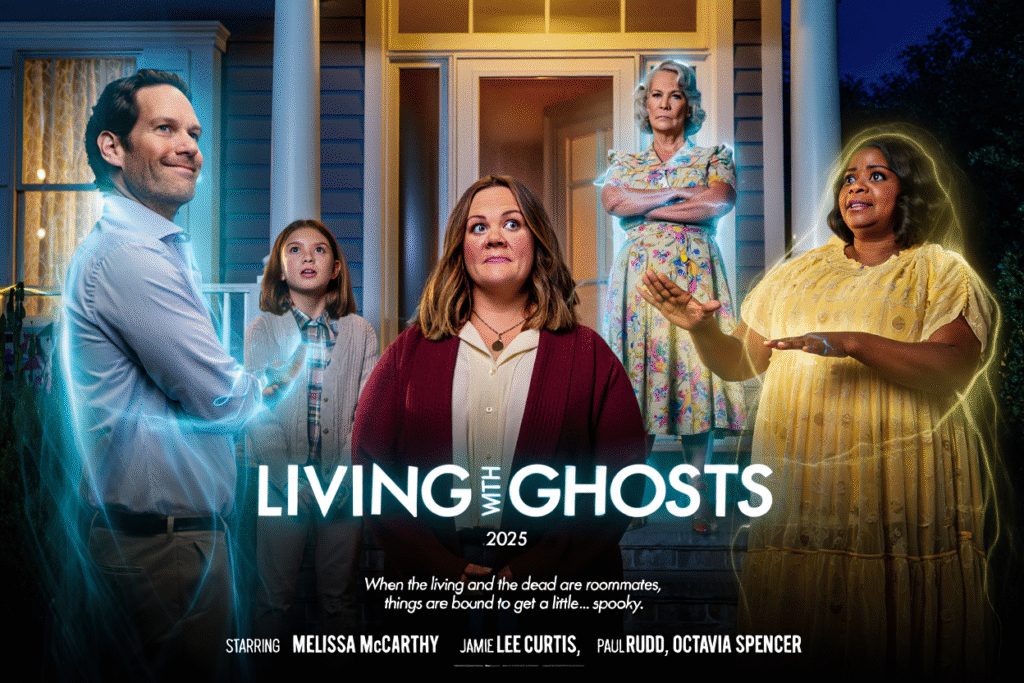
The dynamic between Kate and the ghosts evolves organically. Initial fear gives way to negotiation, frustration, and eventually reliance. The ghosts offer unsolicited dating advice, outdated parenting tips, and emotional insights Kate didn’t realize she needed. These interactions form the heart of the film, highlighting how support can come from the most unexpected places.
What elevates Living with Ghosts beyond simple comedy is its treatment of grief and stagnation. Both Kate and the ghosts are stuck — some emotionally, some literally. The film gently suggests that moving on doesn’t always mean leaving something behind; sometimes it means learning how to coexist with the past.
Visually, the film leans into cozy supernatural aesthetics. The house feels lived-in rather than cursed, filled with warm lighting, creaky floors, and familiar chaos. The ghosts are integrated seamlessly into everyday life, reinforcing the idea that the supernatural here is an extension of domestic reality, not an intrusion.
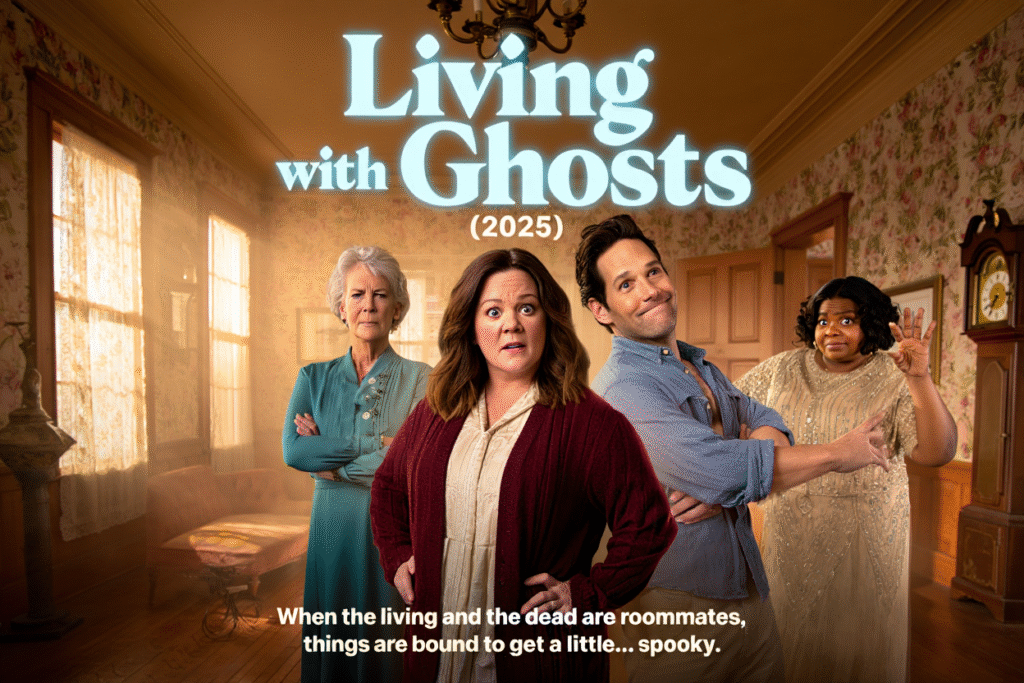
The arrival of a real estate agent introduces stakes without turning the story cynical. The threat of exposure forces both the living and the dead to work together, transforming the house into a shared sanctuary worth protecting. This collaboration brings the film toward its emotional crescendo, emphasizing unity over fear.
By the time the story reaches its conclusion, Living with Ghosts reveals itself as less about spirits and more about belonging. It’s a film that celebrates unconventional families, imperfect healing, and the strange comfort of knowing you’re not alone — even when life feels haunted.
Warm, funny, and unexpectedly touching, Living with Ghosts proves that sometimes the afterlife isn’t about letting go — it’s about learning how to live again, together.