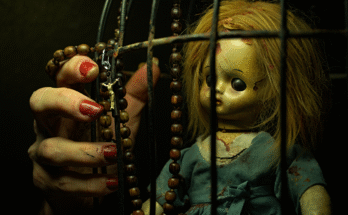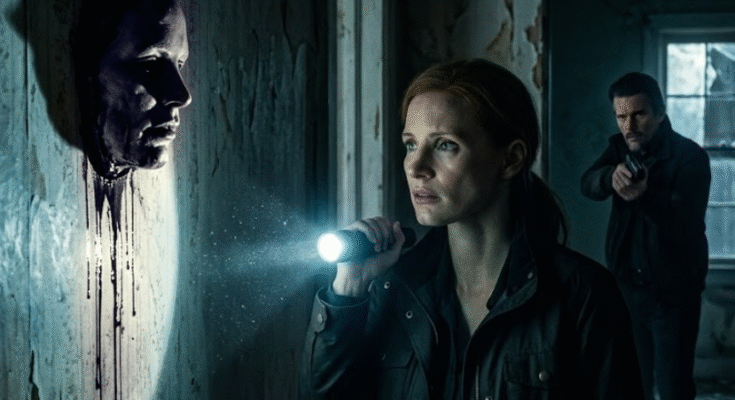
The Mask of Skin is not a horror film that asks you to look away—it dares you to look closer. From its opening moments, the film establishes an atmosphere of suffocating dread, where identity itself becomes the most fragile and terrifying thing a person can lose. This is psychological horror at its most invasive, crawling under the skin long before it ever tears it away.
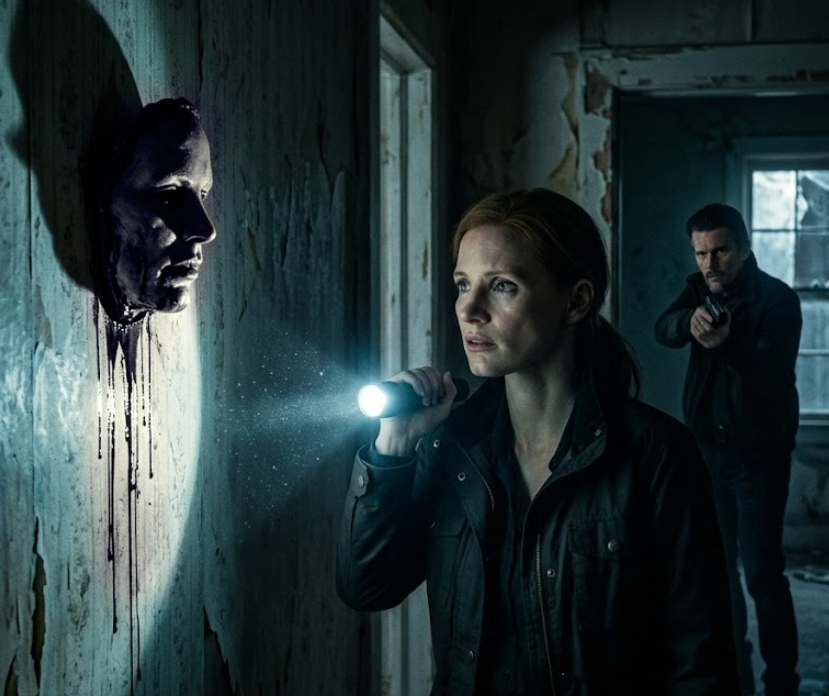
Jessica Chastain delivers a commanding performance as Detective Sarah Carter, grounding the film’s grotesque premise in emotional realism. Sarah is not portrayed as an unshakable hero, but as a woman whose sense of self is slowly eroded by what she uncovers. Chastain’s controlled intensity makes every revelation feel personal, as if each mask discovered brings her closer to losing her own face.
Ethan Hawke’s Detective Michael Williams serves as a quiet counterbalance—measured, weary, and deeply human. His presence anchors the investigation in moral tension rather than procedural routine. Hawke plays a man who understands that some truths, once known, cannot be unseen, and his growing fear is as compelling as any supernatural threat.
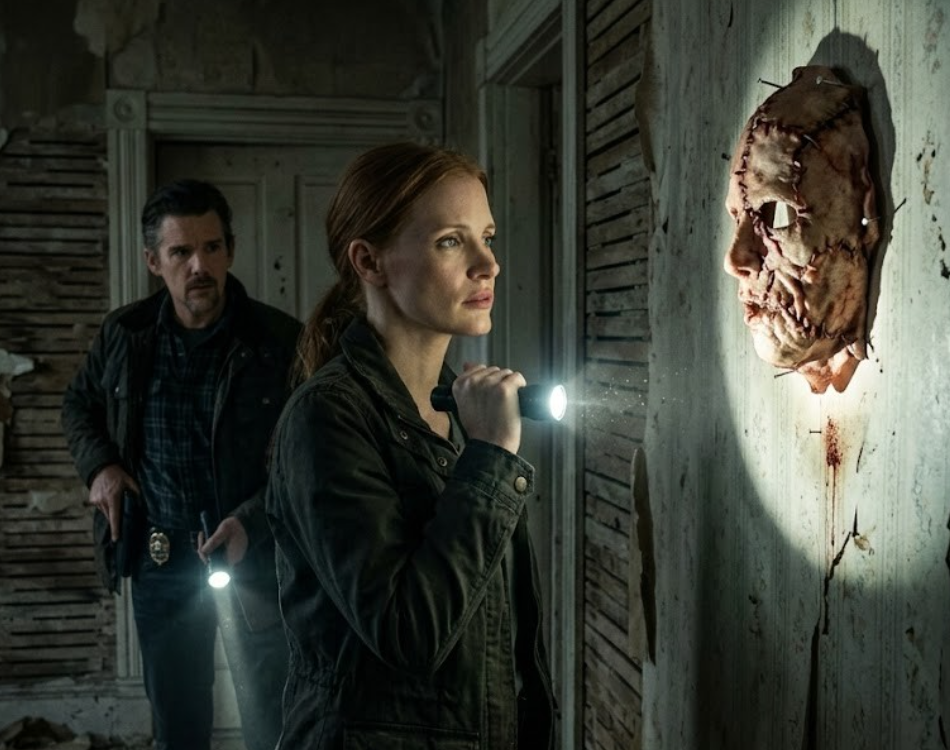
Tessa Thompson’s enigmatic historian adds an intellectual menace to the film. Her character operates in the gray space between knowledge and complicity, offering answers that feel both illuminating and dangerous. Thompson brings an eerie calm to the role, suggesting that understanding evil does not protect you from it—it invites it closer.
Bill Skarsgård’s involvement looms like a shadow over the film, even when he isn’t onscreen. His presence amplifies the unsettling nature of the cult, reinforcing the idea that horror here is not tied to a single villain, but to a belief system that feeds on obsession and desire. The cult members are terrifying not because they are monstrous, but because they are convinced.
The concept of skin masks as vessels of memory is where the film truly distinguishes itself. This is not violence for shock value; it is horror rooted in identity theft at the most intimate level. The idea that wearing another person’s skin allows you to inherit their memories, traumas, and secrets transforms the act into something deeply psychological and profoundly disturbing.
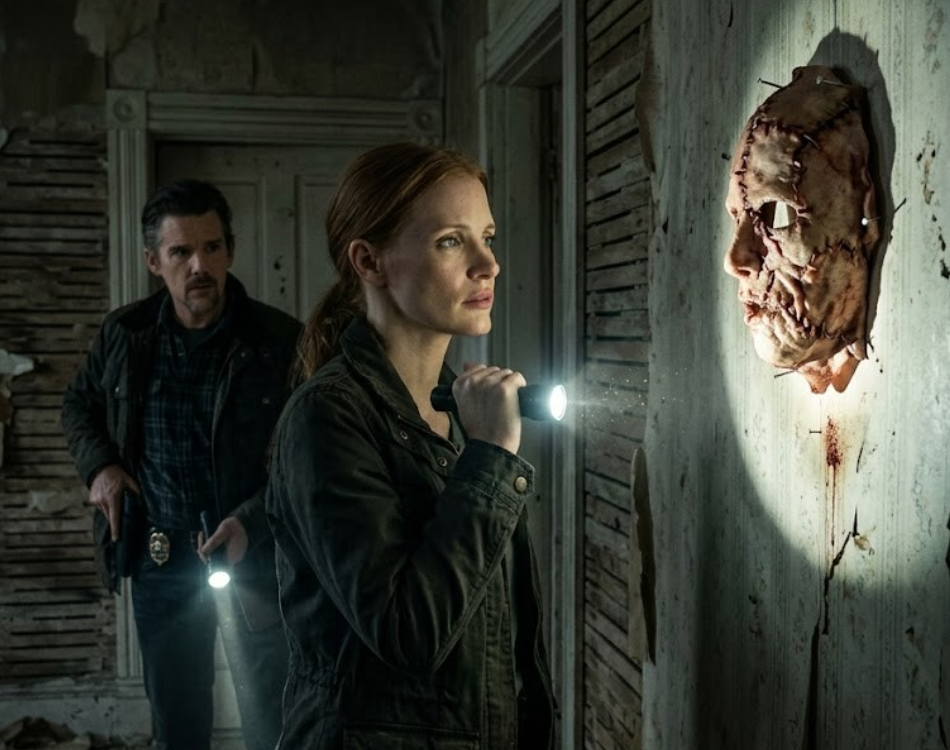
Visually, The Mask of Skin is restrained yet merciless. The camera lingers just long enough to let discomfort settle, favoring suggestion over excess. Raw textures, muted colors, and claustrophobic framing create a world where everything feels too close, too personal, too exposed.
The pacing is deliberately disorienting. As Sarah’s investigation deepens, the film fractures reality itself—faces blur, motivations shift, and trust becomes impossible. The audience, like Sarah, is forced to question who is real and who is merely wearing a convincing mask.
At its core, the film is about obsession: the desire to become someone else, to escape one’s own failures by inhabiting another life. The cult’s rituals reflect a universal fear—that beneath our social masks lies something hollow, unfinished, or unworthy of love.
The final act descends into psychological madness rather than explosive confrontation. Instead of offering clean answers, the film leaves scars. The horror does not end when the mystery is solved; it lingers in the unsettling realization that identity is far more fragile than we want to believe.
The Mask of Skin is not an easy watch, nor does it want to be. It is a haunting meditation on selfhood, memory, and the faces we present to the world. Long after the credits roll, the film leaves you with one chilling question: if someone wore your face, would they become you—or would they reveal who you truly are?