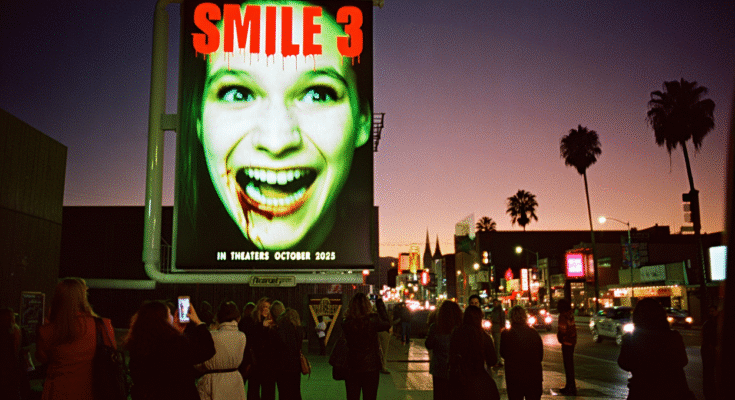
There’s something uniquely disturbing about a smile that doesn’t belong. The Smile franchise has always understood that fear doesn’t need shadows or monsters—it only needs something slightly off. With Smile 3 officially in production, the promise isn’t just more horror… it’s a deeper descent into something far more psychological, far more inescapable.
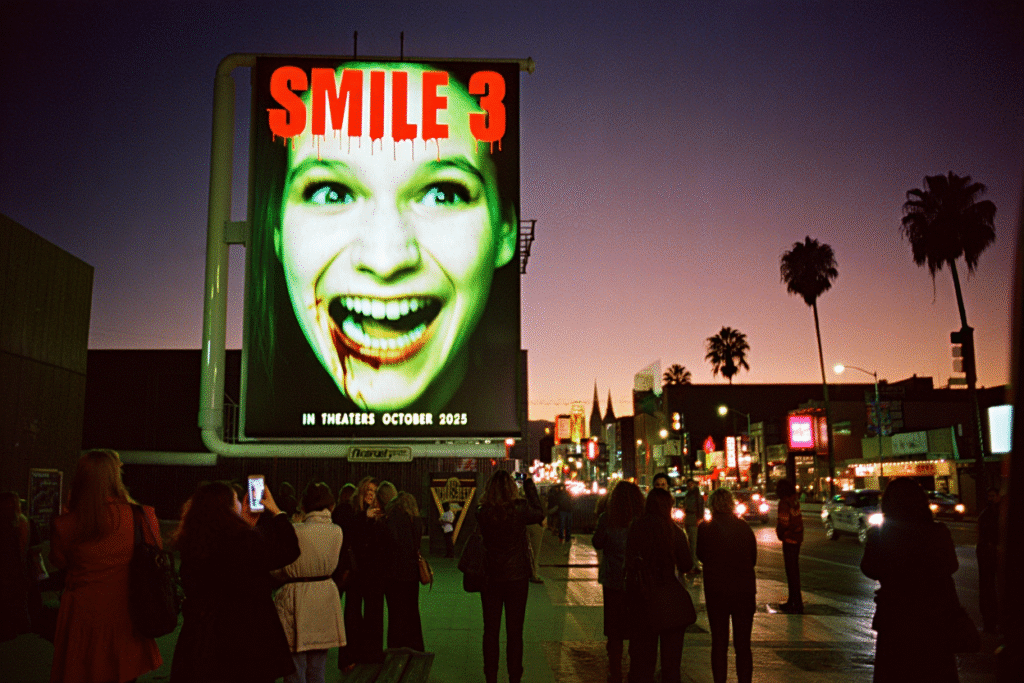
What made the first two films linger wasn’t just the curse—it was the idea that trauma itself could become contagious. Not through touch, not through sound, but through experience. Pain, once witnessed, becomes inherited. Smile 3 seems ready to take that concept and push it to its most terrifying conclusion.
This time, the story is expected to move beyond survival and into understanding. Where did the curse begin? Why does it take the form of that grotesque, unnatural smile? And perhaps most disturbingly—can something like this even have an origin, or has it always existed, waiting for the right moment to surface?
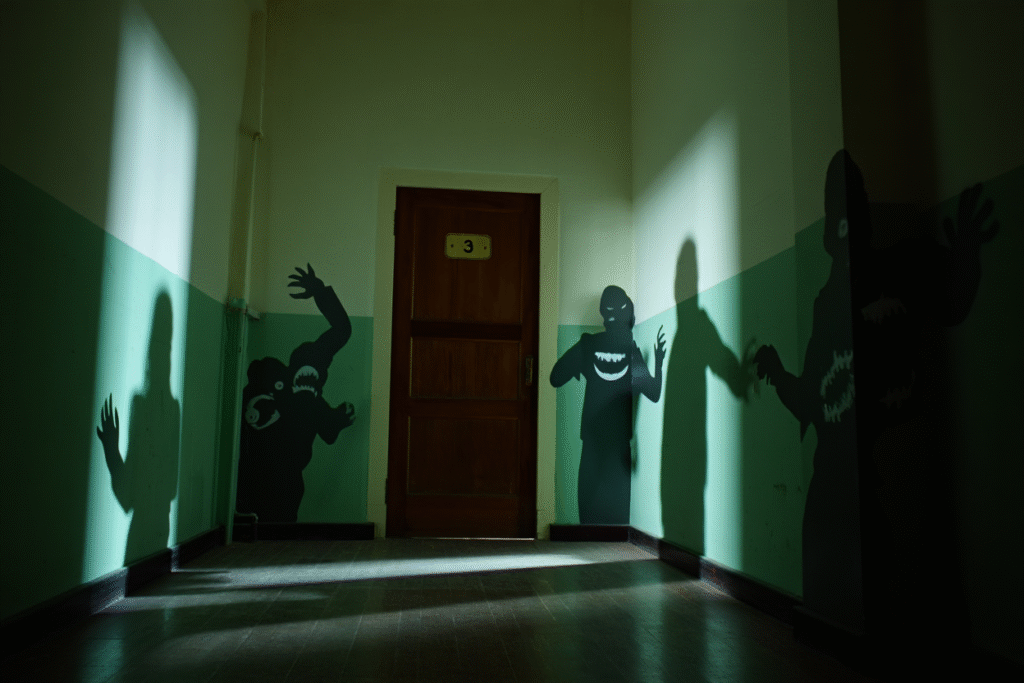
The genius of the Smile series lies in its simplicity. A face. A grin. A moment that lasts just a little too long. It’s horror stripped down to its most primal form—the fear of recognizing something human… that isn’t human anymore. And in Smile 3, that recognition feels like it will become even more blurred.
There’s also a growing sense that the curse is evolving. In previous films, it followed a pattern—a chain of suffering passed from one victim to the next. But what if that chain begins to break? Or worse, what if it begins to spread faster, beyond control, beyond understanding?
Visually, the franchise has always thrived on contrast—normal life interrupted by something deeply wrong. A quiet room. A familiar face. And then, that smile. If Smile 3 leans further into this, it could create an atmosphere where safety itself becomes an illusion.
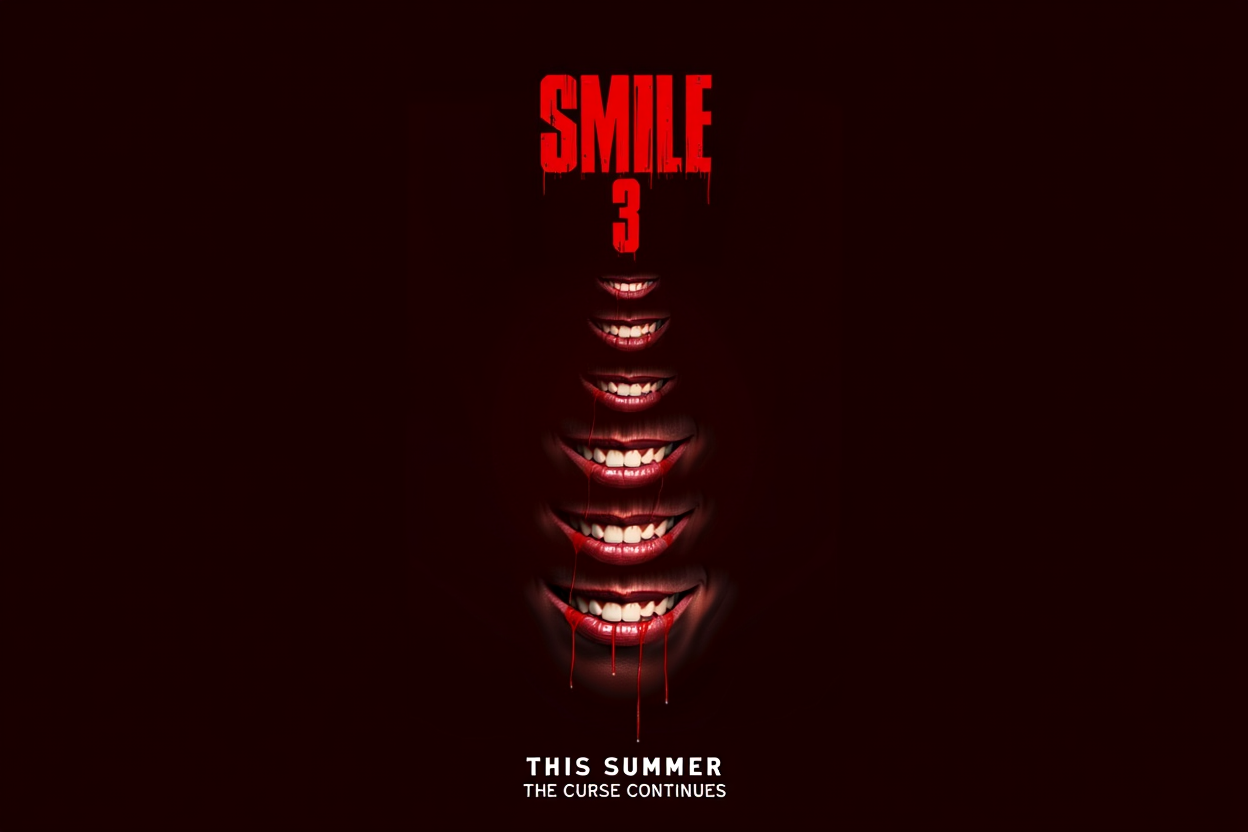
But beneath the horror, there’s always been something painfully human at the core. The curse doesn’t just kill—it isolates. It traps its victims inside their own minds, forcing them to question reality, to doubt themselves, to carry a burden no one else can see. That psychological weight is what truly makes the series unsettling.
If the third installment explores the origins of the curse, it also risks answering too much. Part of what makes Smile effective is its ambiguity—the sense that some things are not meant to be understood. The challenge will be revealing just enough to deepen the fear, without taking away the mystery that gives it power.
There’s also the question of scale. Will Smile 3 remain intimate, focused on a single unraveling mind? Or will it expand into something larger, suggesting that this curse is no longer containable? Either direction carries its own kind of terror.
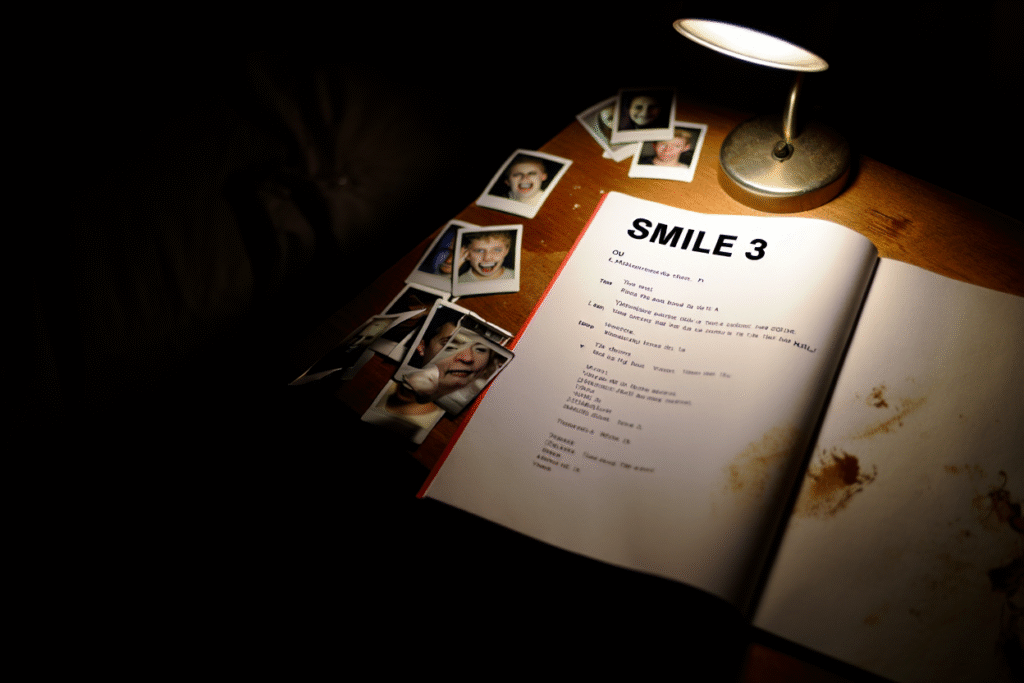
What’s certain is that the franchise has found a way to tap into a very modern fear—the idea that trauma spreads, that pain echoes, that what we witness can change us in ways we can’t undo. And in a world already filled with anxiety and uncertainty, that idea hits uncomfortably close to home.
Smile 3 doesn’t just promise more scares—it promises a deeper understanding of fear itself. Not the loud, explosive kind, but the quiet, creeping dread that builds slowly… until it’s impossible to ignore.