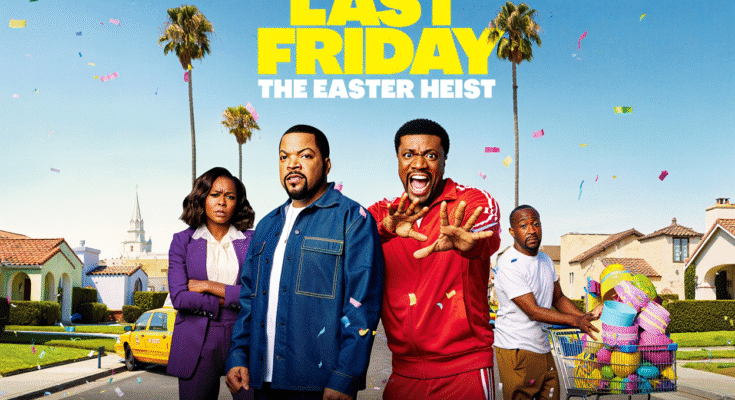
There’s something about a Friday movie that doesn’t try to reinvent comedy—it just leans into the madness of everyday life and lets it spiral. Last Friday: The Easter Heist understands that formula perfectly, delivering a loud, ridiculous, and oddly heartfelt return to a world where trouble isn’t avoided—it’s practically scheduled.
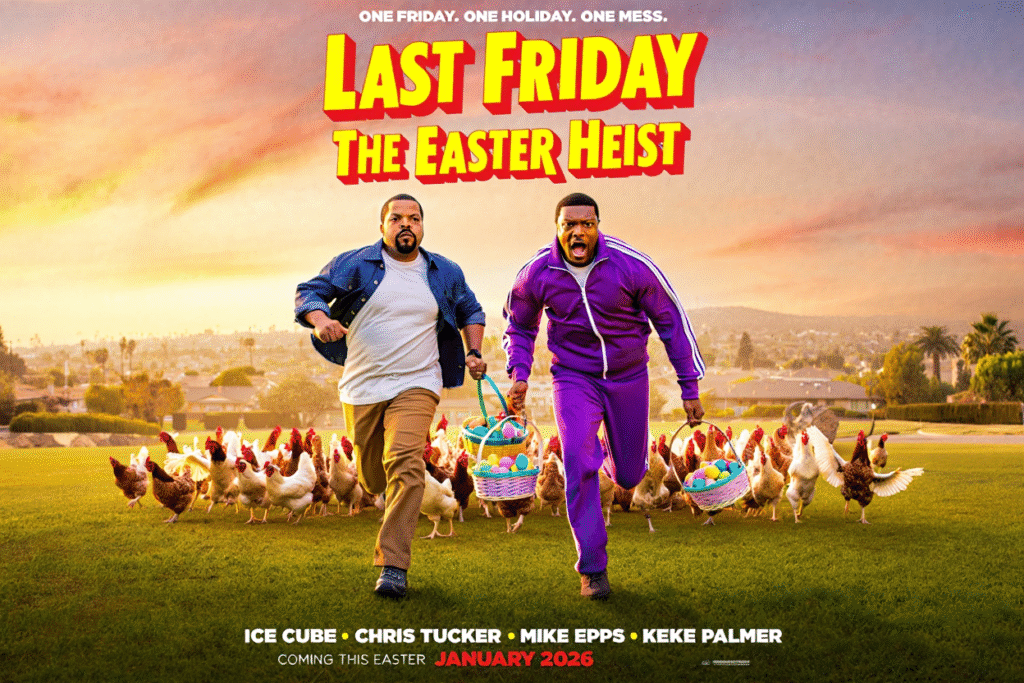
From the jump, the film drops us right back into the neighborhood energy that made the franchise iconic. Nothing feels polished or overproduced—and that’s exactly the charm. It’s messy, unpredictable, and alive with the kind of humor that comes from people just trying (and failing) to keep things together.
Ice Cube’s Craig remains the calm center of the storm, and that contrast is still comedy gold. While everything around him explodes into chaos, he carries that same grounded, slightly exhausted energy—like a man who knows better but somehow still ends up involved every single time.
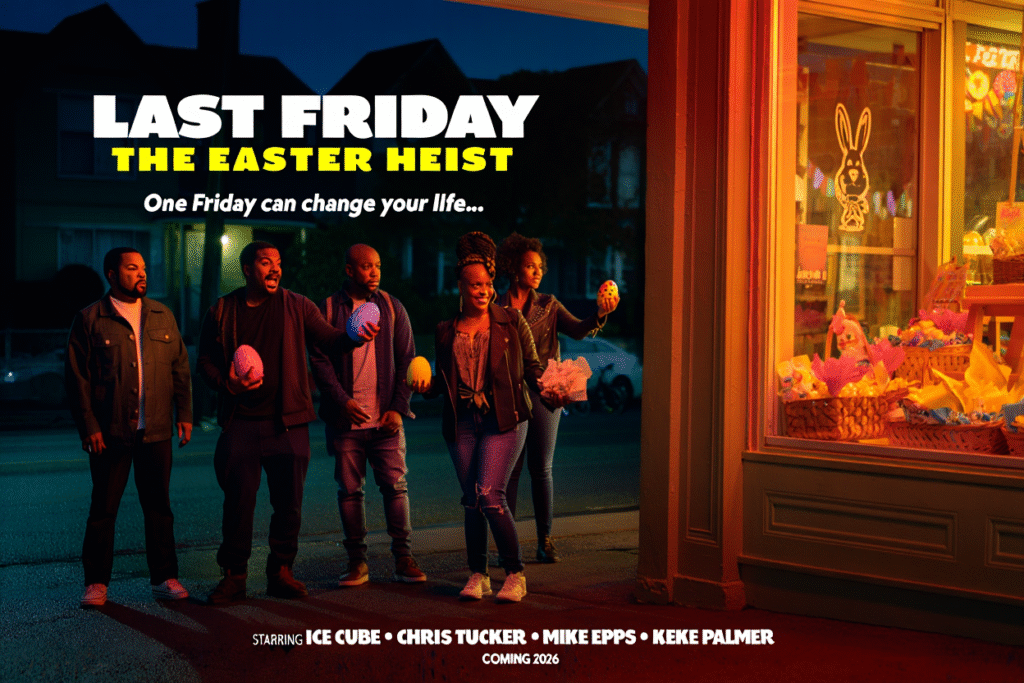
Then there’s Chris Tucker—loud, fast, and completely unstoppable. His return injects the film with a chaotic rhythm that never really slows down. Every line feels like it’s on the verge of going off the rails, and honestly, that’s where the magic is. He doesn’t just deliver jokes—he detonates them.
Mike Epps continues to thrive in the art of bad decisions. Day-Day isn’t just unlucky—he’s the kind of character who walks directly into disaster with confidence. His choices drive much of the film’s chaos, and watching everything unravel because of him becomes part of the fun.
Keke Palmer is a standout addition, bringing a sharper, more self-aware energy to the mix. She feels like the audience’s voice inside the madness—constantly questioning the absurdity, yet somehow still dragged along for the ride. Her presence modernizes the dynamic without losing the original spirit.
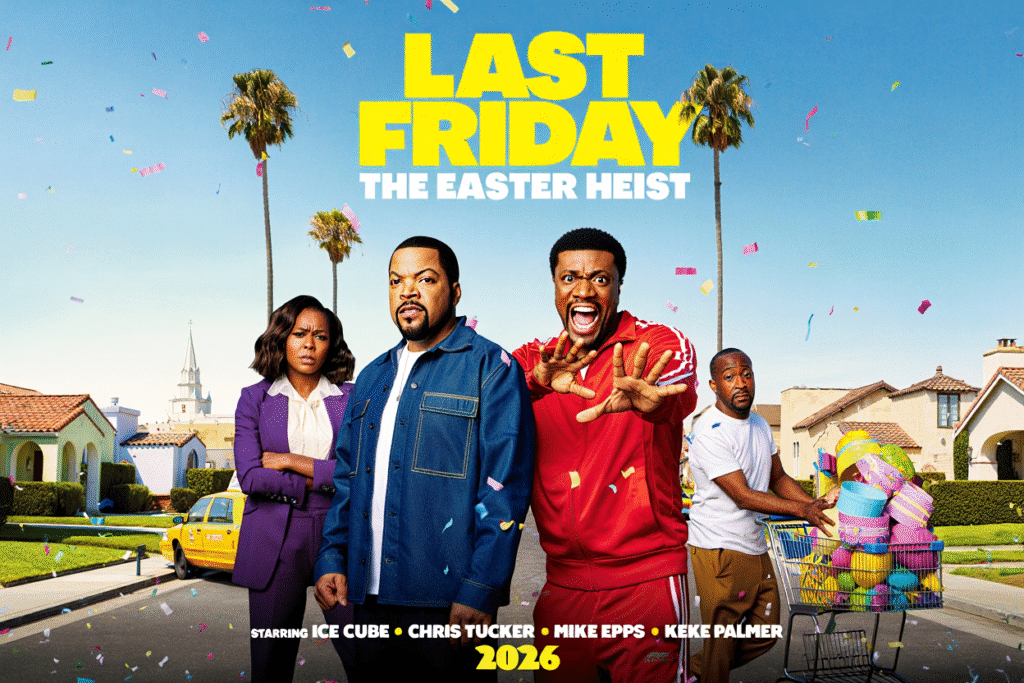
The plot itself—a missing stash of cash hidden in Easter baskets—is intentionally ridiculous. But that’s the point. This isn’t a heist movie in the traditional sense; it’s a comedy of errors, where every attempt to fix the situation only digs the hole deeper.
What really works is how the film uses its setting. The neighborhood isn’t just a backdrop—it’s a character. From nosy neighbors to unexpected alliances, every corner feels alive, contributing to the escalating chaos in ways that feel both absurd and strangely authentic.
The humor leans heavily into physical comedy, rapid-fire dialogue, and situational disasters. Not every joke lands perfectly, but the film doesn’t pause long enough for you to dwell on it. It keeps moving, stacking one ridiculous moment on top of another until you’re just along for the ride.
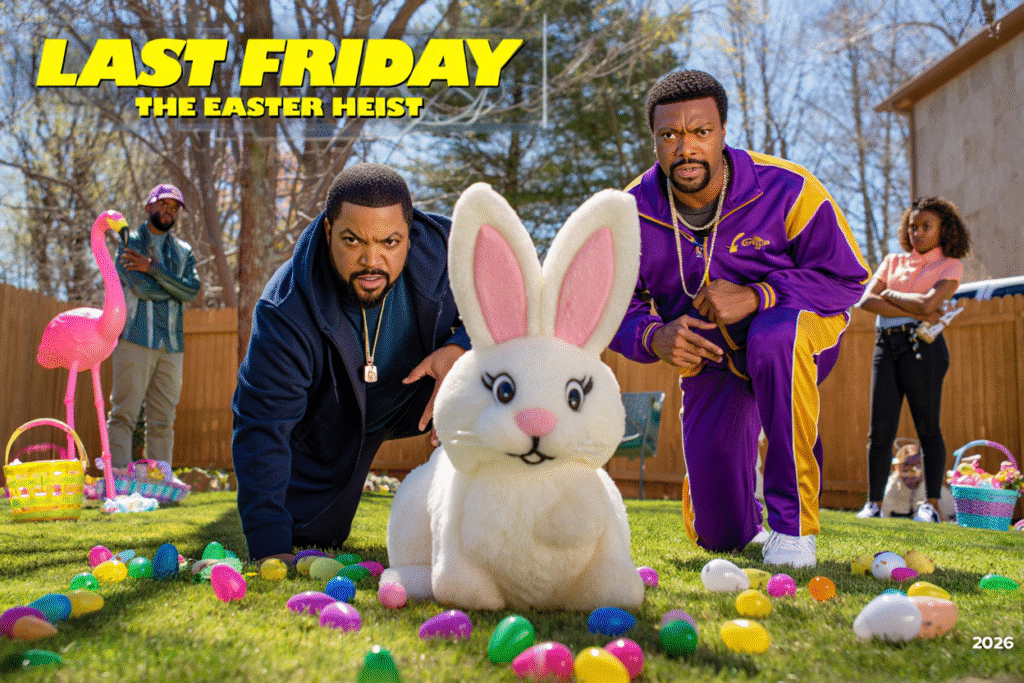
But underneath all the noise, there’s a familiar warmth. The friendships, the loyalty, the sense that no matter how bad things get, these people will show up for each other—it’s what gives the film its heart. The chaos feels earned because the relationships feel real.
Visually, the film doesn’t try to be flashy. It sticks to its roots—daylight streets, cramped houses, chaotic gatherings—letting the performances and energy carry the experience. It’s simple, but it works.
By the time everything comes crashing together in its over-the-top finale, the film reminds you why the Friday series has lasted this long. It’s not about the plot, the money, or even the heist.