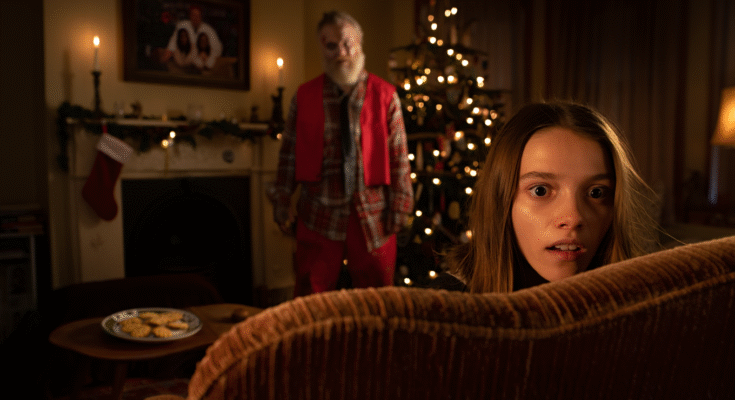
The snow falls quietly at first — soft, pure, and deceptive. Then comes the jingle of bells, faint in the distance, and the sharp edge of something far more sinister. Silent Night, Deadly Night (2025) marks the terrifying resurrection of one of horror’s most controversial holiday classics — a story that turns Christmas itself into a weapon of vengeance. Directed by Mike P. Nelson (Wrong Turn, 2021), this reimagining is both a brutal homage and a hauntingly psychological descent into madness, anchored by a chilling performance from Rohan Campbell that redefines what it means to “believe” in Santa Claus.
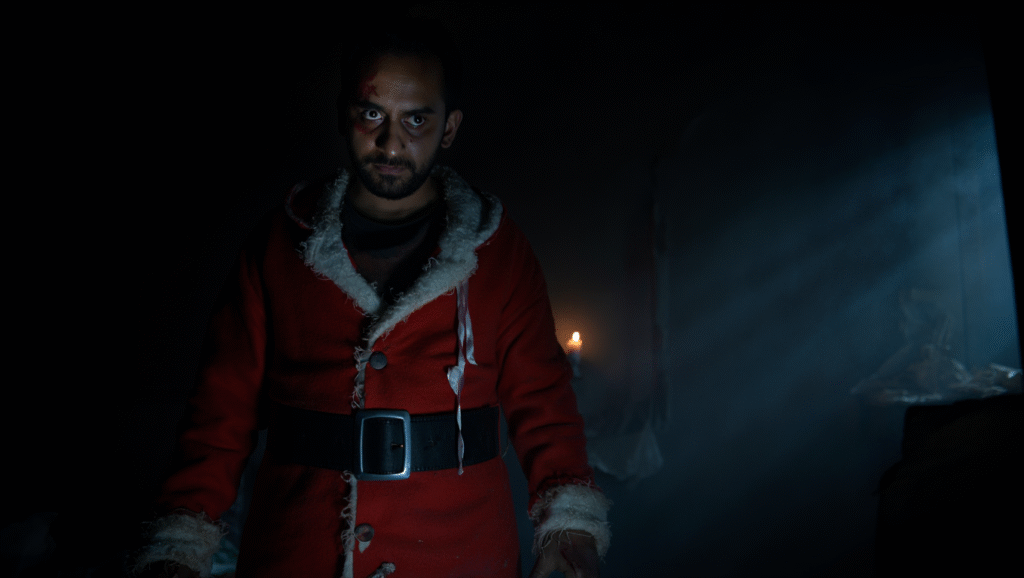
The film opens in a small, snow-covered town haunted by its past — a community that once buried its secrets beneath layers of tinsel and tradition. But when a series of grisly murders begins just days before Christmas, the townspeople are forced to confront the horror they tried to forget. Each victim is found with a single, blood-soaked ornament — and a message that reads, “Santa remembers.” The tagline isn’t just marketing; it’s a promise.
Rohan Campbell delivers a career-defining performance as Billy Chapman — now a man in his late 20s, tormented by the memories of witnessing his parents’ murder by a man in a Santa suit years ago. Institutionalized for most of his life, Billy is finally released, hoping to rebuild some sense of normalcy. But when he takes a job at a local toy store, the sights, sounds, and artificial cheer of Christmas begin to stir something dark inside him. The jingling bells become screams, the red ribbons turn to blood, and the laughter morphs into echoing mockery. The trauma doesn’t just return — it consumes.
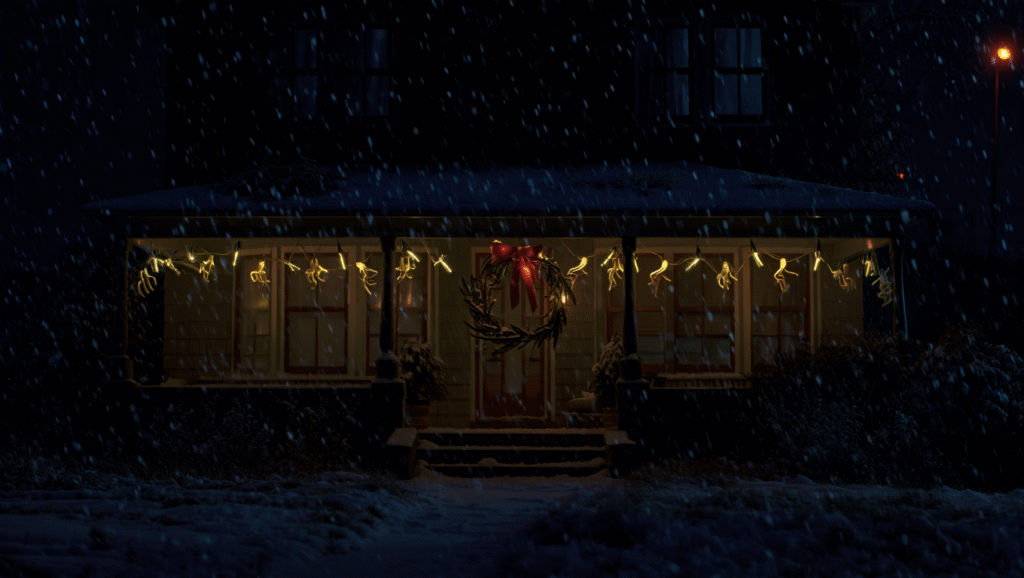
Director Mike P. Nelson doesn’t play this as a slasher for nostalgia’s sake. Instead, he crafts a film steeped in dread and melancholy, where every snowflake feels like ash falling from a fire long extinguished. The cinematography by Eli Born captures a chilling duality — the glow of Christmas lights reflecting off pools of blood, the warmth of family gatherings shadowed by the lurking figure in red. It’s Black Christmas meets The Joker — a story where horror is born from empathy, not just shock.
The pacing is deliberate, allowing the audience to live inside Billy’s unraveling psyche. Nelson masterfully blurs the line between reality and hallucination, using reflections, flickering lights, and distorted carols to make even the most innocent decorations feel menacing. By the time Billy dons the Santa suit, it’s less a costume and more an exorcism — a symbol of everything he’s feared and everything he’s become. “Once he feared Santa… now he is him,” the tagline whispers, and the transformation is as tragic as it is terrifying.
The violence, when it comes, is raw and personal. Nelson avoids gratuitous gore for the sake of it, focusing instead on the emotional weight of each kill. Every victim connects to Billy’s past, each death a twisted attempt at reclaiming innocence lost. One standout sequence — a Christmas parade gone horribly wrong — encapsulates the film’s central theme: the corruption of joy, the inversion of tradition. Amid the chaos, the snow falls again, pure as ever, mocking the blood beneath it.
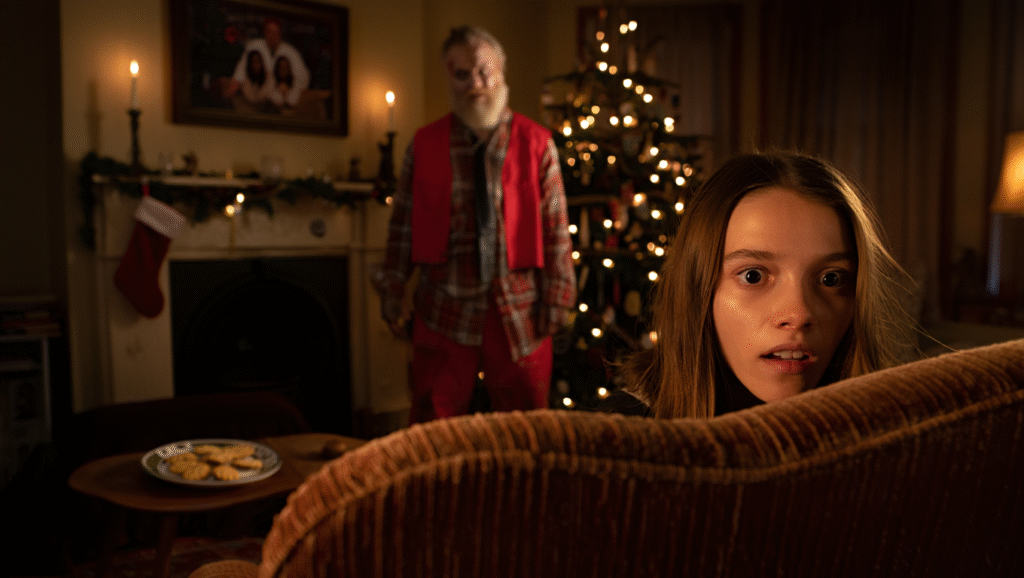
But Silent Night, Deadly Night (2025) isn’t just about one man’s descent. It’s also about the community complicit in his suffering — the priests, the doctors, the neighbors who turned a blind eye. The film peels back layers of moral hypocrisy, showing how society’s obsession with appearances can breed monsters in the dark. In one of the film’s most haunting lines, Billy mutters to a priest, “You told me to be good, but all I ever learned was to hide.” It’s that quiet indictment that gives this version its psychological edge.
Rohan Campbell’s performance grounds the film in painful humanity. His eyes carry both terror and tenderness — a man who never wanted to be the monster he became. When he finally confronts his reflection, seeing the Santa mask staring back, the scene becomes almost operatic in its emotional devastation. He’s not laughing like a slasher — he’s crying through the madness. This isn’t Silent Night played for cheap thrills; it’s Taxi Driver in a Christmas sweater.
The supporting cast complements his descent perfectly. Aimee Garcia plays the compassionate but conflicted store clerk who sees glimpses of goodness in Billy. Stephen McHattie appears as the retired sheriff chasing ghosts from his past, giving the story a gritty, almost noir flavor. Together, they weave a narrative that feels more like a dark parable than a typical horror film — a story about guilt, repression, and the danger of ignoring pain until it devours everything around you.
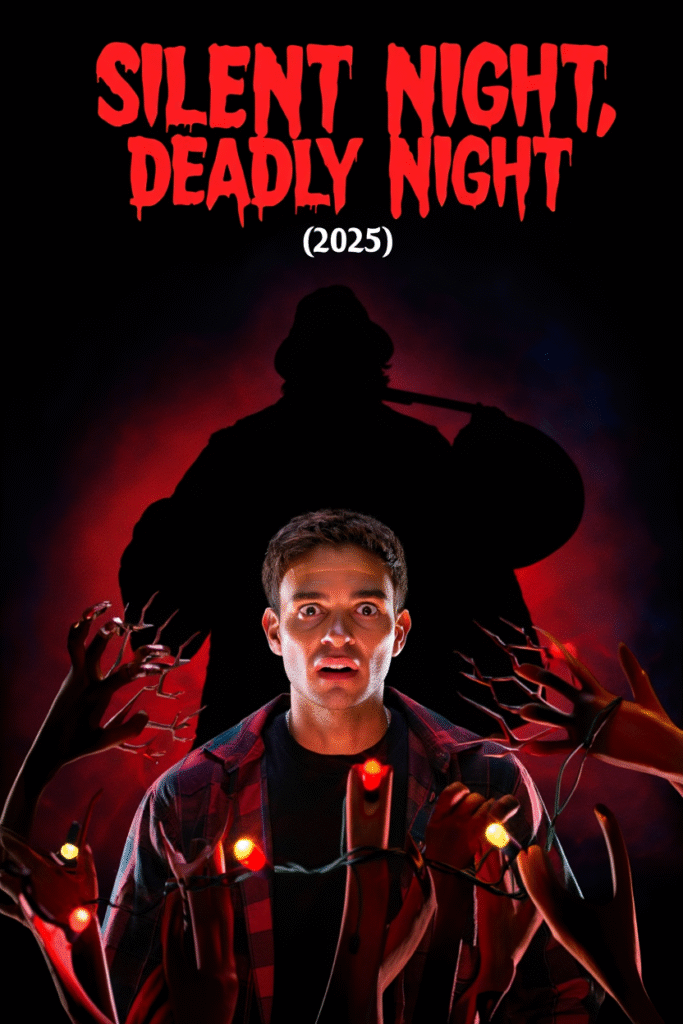
Visually and thematically, the film delivers in spades. The score by Joseph Bishara (known for The Conjuring) transforms familiar holiday melodies into dissonant, bone-chilling compositions. The result is a sensory contradiction — comfort laced with menace — that lingers long after the credits roll. Nelson even sneaks in subtle nods to the original 1984 film, from the toy store setting to the now-infamous “Garbage Day” wink, but he does so with restraint and reverence, not parody.
By its brutal and emotionally resonant finale, Silent Night, Deadly Night (2025) transcends its slasher roots. It’s not just about death — it’s about the loss of innocence, the ghosts of trauma, and the thin, fragile line between victim and villain. As Billy stands beneath the falling snow, blood glistening against the white, the film leaves you with one question that feels both terrifying and true: what happens when the things we fear most are the ones we’ve been taught to celebrate?
Silent Night, Deadly Night (2025) is a stunning resurrection — a film that dares to treat horror with both brutality and soul. It’s as much tragedy as terror, a yuletide nightmare that reclaims the genre’s most infamous Santa for a new generation.
⭐ Rating: 9.2/10