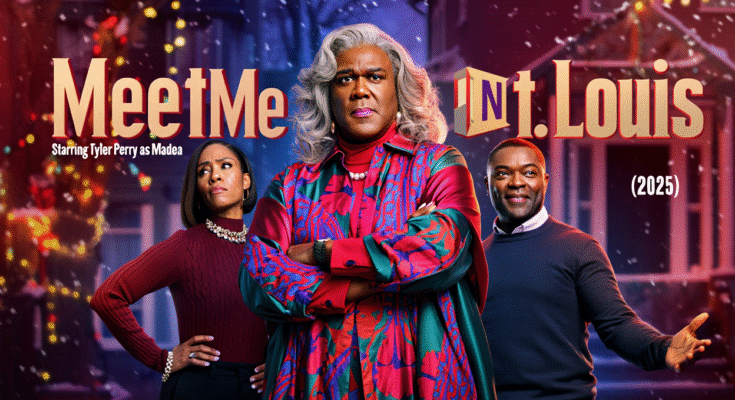
With Tyler Perry’s Meet Me in St. Louis, the Madea cinematic universe rolls into the Midwest — and the results are predictably hysterical, surprisingly touching, and unmistakably Perry. The film transforms the classic sentimentality of the 1944 musical into a raucous, contemporary holiday parody filled with family drama, fried chicken, and the kind of unfiltered Madea wisdom that hits harder than eggnog.
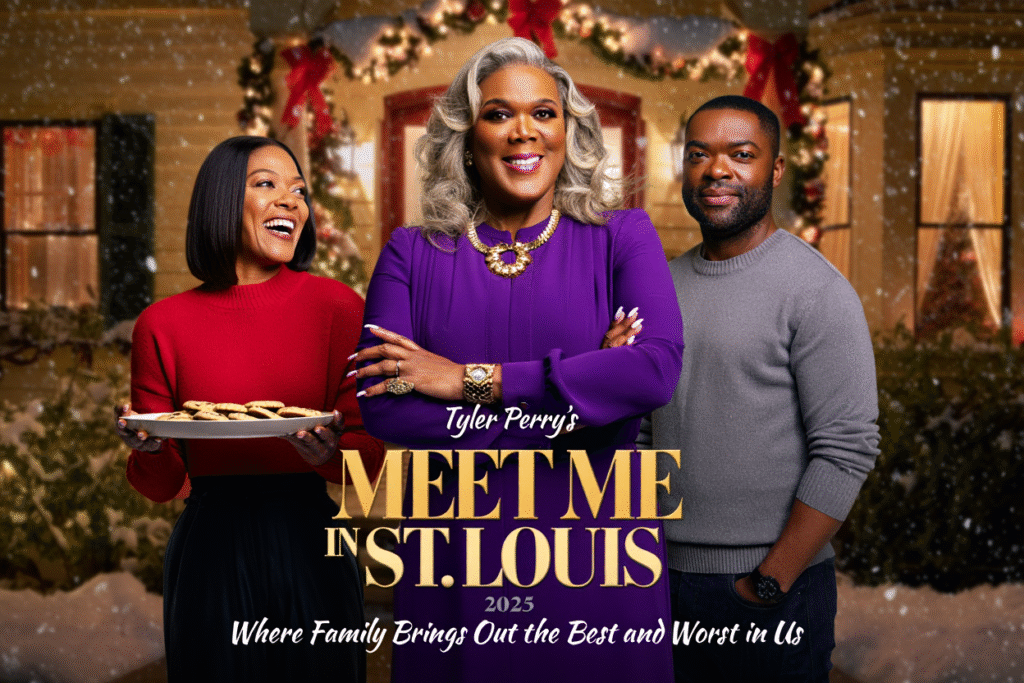
At first glance, this looks like another round of holiday madness for Madea (Tyler Perry), but Perry’s writing digs a little deeper this time. The story opens with Madea visiting her sister’s family in St. Louis for Christmas, armed with nothing but a suitcase full of wigs, sass, and unsolicited advice. Within minutes, chaos descends like a blizzard. She burns the sweet potato pie, offends the church choir, and accidentally outs a family secret during dinner — and that’s just the first act.
Regina Hall brings both grace and comedic fire as Vanessa, Madea’s perfectionist niece, determined to throw a “classy, drama-free” family reunion. Naturally, Madea’s very existence ensures the exact opposite. Their dynamic crackles with energy: Hall’s deadpan attempts to maintain order crash hilariously against Madea’s irrepressible mayhem. It’s a battle of ideals — control versus chaos — that every family can relate to during the holidays.
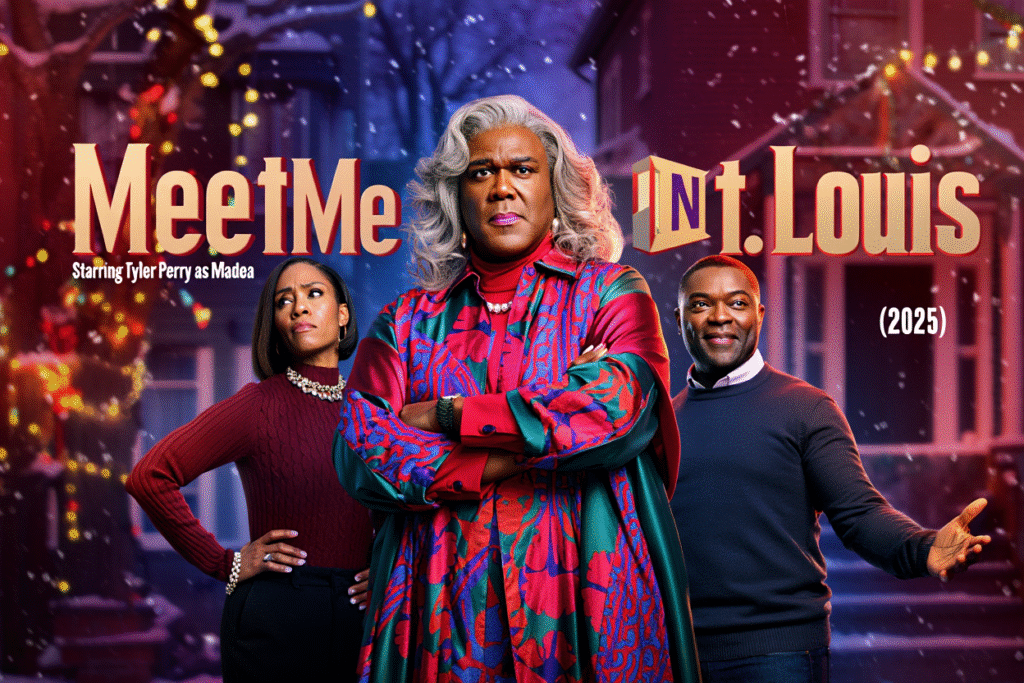
David Oyelowo, as the charming local handyman Leo, delivers one of the film’s most grounded performances. He’s the calm amid the storm — a man who sees through Madea’s bluster and recognizes the loneliness hiding beneath her bravado. Their scenes together, especially when Madea accidentally volunteers him to play Santa at a disastrous block party, strike the perfect blend of warmth and wit. Oyelowo’s quiet sincerity makes him the film’s emotional anchor.
What sets Meet Me in St. Louis apart from Perry’s other holiday outings is its tone — it swings effortlessly from laugh-out-loud slapstick to genuine pathos. One moment, Madea’s leading the neighborhood kids in a chaotic caroling session gone wrong (“Silent night? Not in this house, baby!”), and the next, she’s quietly reflecting on lost time and unspoken regrets. Perry, as both writer and director, has always known how to weave humor through pain — and here, that balance feels particularly refined.
The St. Louis setting adds an unexpected freshness. Instead of the usual southern small-town vibe, we get snowy streets, bustling city lights, and a rich mix of community life that gives the film both texture and heart. The cinematography embraces cozy interiors and warm tones, making every frame feel like a family photo come to life — even as Madea flips that photo off for being crooked.
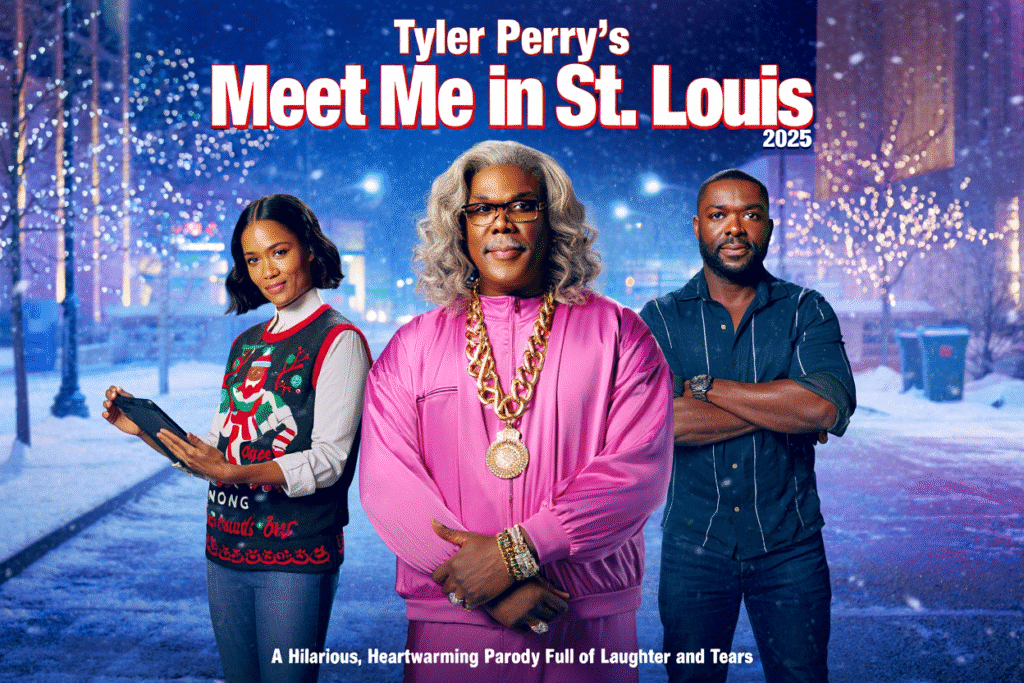
The supporting cast keeps the chaos colorful. Regina Hall’s exasperated outbursts, the nosy neighbors, and the unexpected church brawl over a stolen ham create a perfect storm of laughter. But it’s Perry’s performance — layered, sharp, and occasionally vulnerable — that reminds audiences why Madea remains a pop-culture force. She’s brash, loud, and larger than life, but when she sits down at the piano in the film’s third act to deliver a soulful rendition of “I’ll Be Home for Christmas,” the theater goes silent.
That emotional reveal near the end — a personal confession that reframes Madea’s tough-love approach to family — lands beautifully. It’s not melodramatic, just honest. Perry reminds us that behind the laughter, there’s always a longing for connection, forgiveness, and belonging. Madea’s family may be messy, but they’re real — and that’s what makes this film feel alive.
Tyler Perry’s Meet Me in St. Louis doesn’t reinvent the holiday movie formula; it reinvigorates it. It’s a comedy of errors wrapped in heartache and topped with sweet redemption — a blend Perry has perfected over decades. Audiences will come for the laughs, but they’ll stay for the humanity.

By the film’s final scene, as snow falls over a noisy, imperfect dinner table full of love, bickering, and gospel singing, Madea raises a glass and sums it all up: “Family ain’t perfect, baby. But it’s ours — and that’s enough to keep us warm.”