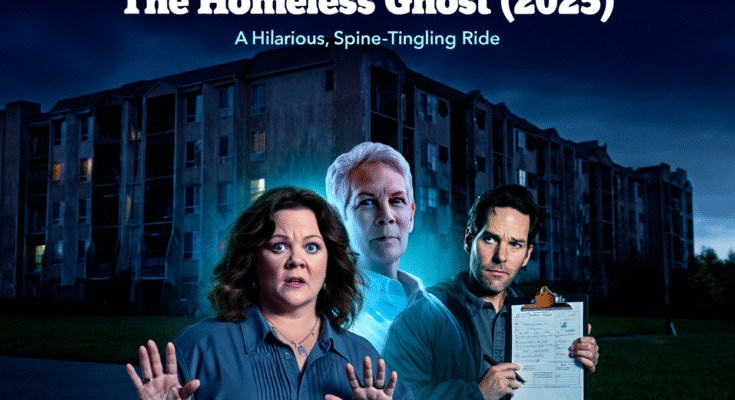
The Homeless Ghost (2025) takes a familiar haunted-apartment premise and flips it into something unexpectedly warm, funny, and quietly compassionate. On the surface, it’s a comedy-horror filled with flying furniture and midnight screams, but beneath the slapstick chaos lies a story about displacement, dignity, and the need to belong—whether you’re alive or long past it.

Melissa McCarthy is perfectly at home as Claire, a woman whose life has hit enough dead ends that a haunted apartment almost feels on-brand. McCarthy plays her not as a caricature, but as someone exhausted, resilient, and armed with humor as a survival tool. Her reactions to the supernatural aren’t exaggerated screams but weary disbelief, which makes the comedy land even harder.
Jamie Lee Curtis brings surprising emotional depth to the role of the ghost. Far from a standard specter, her character is mischievous, lonely, and deeply rooted in the building she refuses to leave behind. Curtis balances prank-heavy chaos with moments of quiet vulnerability, turning the ghost into someone you understand—even when she’s rearranging furniture at 3 a.m.
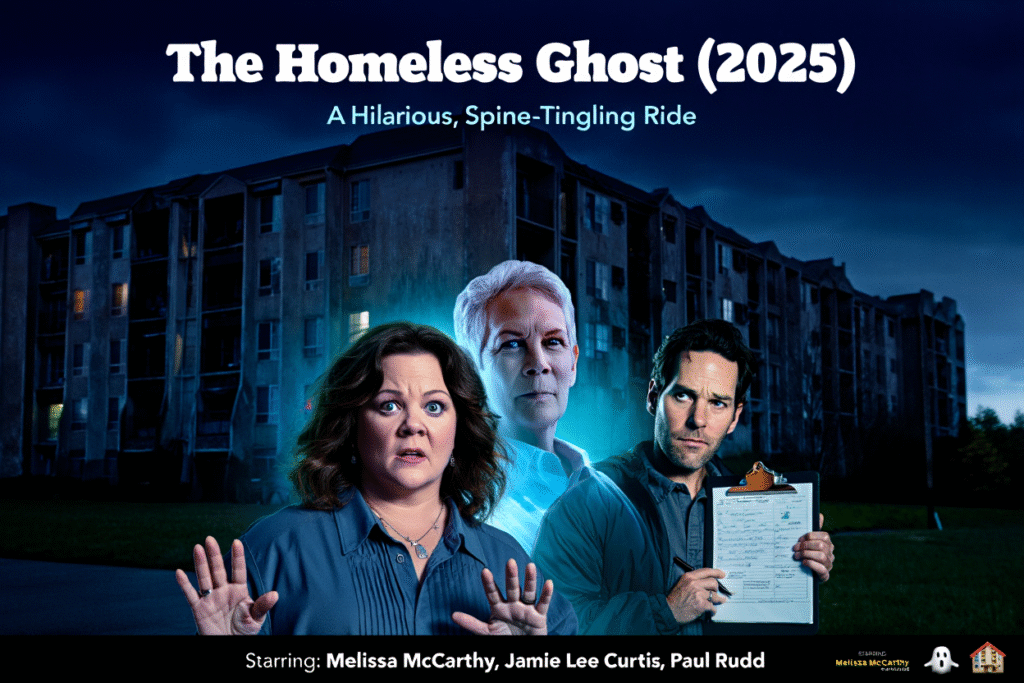
The dynamic between McCarthy and Curtis is the film’s beating heart. Their interactions feel less like human versus ghost and more like two stubborn souls forced into an unwanted roommate situation. The humor grows organically from their clashing personalities, but so does a strange, reluctant empathy.
Paul Rudd adds an offbeat charm as the skeptical neighbor with paranormal ambitions. His character plays beautifully against the absurdity, oscillating between overconfidence and sheer confusion. Rudd’s understated delivery acts as a stabilizer, keeping the film from tipping into full cartoon territory.
Visually, the film embraces controlled chaos. The apartment building feels lived-in and worn, a perfect metaphor for both Claire’s life and the ghost’s emotional stagnation. The supernatural effects are playful rather than terrifying, leaning into comedy while still maintaining a spooky atmosphere.
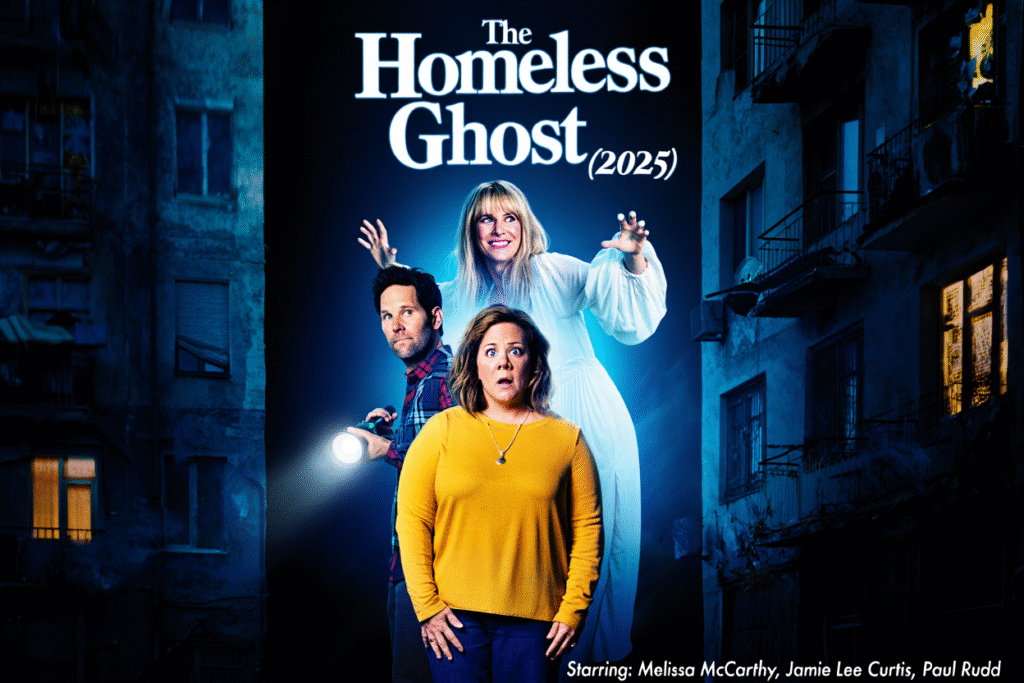
What makes The Homeless Ghost stand out is its thematic core. The idea of a ghost with nowhere to go reframes haunting as a form of emotional homelessness. The film subtly asks who gets forgotten when society moves on—and what happens when even the afterlife has no room left.
The pacing allows the comedy to breathe while gradually revealing the ghost’s unfinished business. Rather than relying on a single twist, the story unfolds through small discoveries, deepening the emotional connection without sacrificing humor.
As the mystery behind the haunting comes into focus, the film shifts from chaotic laughs to something more reflective. Claire’s journey toward helping the ghost mirrors her own attempt to reclaim stability, making their partnership feel earned rather than convenient.
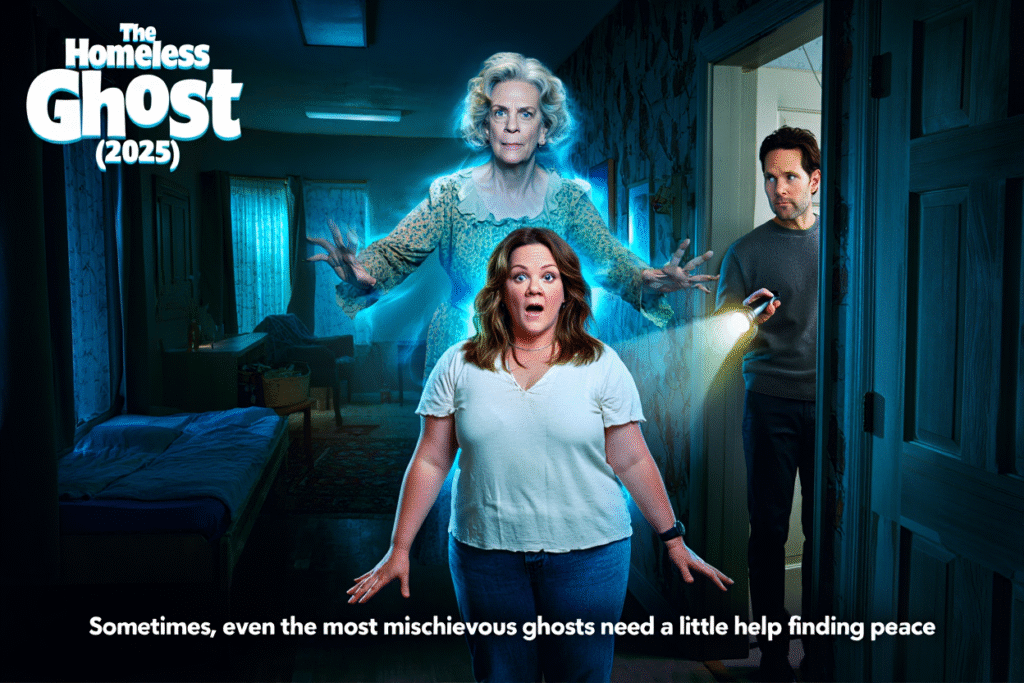
The final act avoids cheap sentimentality, opting instead for a gentle resolution that honors both characters’ growth. It’s less about banishing a ghost and more about acknowledging pain, loss, and the courage it takes to let go.
The Homeless Ghost is a rare horror-comedy that understands laughter and compassion can coexist. Funny, spooky, and unexpectedly humane, it reminds us that sometimes the scariest thing isn’t a ghost in your apartment—but the fear of having nowhere to belong at all.