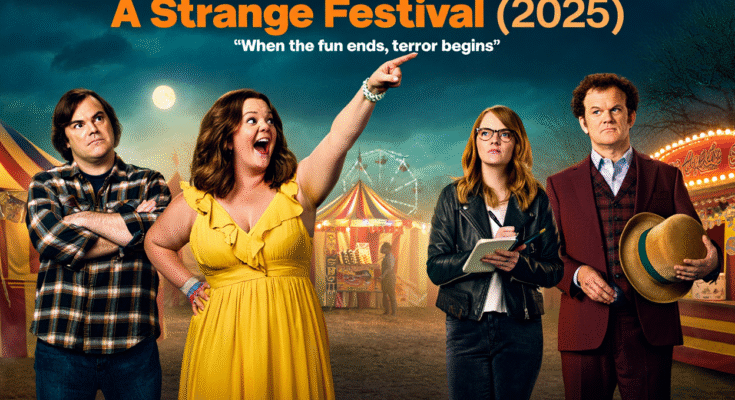
A Strange Festival (2025) is the kind of horror-comedy that welcomes you with neon lights, awkward enthusiasm, and carnival music—then quietly locks the exit behind you. It’s bizarre, energetic, and gleefully unsettling, blending absurd humor with creeping dread in a way that feels intentionally unbalanced. The film understands that the best horror-comedies don’t dilute fear with jokes; they let the jokes walk hand-in-hand with it.
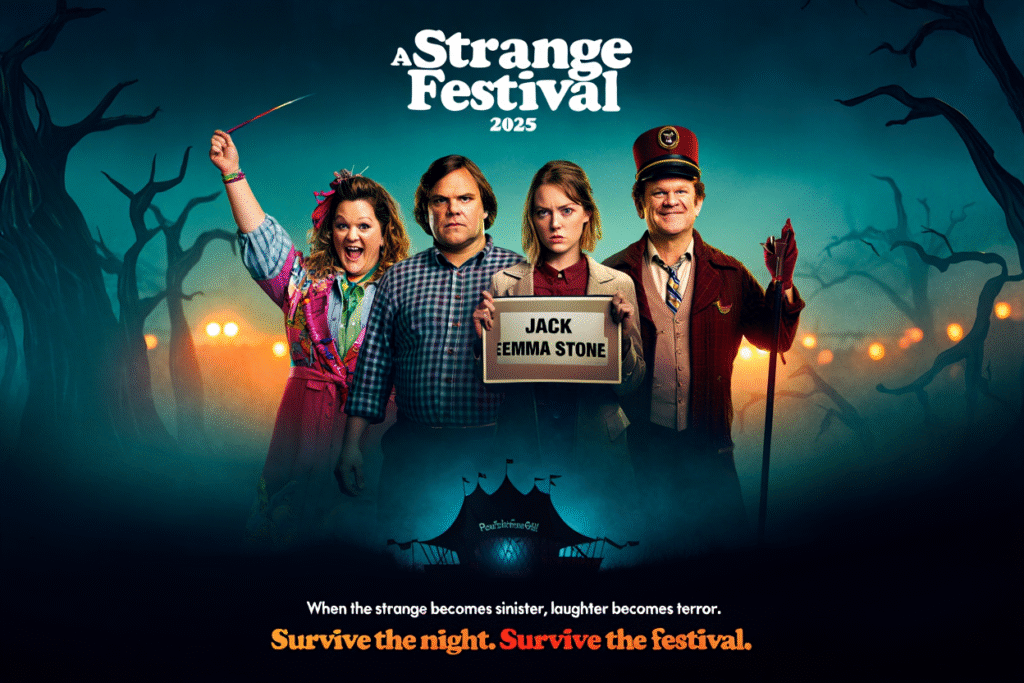
At the center of the chaos is Lizzie, played by Melissa McCarthy with unrestrained joy and manic curiosity. Lizzie is the kind of person who sees a warning sign and assumes it’s part of the experience. McCarthy’s performance is infectious, weaponizing optimism as both comedy and narrative danger. Her excitement becomes the spark that pulls everyone deeper into a situation that should have ended the moment they arrived.
Jack Black’s Hank acts as the uneasy conscience of the film. A local who knows far more than he initially admits, Hank radiates nervous humor and suppressed panic. Black perfectly balances goofiness with dread, delivering laughs while constantly signaling that something is very wrong. His warnings feel less like exposition and more like desperate attempts to save people who refuse to listen.
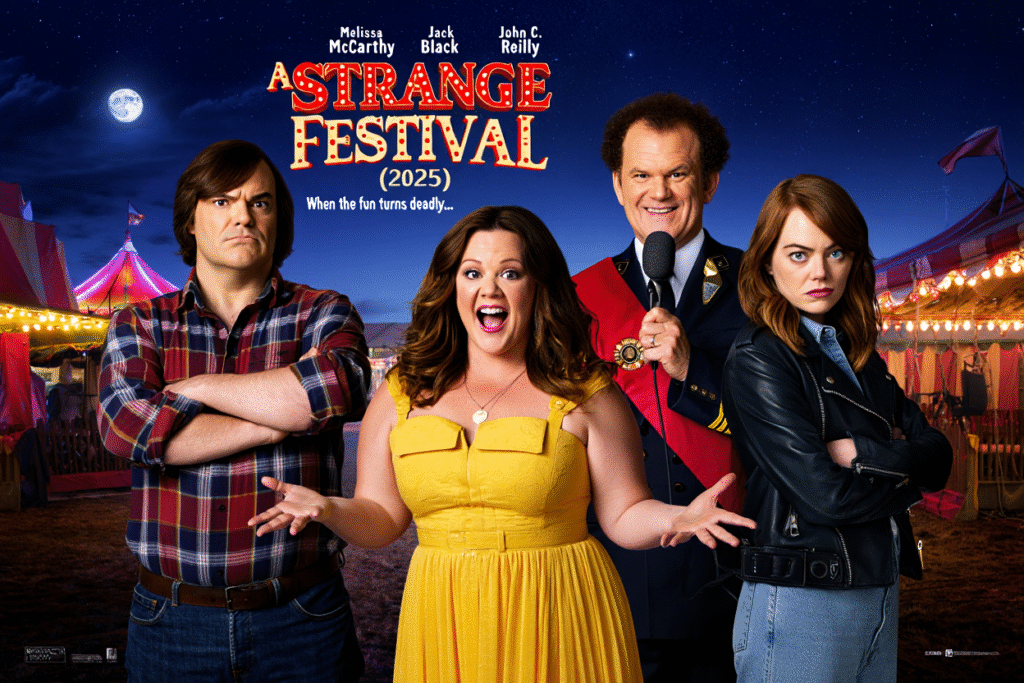
Emma Stone’s Claire provides the film with its sharpest edge. As a sarcastic journalist, she approaches the festival with skepticism, humor, and a growing sense of professional obsession. Stone plays her as clever but not invincible, slowly unraveling as curiosity turns into survival instinct. Her character grounds the story, reminding the audience that laughter doesn’t cancel danger.
John C. Reilly’s mayor is a masterclass in unsettling charm. Warm, awkward, and just a bit off, he embodies the uncanny friendliness that horror thrives on. Every smile feels rehearsed, every gesture suspicious. Reilly makes the character funny without ever letting him feel safe, turning casual conversations into low-key nightmares.
The festival itself is the film’s greatest achievement. It’s a sensory overload of strange performances, distorted rituals, and traditions that feel ancient yet deliberately theatrical. The line between performance and reality blurs quickly, and the audience, like the characters, struggles to tell when the joke ends. The setting feels alive—hungry, even—as though it’s observing its guests.
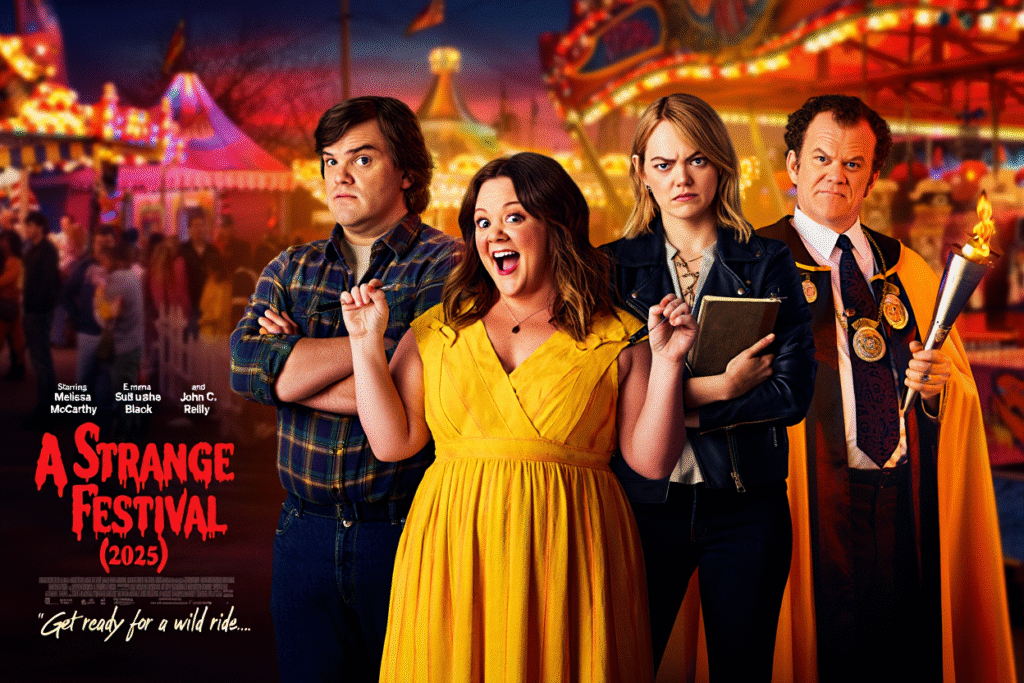
As night falls, the tone subtly shifts. The humor becomes sharper, darker, and more defensive. Performers stop pretending. Smiles linger too long. Traditions reveal consequences. The film excels at escalation, turning small oddities into existential threats without losing its comedic rhythm.
What makes A Strange Festival work is its commitment to discomfort. The laughs often arrive after moments of fear, not before. The film allows silence, awkward pauses, and visual unease to coexist with punchlines, creating a tonal balance that feels deliberate and confident.
The ensemble chemistry keeps the madness cohesive. Characters clash, panic, argue, and improvise survival in ways that feel chaotic but human. Their reactions—half disbelief, half terror—mirror the audience’s experience, making the absurdity feel earned rather than random.
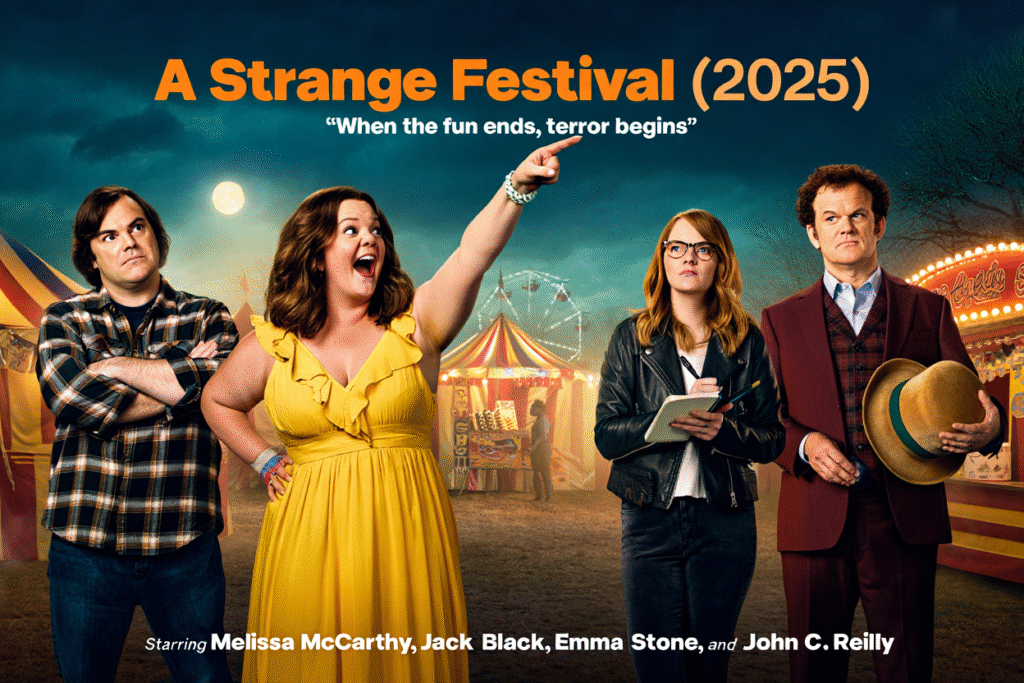
The final act leans fully into surreal horror. Revelations hit hard, the curse reveals its true nature, and escape becomes a question of identity rather than location. The film doesn’t aim for neat resolution; instead, it embraces consequence, letting the festival’s legacy linger like a bad dream you can’t quite shake.
A Strange Festival is loud, weird, funny, and unsettling in equal measure. It’s a horror-comedy that understands the power of tone, character, and atmosphere, delivering laughs that stick in your throat and scares that make you laugh out of instinct. By the end, you realize the film never wanted you to feel safe—only entertained while being very uncomfortable.