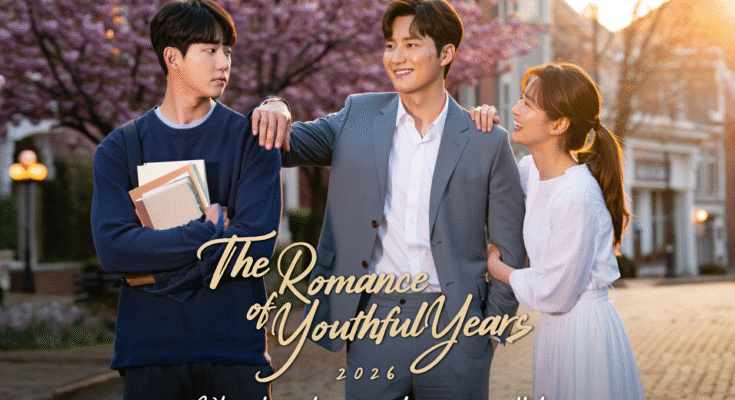
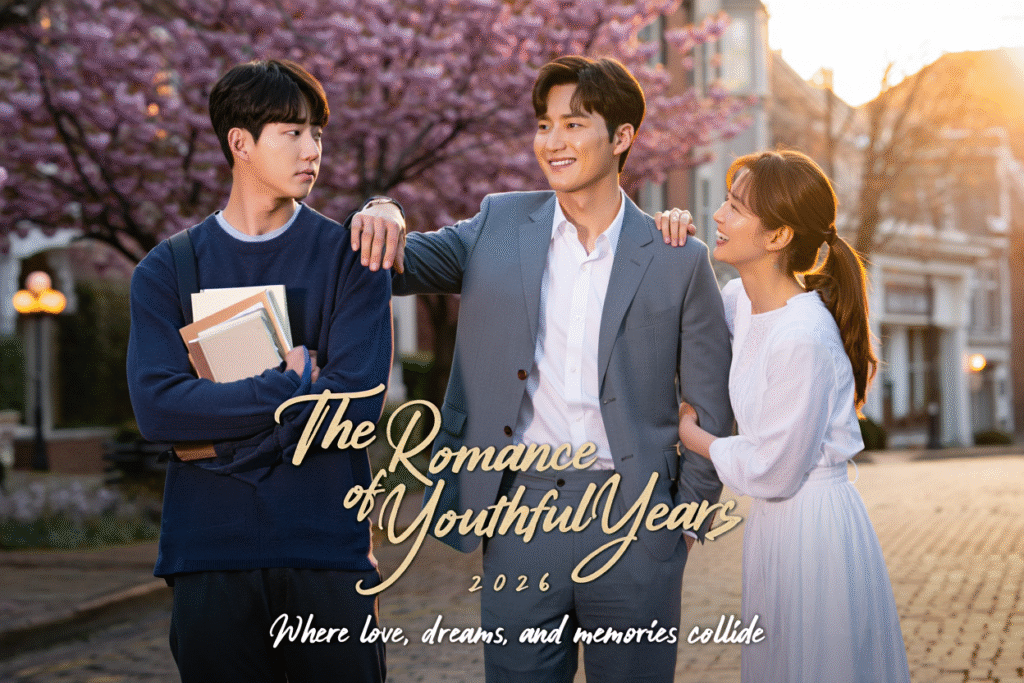
The Romance of Youthful Years is a tender, introspective coming-of-age romance that understands one painful truth: youth doesn’t end suddenly — it slips away while you’re too busy dreaming. Set against a soft, picturesque backdrop, the film captures the fragile beauty of first love and the quiet ache of growing into someone you didn’t plan to become.
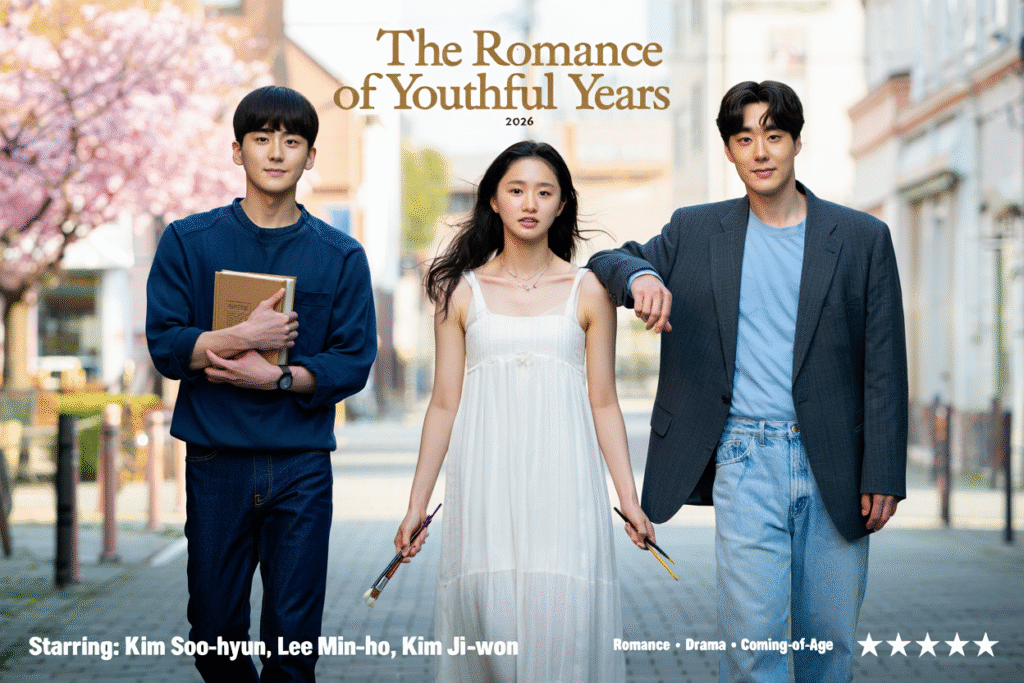
Kim Soo-hyun delivers a deeply restrained performance as Jae-min, a young man defined by intellect and emotional hesitation. His brilliance is not flashy; it’s internal, heavy, and often isolating. Soo-hyun portrays Jae-min as someone who thinks too much and feels too deeply, embodying the kind of youth that is lived inwardly, where every glance and unspoken word carries enormous weight.
Kim Ji-won shines as Ji-hyun, the emotional heart of the film. Free-spirited and artistic, she represents the kind of youth that feels infinite — the belief that time will always wait. Ji-won brings warmth and vulnerability to the role, making Ji-hyun both magnetic and heartbreakingly human. She is not just a love interest, but a symbol of fleeting freedom.
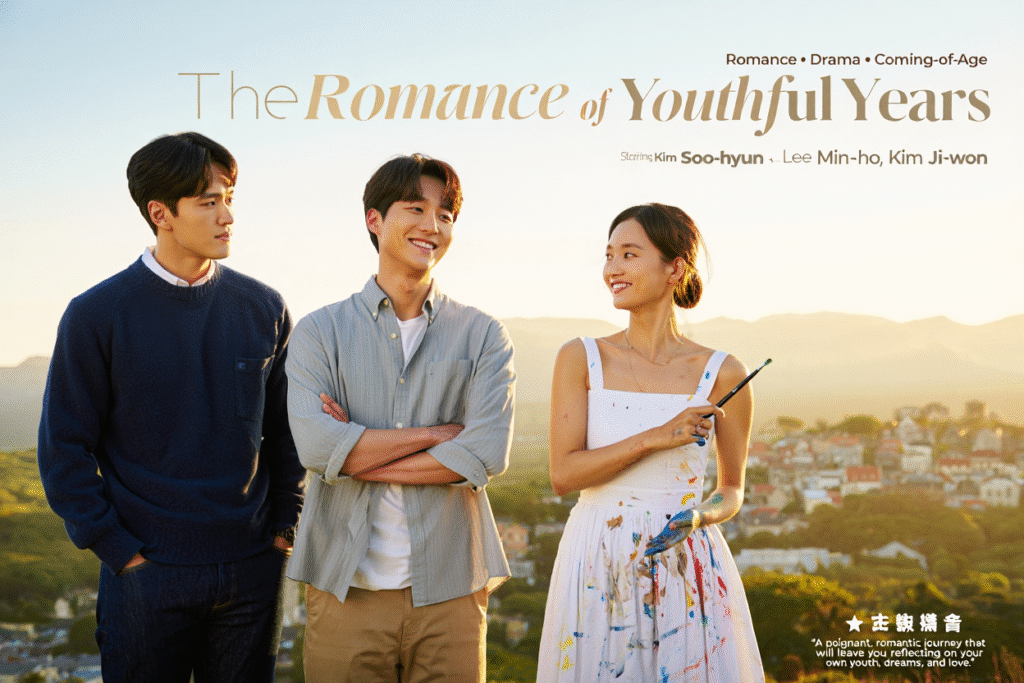
Lee Min-ho’s Seok-ho adds a compelling layer of tension to the trio. Charismatic and ambitious, he seems destined for success, yet quietly fears what that success might cost him. Min-ho plays Seok-ho with charm on the surface and uncertainty underneath, creating a character who is both confident and quietly fragile.
The film’s strength lies in its depiction of friendship slowly bending under the weight of unspoken emotions. There are no villains here — only people growing at different speeds. Love does not explode; it drifts, hesitates, and sometimes arrives too late. The triangle feels organic, painful, and painfully familiar.
Visually, The Romance of Youthful Years is soaked in nostalgia. Warm sunlight, empty classrooms, late-night walks, and half-finished conversations create a dreamlike atmosphere. The cinematography lingers, allowing silence to speak louder than dialogue, making the audience feel like they’re remembering their own past rather than watching someone else’s.
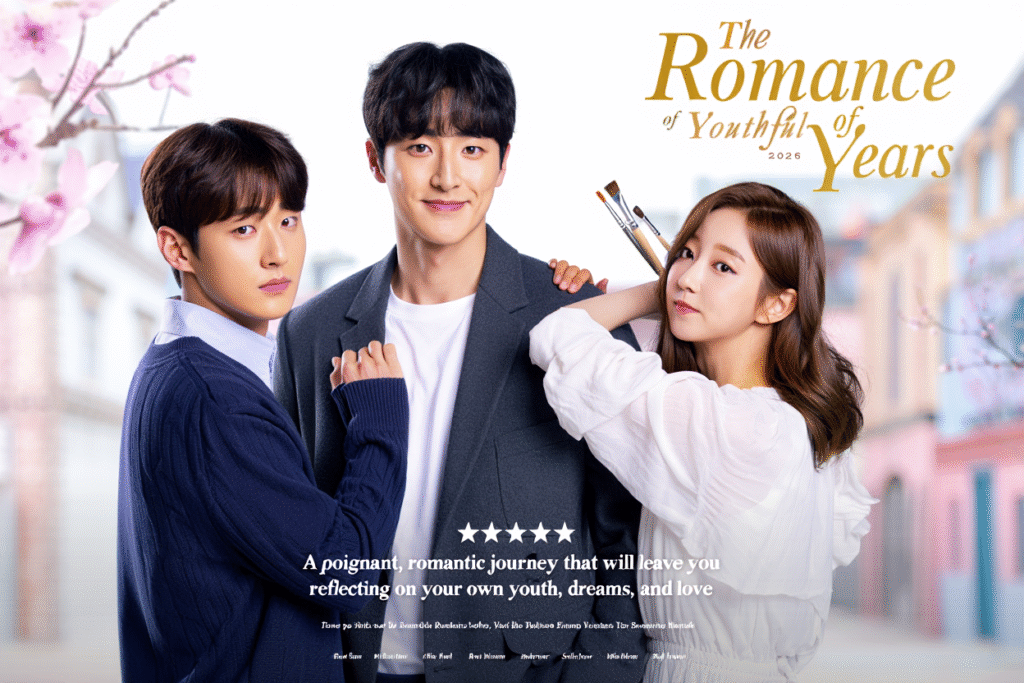
The soundtrack deserves special praise. Soft piano melodies and acoustic themes weave through the story like memories resurfacing unexpectedly. Each song feels like a chapter of youth — hopeful, fragile, and slightly sad — enhancing the emotional resonance without overpowering it.
What makes the film truly powerful is its honesty. It refuses to romanticize adulthood or offer easy resolutions. Dreams shift, people change, and love does not always survive the transition. The film understands that sometimes the most important relationships are the ones that teach us who we were — not who we’ll end up with.
The performances work in quiet harmony. No one overacts, no moment feels forced. Instead, emotions simmer beneath the surface, making the eventual emotional fractures feel earned and devastating. It’s a film that trusts its audience to feel rather than be told what to feel.
As the characters move beyond their college years, the film gently asks a universal question: Who do we become when youth lets go of our hand? The answer is not comforting, but it is truthful — we carry fragments of those years with us, even as we move on.
The Romance of Youthful Years is not just a love story — it is a memory. One that aches softly, long after the screen fades to black. It reminds us that first love doesn’t always last, but it always leaves a mark. And sometimes, the most romantic thing about youth is simply that it existed at all. 🌙✨