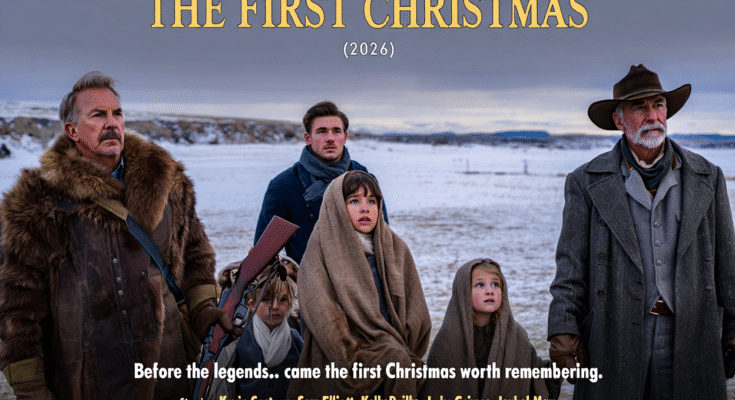
The First Christmas is not a holiday film in the traditional sense. There are no cheerful jingles, no easy miracles, and no sentimental shortcuts. Instead, Kevin Costner delivers a solemn, weather-beaten Western epic that reframes Christmas not as celebration, but as endurance. From its opening images of snow-devoured plains, the film makes it clear: this is a story about what faith looks like when hope is almost gone.
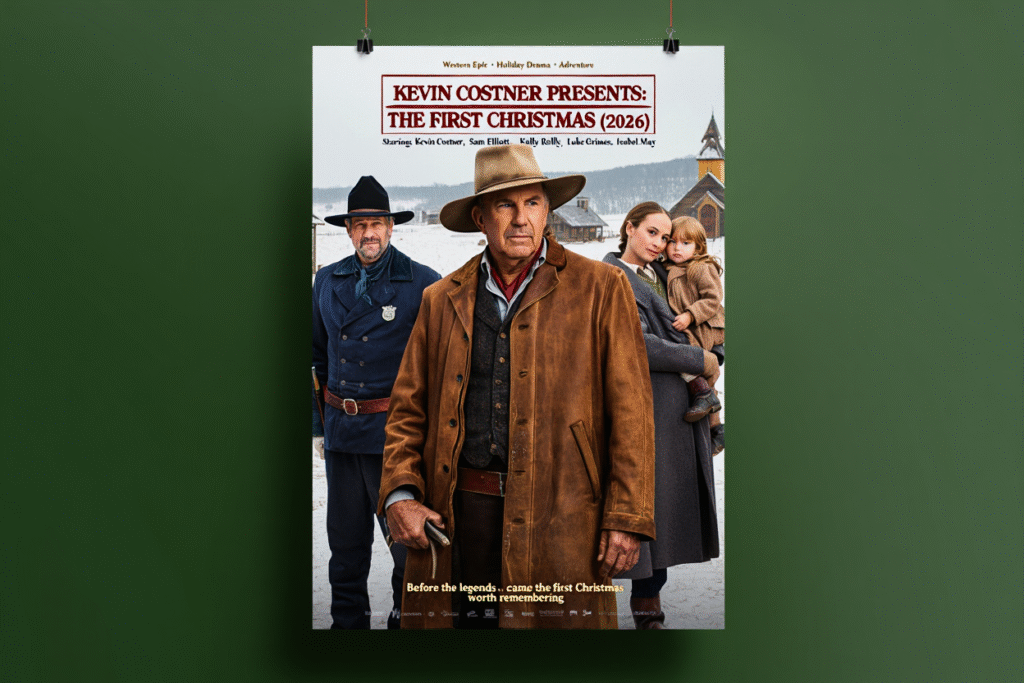
Kevin Costner’s John Hawthorne is a man carved from loss. His performance is restrained, heavy with grief that never fully surfaces but informs every decision he makes. Hawthorne is not a hero chasing glory—he’s a man exhausted by survival, stepping forward only because no one else can. Costner’s quiet authority anchors the film, reminding us why he remains one of cinema’s most compelling figures in frontier storytelling.
Sam Elliott’s Marshal Everett Cole feels like the soul of the old West itself. His gravelly voice and weary eyes carry decades of violence and regret, and Elliott plays him with devastating restraint. Cole’s search for redemption is not loud or dramatic; it’s expressed through small, moral choices made when no one is watching. His bond with Hawthorne becomes the film’s emotional spine—two men holding the line against both chaos and despair.
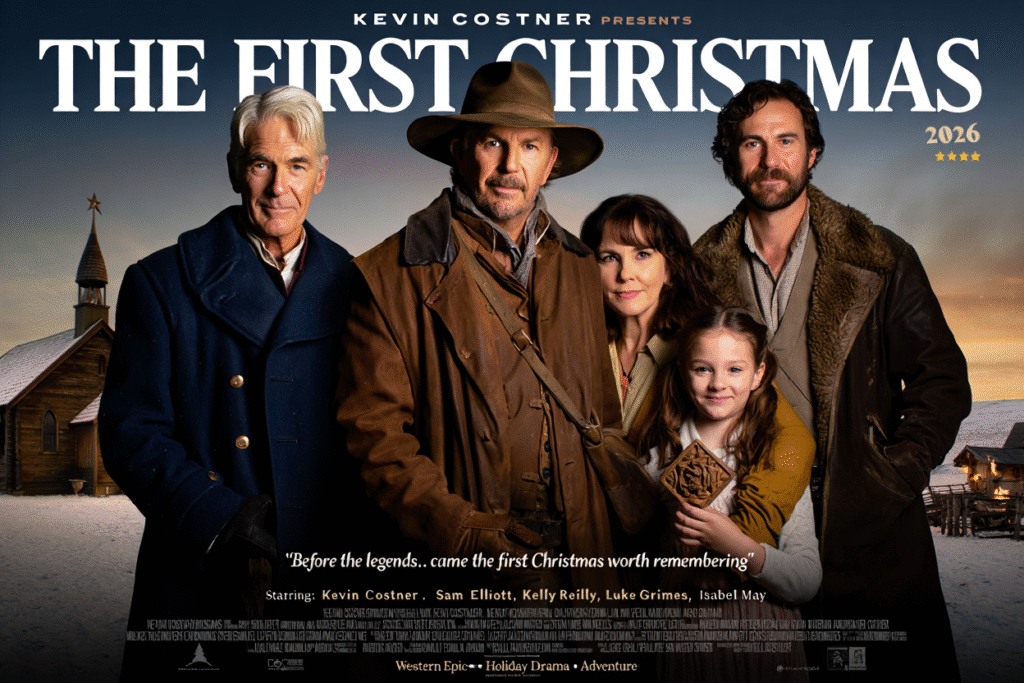
Kelly Reilly brings fierce humanity to Clara Ridge, a woman defined by resolve rather than fragility. She is not merely a messenger of tragedy, but a catalyst for action, forcing the settlement to confront its moral limits. Reilly’s performance is layered with urgency and compassion, grounding the film’s larger themes in personal stakes.
Isabel May, as the orphan girl, is the quiet heart of the story. She speaks little, yet her presence dominates the narrative. The carved keepsake she carries becomes more than a plot device—it’s a symbol of legacy, memory, and the fragile thread connecting past and future. May conveys fear, strength, and innocence without sentimentality, making the stakes feel deeply personal.
Luke Grimes’ Elias Ward adds tension and grit to the journey. As a tracker haunted by his own past, he embodies the cost of survival in a lawless land. His scenes in the frozen wilderness are some of the film’s most haunting, emphasizing how nature itself is an unforgiving antagonist.
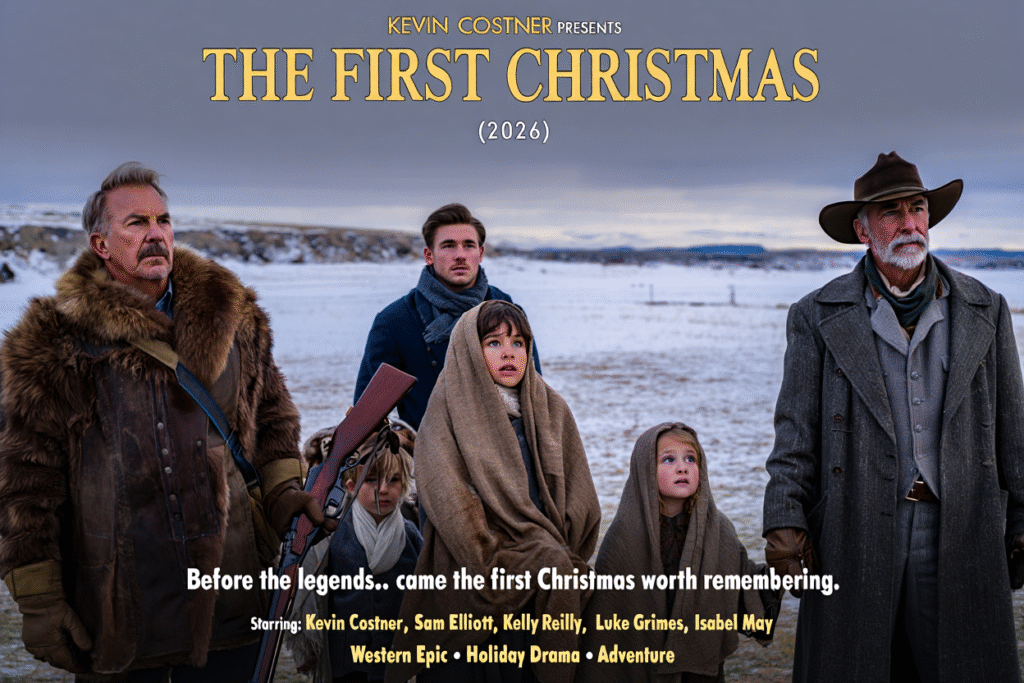
Visually, The First Christmas is stunning in its severity. Snowstorms are not picturesque—they are suffocating, relentless, and cruel. Lantern light against endless white becomes a recurring motif, symbolizing human warmth fighting against an indifferent world. The cinematography refuses romanticism, choosing authenticity over beauty, which makes the rare moments of peace feel earned.
The pacing is deliberate, almost meditative. The film allows silence to speak, trusting the audience to sit with discomfort and uncertainty. This restraint may challenge viewers expecting conventional holiday uplift, but it deepens the emotional payoff. Every step through the snow feels heavy because the film makes you feel the weight of it.
What elevates The First Christmas is its thematic ambition. Christmas here is not a reward for goodness—it is a test of it. The film argues that belief is forged not in abundance, but in scarcity; not in joy, but in sacrifice. Unity becomes a survival strategy, and kindness a form of rebellion against despair.
The Christmas Eve climax is powerful precisely because it avoids spectacle. The standoff in the snow, lit by flickering lanterns and trembling resolve, feels intimate and raw. When the hymn finally rises, it doesn’t signal victory—it signals endurance. Survival itself becomes the miracle.
In the end, The First Christmas stands apart from modern holiday cinema. It is solemn, reflective, and deeply human—a Western that understands Christmas as an act of courage. Kevin Costner doesn’t offer comfort; he offers meaning. And long after the snow settles, the film leaves behind a quiet, enduring truth: sometimes, the first gift is simply choosing to stand together in the cold.