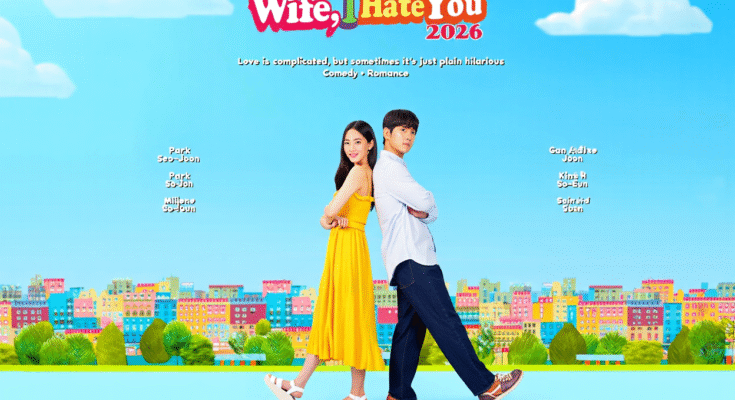
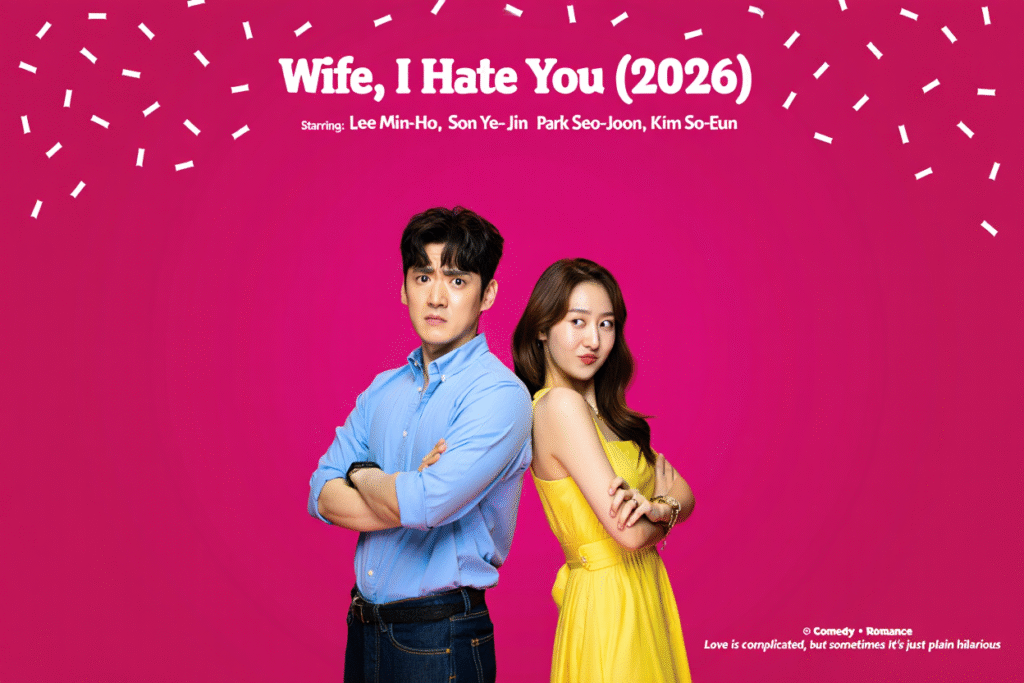
Wife, I Hate You (2026) is a romantic comedy that dares to begin where most love stories end: with a sentence spoken in anger that changes everything. Bright, witty, and emotionally sharp, the film turns marital frustration into a playground for humor, vulnerability, and rediscovery.
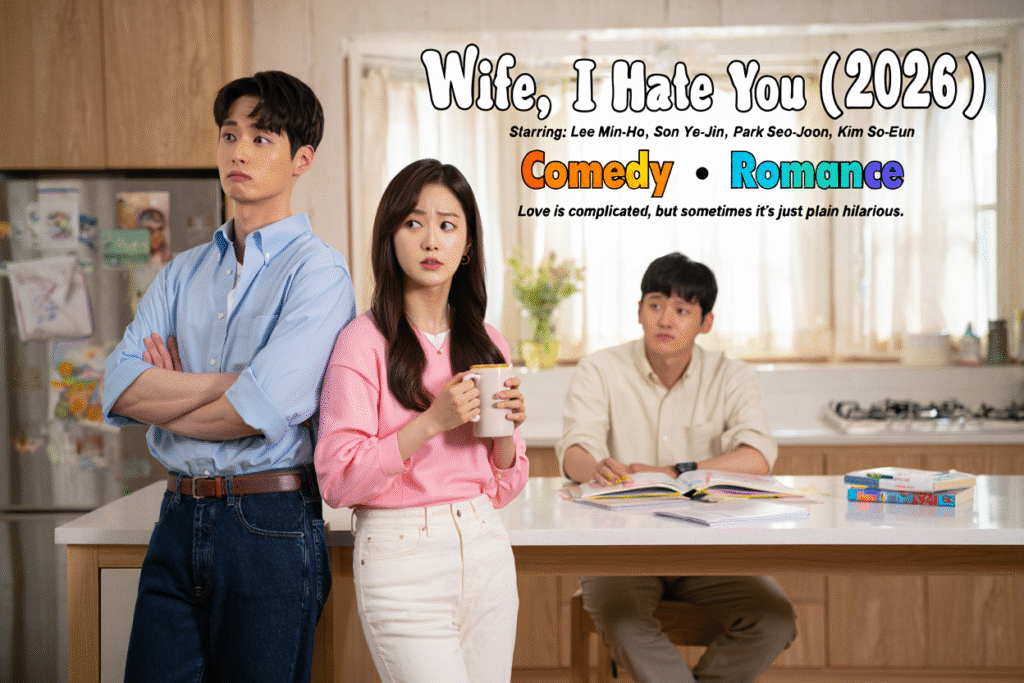
Lee Min-Ho delivers one of his most relatable performances as Joon-Ho, a man who believes he understands marriage—until he realizes he’s been taking love for granted. His frustration isn’t rooted in cruelty, but in exhaustion, miscommunication, and the quiet buildup of years spent assuming his wife will always stay. That single outburst, “I hate you,” becomes both the film’s inciting incident and its emotional scar.
Son Ye-Jin is the film’s true emotional compass as Soo-Jin. Rather than exploding or begging for reassurance, she does something far more unsettling: she believes him. Her decision to emotionally detach and live as if they are already separated is calm, dignified, and devastating. Son Ye-Jin plays this restraint beautifully, letting silence speak louder than confrontation.
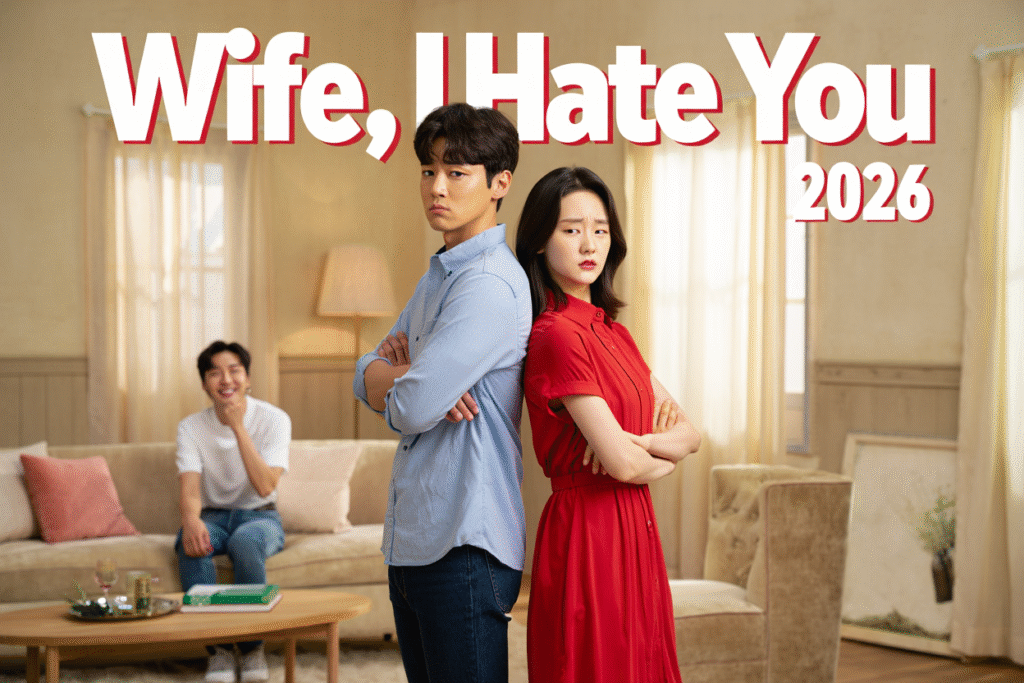
The comedy thrives on contrast. Joon-Ho expects freedom, but instead finds emptiness. His once-noisy life becomes unbearably quiet, and the absence of Soo-Jin’s presence turns everyday routines into painful reminders of what he’s lost. The humor here is subtle—found in awkward dinners, empty conversations, and Joon-Ho’s growing panic.
Park Seo-Joon injects chaotic energy as the well-meaning but clueless best friend. His advice is spectacularly bad, ranging from grand romantic gestures to borderline disastrous schemes. Yet his character serves an important role: representing society’s shallow understanding of love as performance rather than commitment.
Kim So-Eun adds warmth and perspective, acting as a quiet mirror to Soo-Jin’s emotional journey. Through her, the film explores female solidarity and the strength it takes to demand respect rather than settle for apologies that come too late.
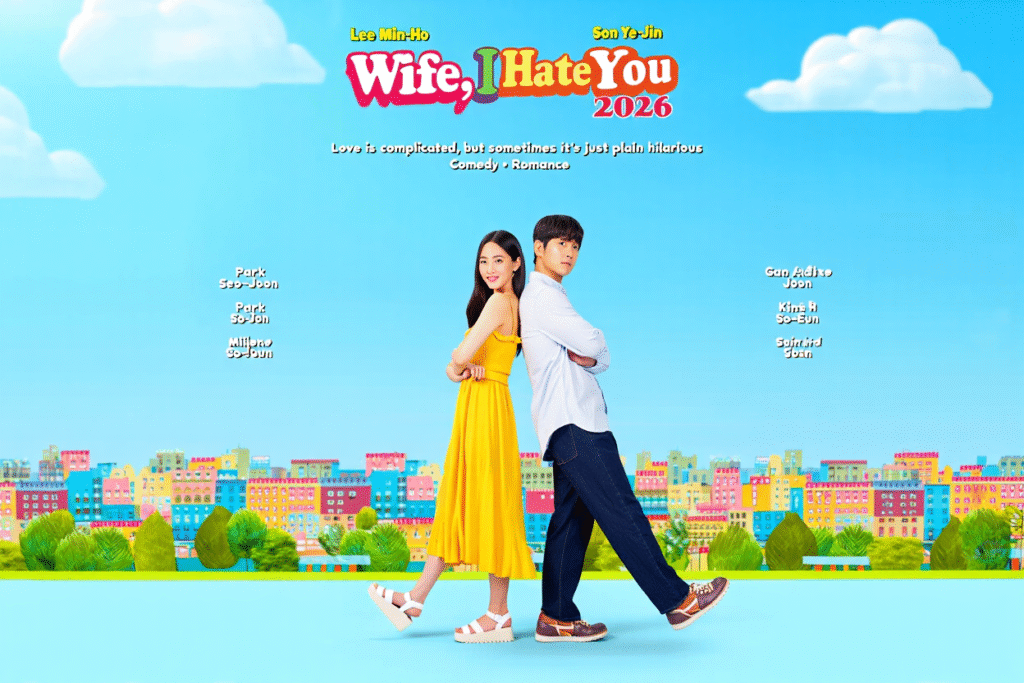
What sets Wife, I Hate You apart from typical rom-coms is its refusal to villainize either partner. Both Joon-Ho and Soo-Jin are flawed, human, and painfully realistic. The film understands that love doesn’t die from hatred—it erodes through neglect, careless words, and unspoken expectations.
Visually, the film uses space and distance as storytelling tools. Early scenes frame the couple together in tight, intimate shots, while later moments emphasize physical separation, empty rooms, and visual barriers. The cinematography quietly reinforces the emotional divide without ever feeling heavy-handed.
The dialogue sparkles with humor, but the emotional beats land hardest in the quiet moments. A shared memory, a forgotten habit, a moment where laughter almost returns—only to fade again. These scenes capture the ache of loving someone you may have already lost.
As the story moves toward reconciliation, the film wisely avoids easy solutions. Love isn’t repaired with one speech or one gesture. Instead, Wife, I Hate You argues that healing begins with accountability, listening, and the courage to admit fear beneath anger.
In the end, Wife, I Hate You (2026) is not just about marriage—it’s about language, pride, and the fragile line between love and loss. Funny, heartfelt, and quietly profound, the film reminds us that sometimes the most dangerous words in a relationship are the ones spoken without thinking—and the most powerful ones are the ones we learn to say too late.