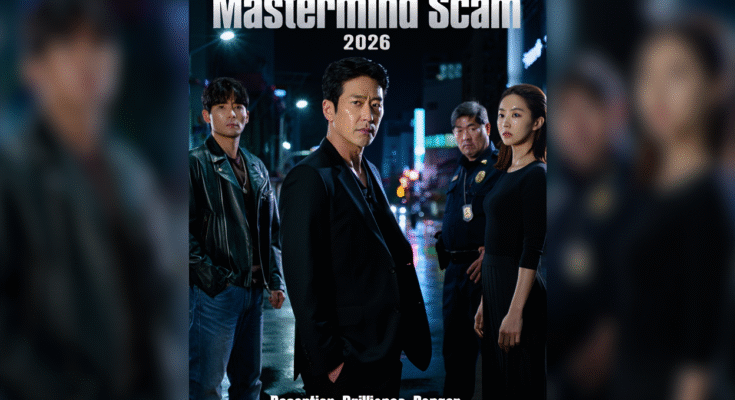
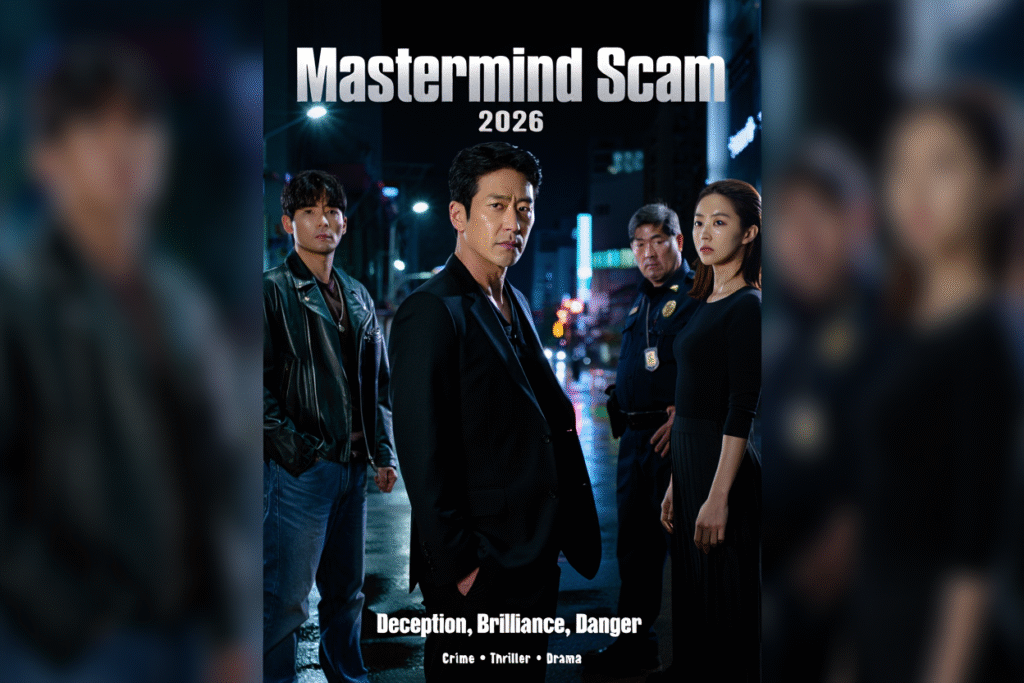
Mastermind Scam (2026) is a razor-sharp crime thriller that understands one essential truth: the most dangerous battles are not fought with guns, but with minds. From its opening moments, the film pulls the audience into a world where intelligence is currency, trust is expendable, and every smile may conceal a lie waiting to strike.
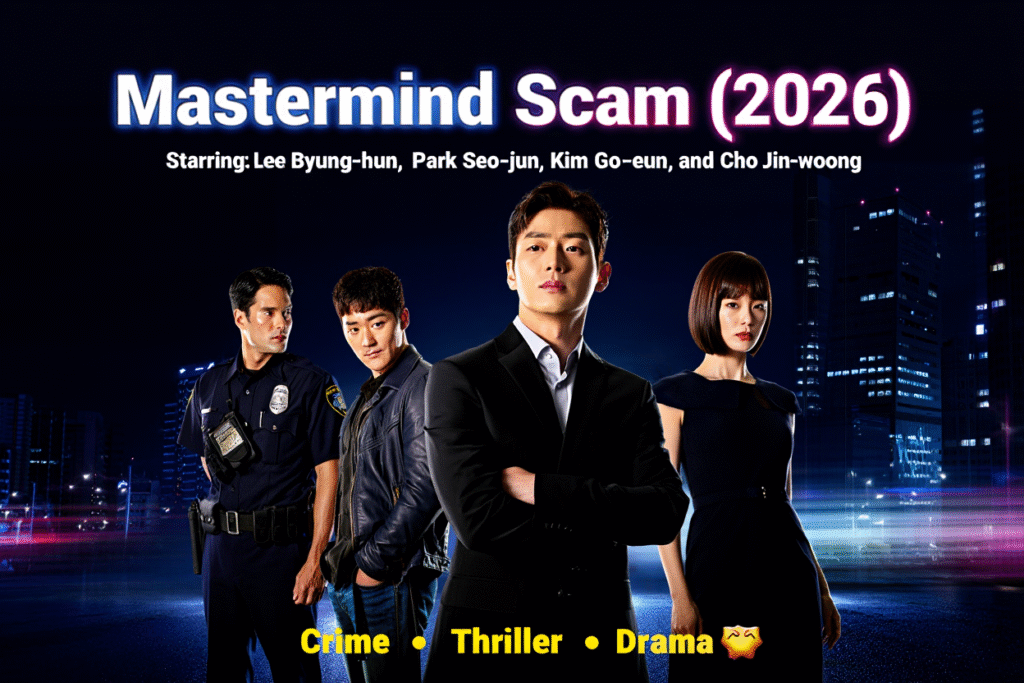
Lee Byung-hun dominates the screen as Joo Hyun, a veteran architect of deception whose calm demeanor hides decades of calculated crimes. His performance is chilling in its restraint—he doesn’t need to raise his voice or threaten violence. Power, for Joo Hyun, lies in foresight. Lee plays him like a chess grandmaster who is already thinking ten moves ahead, even as the board begins to crack beneath him.
Park Seo-jun brings a sharp, restless energy to Ji Ho, the ambitious protégé desperate to step out of the shadow of his past failures. His character embodies the hunger of youth—brilliant, reckless, and dangerously eager to prove his worth. The tension between Ji Ho and Joo Hyun forms the emotional backbone of the film, turning mentorship into rivalry and respect into quiet resentment.
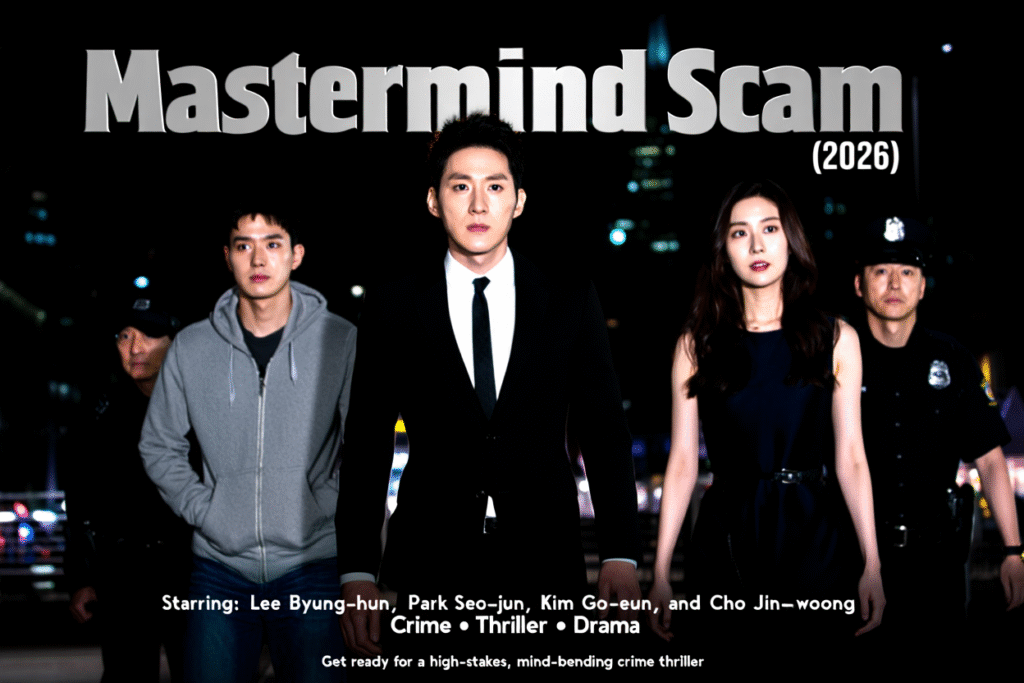
Kim Go-eun is mesmerizing as Soo Jin, the hacker whose fingers move faster than her conscience. She is not just a technical genius but an emotional enigma, and the film wisely gives her space to unravel. Beneath her confidence lies a history of compromises that threaten to destroy both the mission and herself. Kim plays her with a fragile intensity that makes every decision feel like a ticking bomb.
Cho Jin-woong’s Detective Kim is a masterclass in controlled obsession. Unlike typical crime antagonists, he isn’t portrayed as a blunt force chasing criminals—he’s a thinker, a patient hunter who understands that scams leave patterns, even when they pretend not to. His slow, methodical pursuit adds a constant pressure that never fully releases.
The brilliance of Mastermind Scam lies in its structure. The narrative unfolds like a layered illusion, revealing information only when it benefits the lie being told at that moment. Just when you think you understand the plan, the film pulls the rug out from under you, forcing you to question whether you were ever meant to see the truth at all.
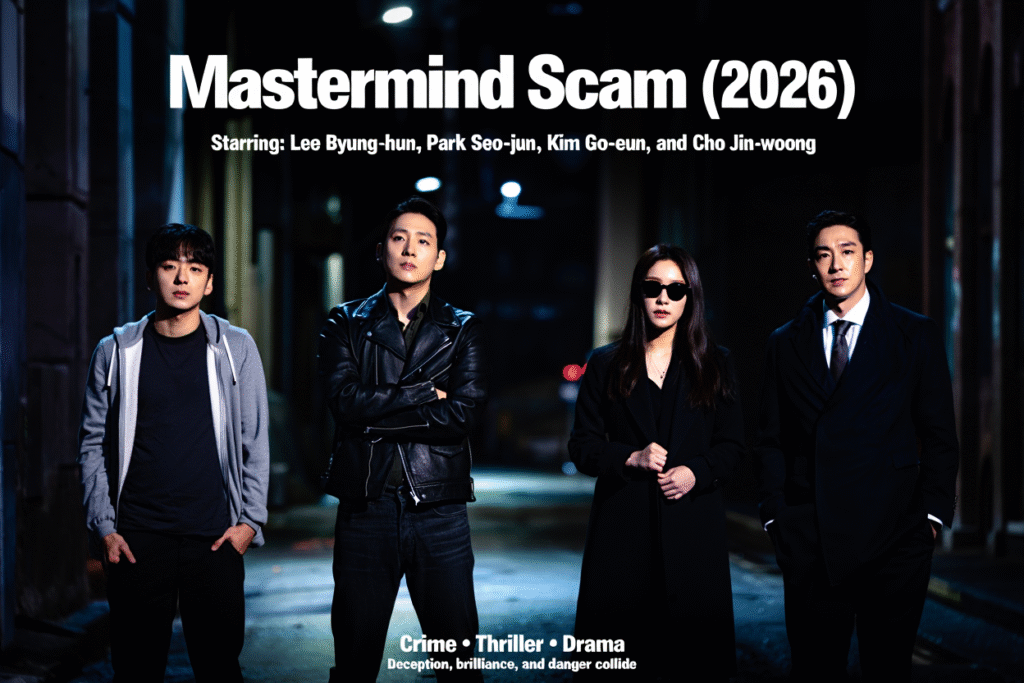
Visually, the film is sleek and precise. Cold blues and metallic grays dominate the frame, reflecting a world stripped of sentimentality. Glass walls, surveillance screens, and digital interfaces create a sense of constant observation, reinforcing the idea that no one is ever truly hidden—not even the masterminds.
What elevates the film beyond a standard heist thriller is its moral ambiguity. No character is fully innocent, and no betrayal feels entirely unjustified. The film doesn’t ask who is right or wrong—it asks how far intelligence can be pushed before it becomes self-destruction.
The tension escalates not through explosions, but through conversations. A pause before a response, a glance held a second too long, a plan altered at the last moment—Mastermind Scam understands that suspense lives in uncertainty, not spectacle.
As the final act approaches, the film becomes increasingly psychological. Alliances fracture, egos collide, and the illusion of control disintegrates. Every character is forced to confront the same haunting question: Is being the smartest person in the room enough to survive it?
By the end, Mastermind Scam (2026) leaves a lingering chill. It’s a film that doesn’t celebrate cleverness—it warns against it. In a world built on deception, the greatest scam may be convincing yourself that you’re the one in control.