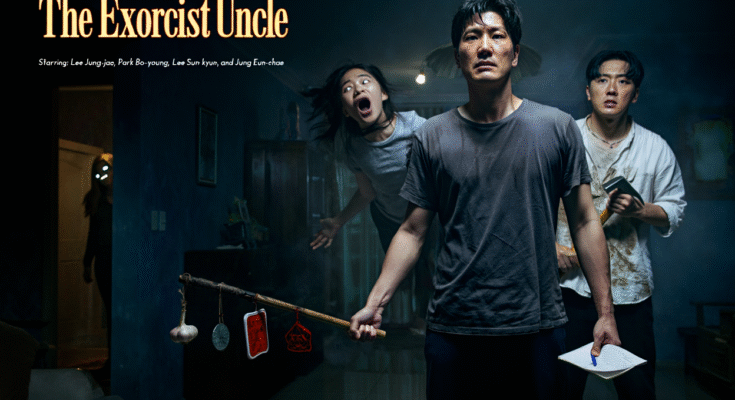
The Exorcist Uncle arrives as a refreshing anomaly in the horror landscape, blending supernatural terror with sharp, character-driven comedy in a way that feels distinctly human. Rather than leaning on priests, ancient tomes, or sacred institutions, the film asks a simpler question: what happens when an ordinary man is forced to confront the unthinkable armed with nothing but love, panic, and bad ideas?
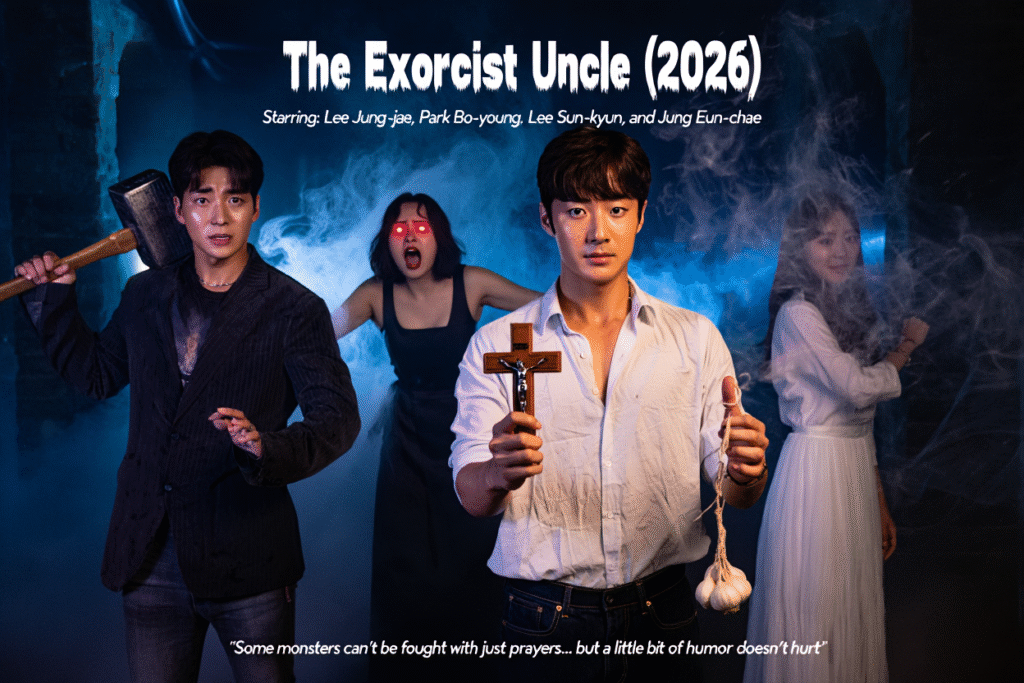
Lee Jung-jae anchors the film with a wonderfully grounded performance as Sung-jae, a stubborn, sarcastic man whose greatest enemy before the possession was probably mild inconvenience. His fear of ghosts isn’t played for cheap laughs—it’s genuine, almost childlike, making his decision to face a demon for his wife feel both absurd and deeply heroic.
Park Bo-young delivers one of the film’s most impressive turns as Hye-jin. Her possession is chilling not because of excess theatrics, but because of restraint. The shift between warmth and menace is subtle, unsettling, and emotionally painful, reminding us that the true horror lies in watching someone you love disappear while still standing right in front of you.
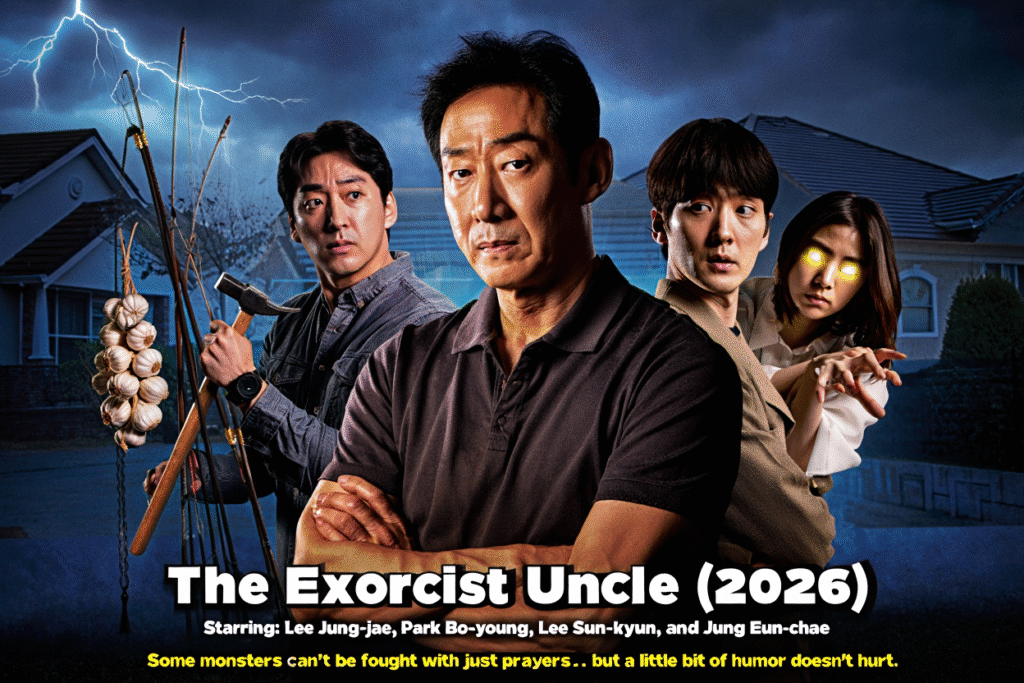
The film’s comedic backbone comes alive when Lee Sun-kyun enters as Min-seok, the failed exorcist with just enough knowledge to be dangerous. His chemistry with Lee Jung-jae is effortless, built on years of shared history, mutual disappointment, and reluctant loyalty. Their partnership feels less like a buddy comedy and more like two exhausted men stumbling through destiny.
What truly sets The Exorcist Uncle apart is how humor is used as survival, not distraction. Jokes erupt in moments of peak tension—not to deflate fear, but to cope with it. Laughter becomes a shield, a way for the characters to keep moving forward when terror threatens to freeze them in place.
Directorally, the film walks a careful tonal tightrope. The supernatural elements are treated seriously—spirits are vengeful, rituals are dangerous, and failure has consequences. Yet the absurd tools Sung-jae carries—a fishing rod, garlic necklace, and hammer—highlight the desperation of a man who refuses to wait for a miracle.
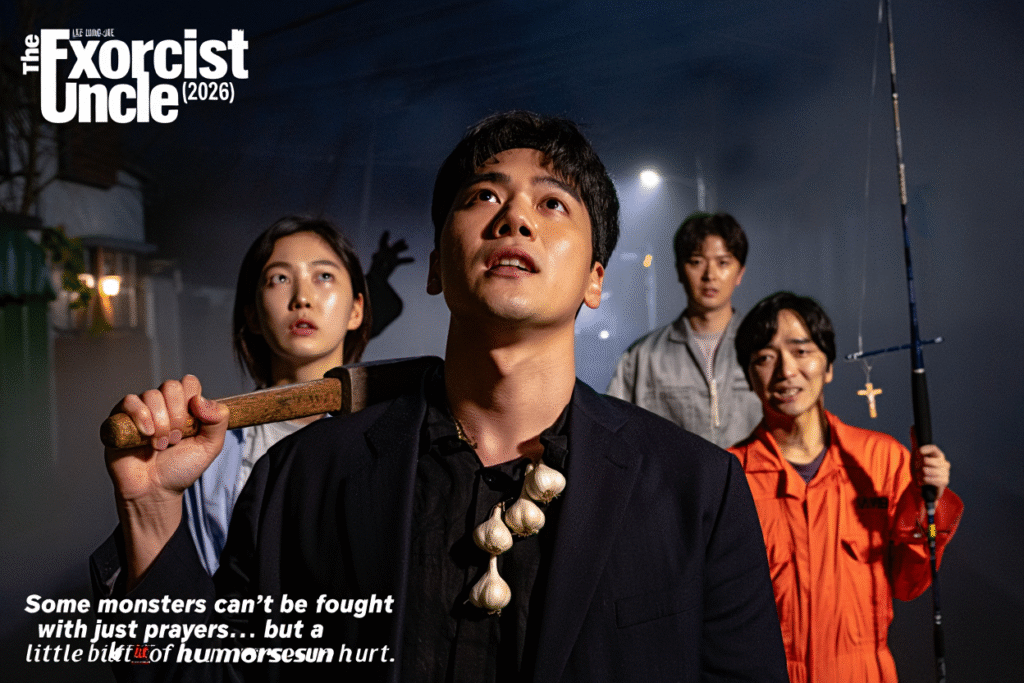
Jung Eun-chae’s supporting role adds emotional depth to the narrative, grounding the supernatural chaos in unresolved trauma and spiritual consequences. Her presence reinforces the idea that demons are rarely random; they are born from pain, neglect, and unfinished stories.
Visually, the film balances eerie atmosphere with domestic familiarity. Hallways, kitchens, and living rooms become battlegrounds, reinforcing the idea that horror doesn’t need grand cathedrals—it thrives where people feel safest. The contrast between everyday spaces and supernatural intrusion is deeply effective.
At its core, the film is less about exorcism and more about courage. Sung-jae doesn’t grow braver because he becomes stronger—he grows braver because he refuses to abandon the person he loves. Fear never leaves him; he simply learns to move while shaking.
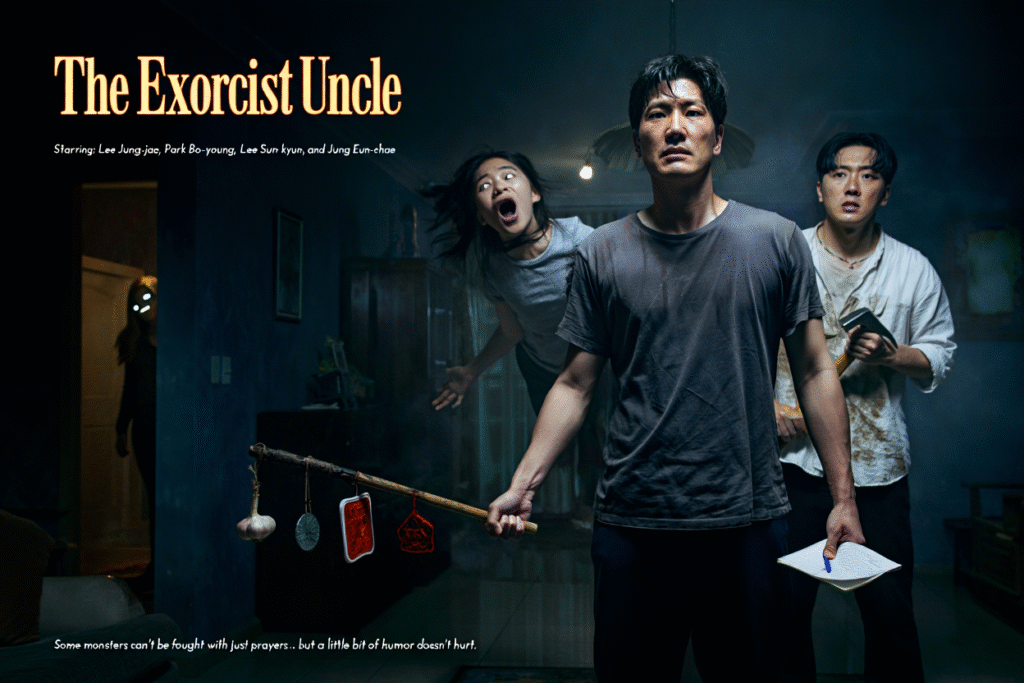
The final act avoids spectacle in favor of emotional payoff. Instead of a bombastic showdown, the climax focuses on choice, sacrifice, and vulnerability. It’s in these moments that the film reveals its true heart, transforming from horror-comedy into something quietly profound.
The Exorcist Uncle proves that monsters don’t always require holy water or ancient chants to be defeated. Sometimes, they’re challenged by flawed people who are scared, unqualified, and utterly unwilling to give up. Funny, frightening, and unexpectedly tender, the film stands as a reminder that bravery doesn’t come from faith alone—but from love stubborn enough to fight the dark.