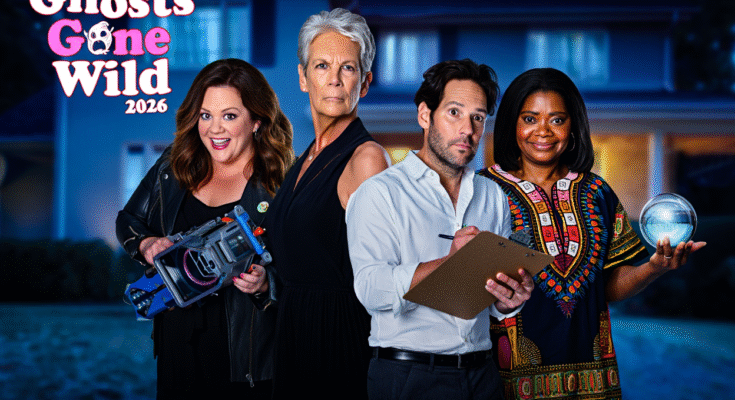
Ghosts Gone Wild knows exactly what it is — and never apologizes for it. This is not a horror film pretending to be funny, nor a comedy that accidentally stumbles into scares. It’s a full-on supernatural party movie that weaponizes chaos, timing, and an absurdly strong ensemble cast to turn haunting into havoc.
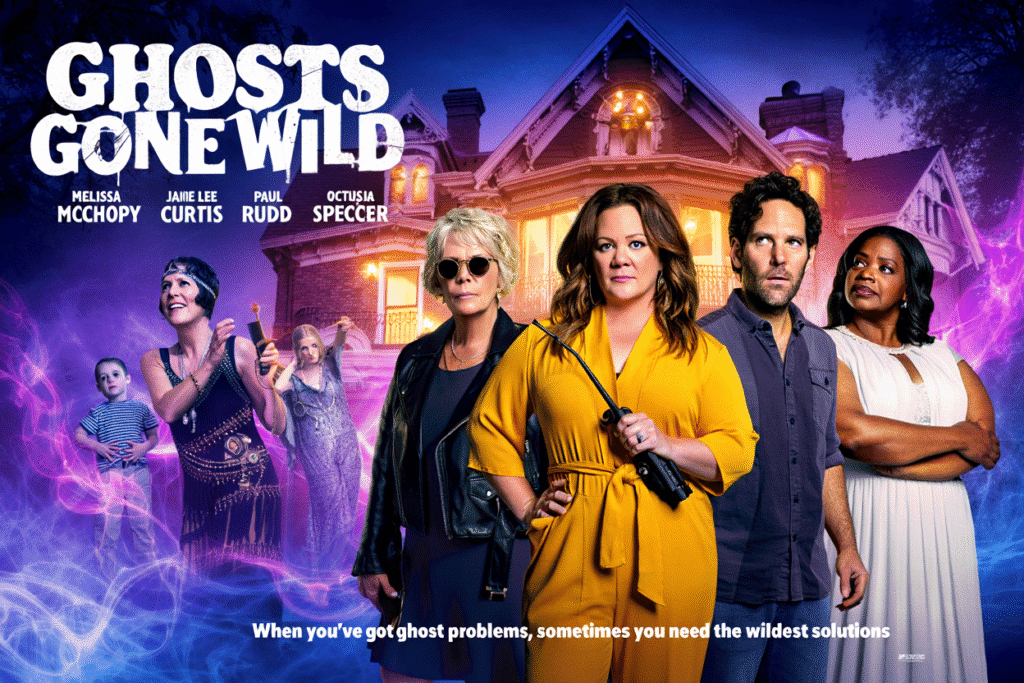
Melissa McCarthy once again proves she is unmatched in controlled mayhem. Her Kate is loud, impulsive, wildly unprofessional — and completely magnetic. McCarthy leans into physical comedy, improvised-feeling chaos, and perfectly timed reactions, but she never lets the character become disposable. Kate’s exhaustion with “serious paranormal rules” becomes the film’s thesis: maybe ghosts don’t need solemn rituals — maybe they need boundaries and a noise complaint.
Jamie Lee Curtis plays Lorraine with delicious contrast. Where Kate explodes, Lorraine simmers. Curtis delivers dry, lethal one-liners with the confidence of someone who has faced real demons and is deeply annoyed that this is how she’s spending her semi-retirement. Her gradual descent from composed authority to reluctant participant in ghost dance-offs is one of the film’s greatest pleasures.
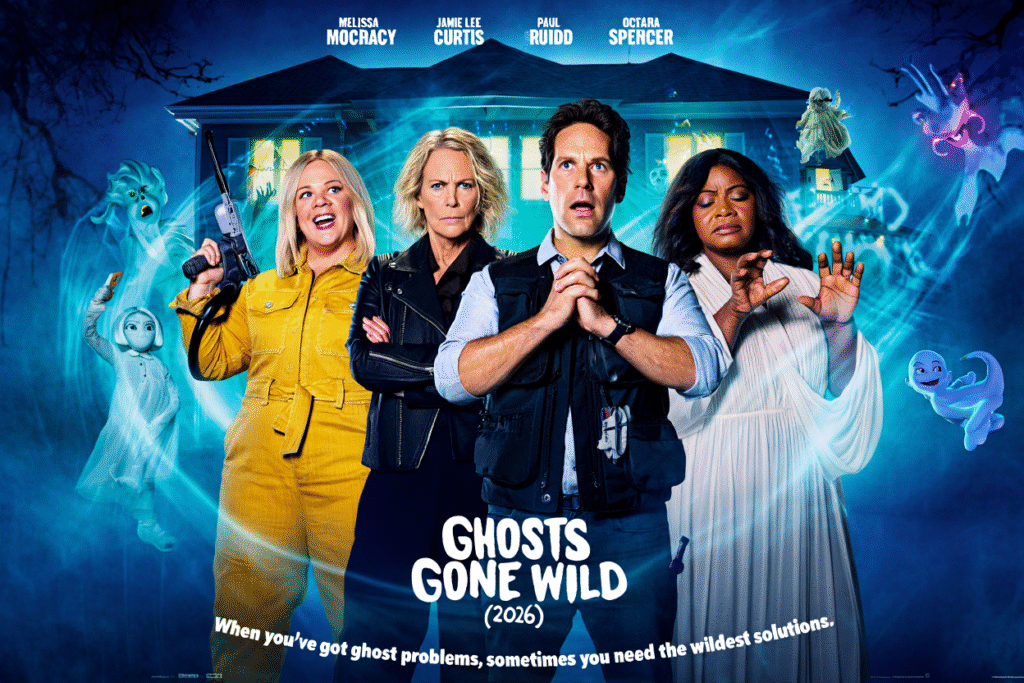
Paul Rudd is used flawlessly. His Danny isn’t just scared — he’s existentially offended by everything paranormal. Rudd’s deadpan delivery, awkward pauses, and visible discomfort make him the ghosts’ favorite target, and the film milks this dynamic mercilessly. Watching him try to apply logic to ghosts doing keg stands is comedy gold.
Octavia Spencer grounds the madness. Mildred could have been the “serious psychic” cliché, but Spencer plays her with warmth, confidence, and quiet exasperation. She treats the ghosts like unruly relatives rather than threats, and that tonal balance keeps the film from tipping into pure sketch comedy. She’s the emotional anchor — even when dodging flying spectral furniture.
The ghosts themselves are the film’s secret weapon. Instead of leaning on jump scares, Ghosts Gone Wild builds personality-driven chaos: flapper spirits who refuse to let the Roaring Twenties die, a prank-obsessed ghost child who understands modern trolling better than TikTok, and a mansion that feels less cursed than chronically overstimulated. The supernatural rules are loose, but intentionally so — this is about escalation, not mythology.
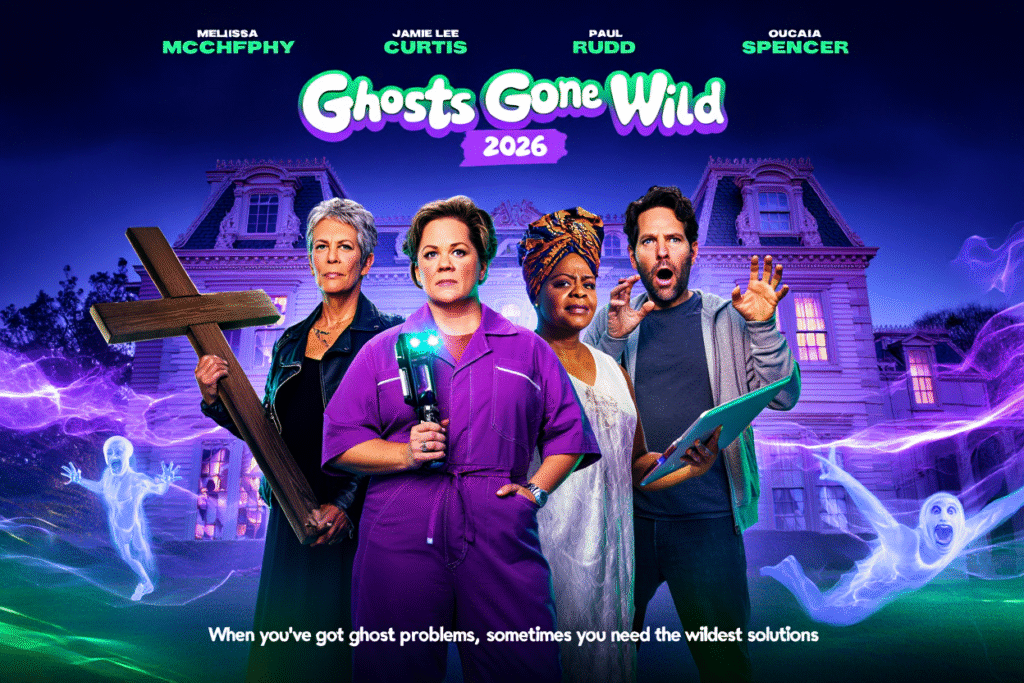
Visually, the film embraces color, movement, and kinetic set pieces. Neon séance lights, slow-motion ghost dance battles, and wine glasses floating just to be petty — it’s playful without being cheap. The horror elements are present, but always undercut by timing and absurdity rather than fearlessness.
What makes Ghosts Gone Wild work is restraint in the script. It knows when to let a joke breathe and when to pull back before exhaustion sets in. Beneath the noise is a surprisingly coherent theme: chaos doesn’t come from the dead — it comes from refusing to adapt. These ghosts aren’t evil. They’re bored.
The final act doesn’t aim for emotional devastation — it aims for communal catharsis. The solution isn’t exorcism, but negotiation, structure, and one final absolutely unhinged party that somehow resolves everything. It’s ridiculous. It’s earned. And it fits the film’s tone perfectly.
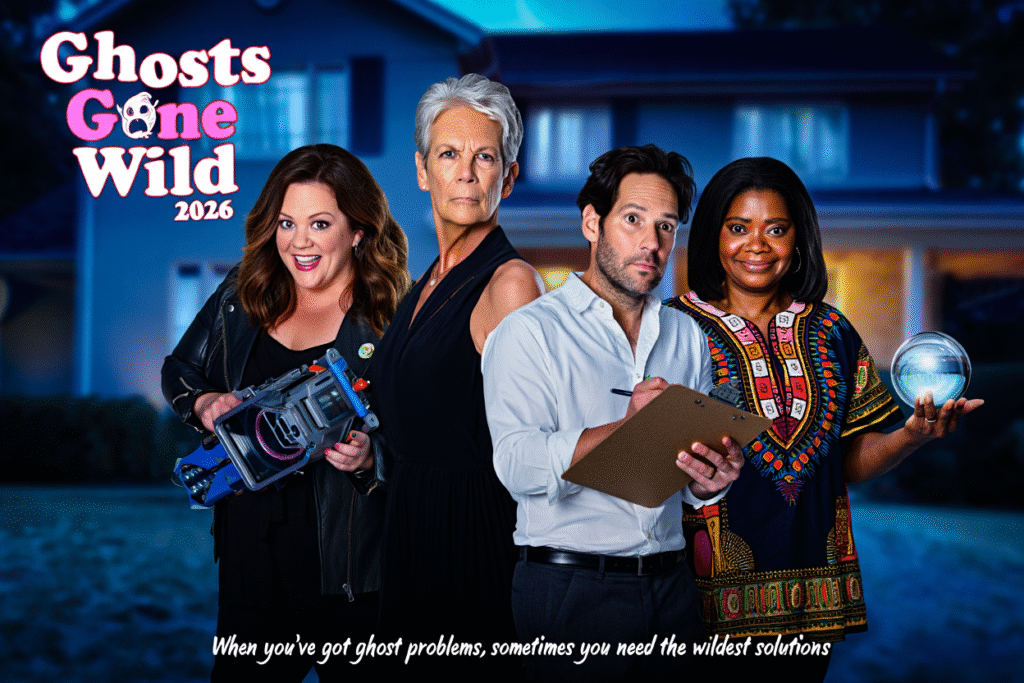
Ghosts Gone Wild won’t redefine horror-comedy — but it doesn’t need to. It understands its mission: deliver relentless laughs, supernatural nonsense, and a cast clearly having the time of their lives. Sometimes the afterlife isn’t terrifying.
Sometimes it just needs to calm down. 👻🎉