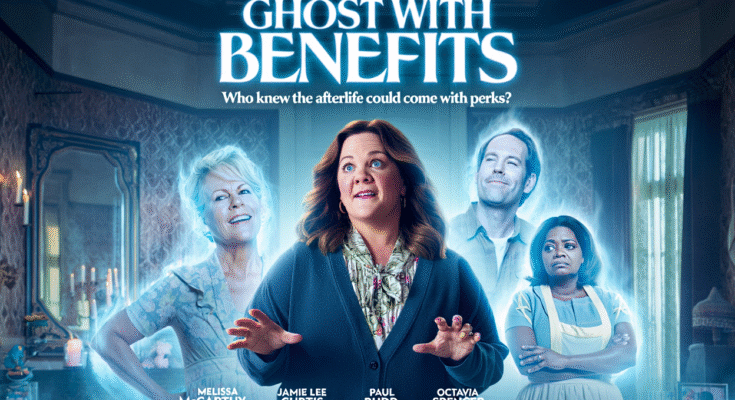
Ghost with Benefits leans fully into its high-concept title, delivering a warm, joke-packed supernatural comedy that feels like a spiritual cousin to Beetlejuice and Ghostbusters, filtered through modern, family-friendly humor. The film knows exactly what it wants to be: playful, character-driven, and unapologetically comforting.
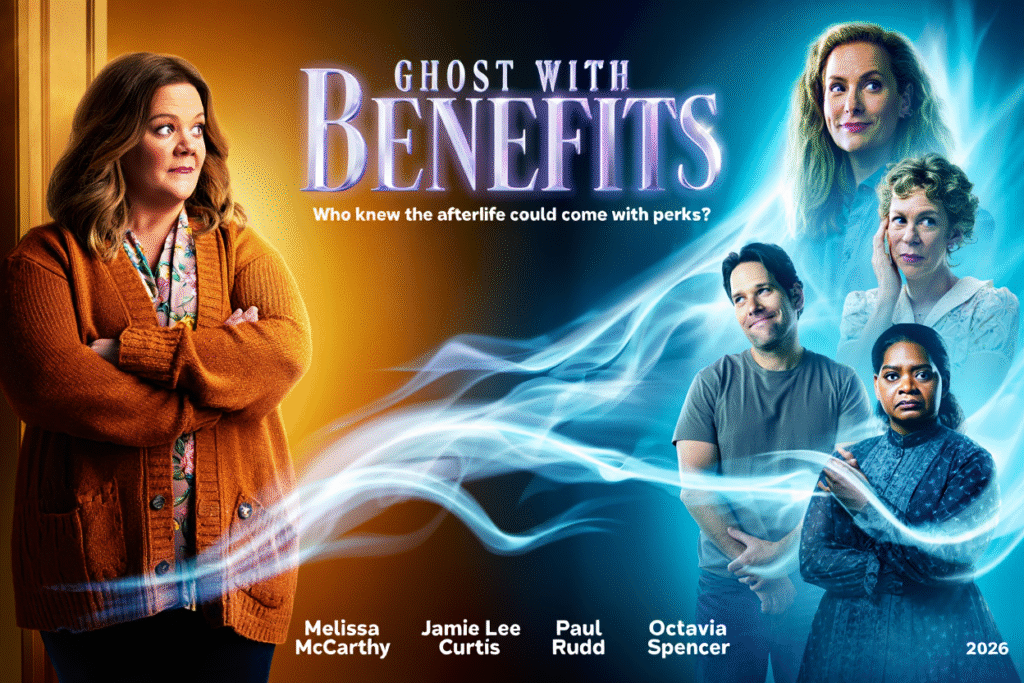
Melissa McCarthy anchors the film with her signature blend of physical comedy and emotional sincerity. As Kate, a woman whose life has quietly fallen apart, McCarthy brings vulnerability beneath the jokes, making her transformation from overwhelmed outsider to confident homeowner genuinely satisfying. Her reactions to the supernatural are exaggerated just enough to sell the comedy without breaking immersion.
Jamie Lee Curtis steals scenes as Rose, the sharp-tongued ghost leader whose mischief hides decades of unresolved emotion. Curtis plays her with theatrical flair, turning sarcasm into a character trait rather than a gimmick. Rose isn’t just funny—she’s oddly wise, embodying the film’s message that growth doesn’t stop after death.
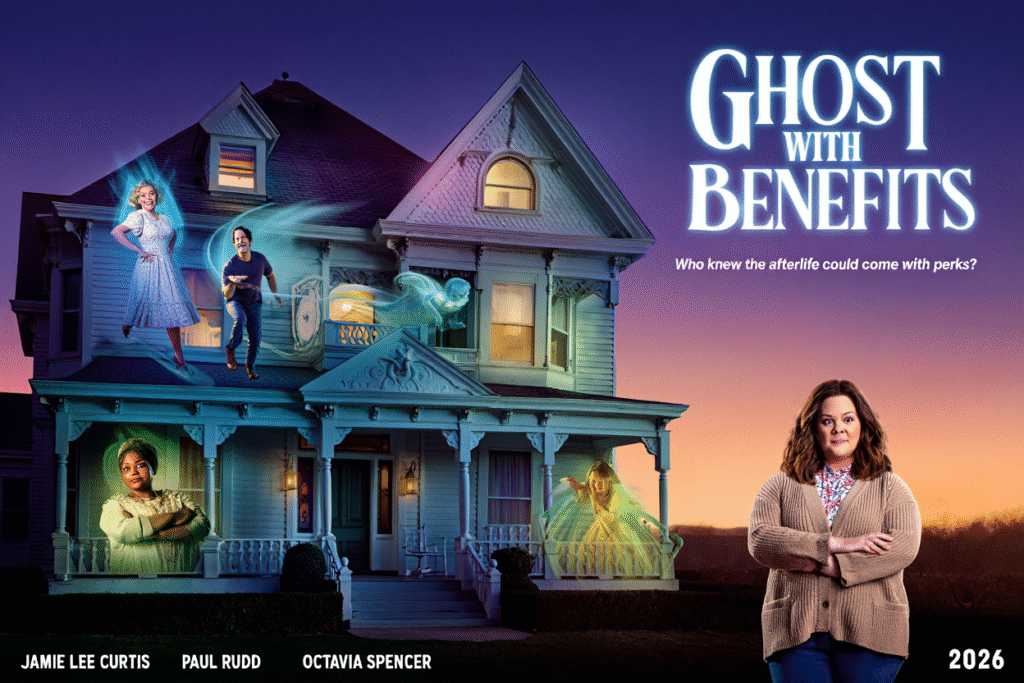
Paul Rudd’s Dave is effortless charm incarnate. His laid-back, nap-loving ghost becomes a comedic pressure valve, delivering some of the film’s best throwaway lines and visual gags. Rudd’s performance thrives on understatement, making Dave’s indifference to chaos hilariously contagious.
Octavia Spencer grounds the ensemble as Clara, the protective and pragmatic ghost whose loyalty defines the group. Spencer adds emotional weight to what could have been a purely comic role, giving the ghostly “family” a sense of history and purpose. Her presence elevates the film’s heart without slowing its pace.
The “ghost benefits” concept is where the film truly shines. Each supernatural favor comes with unintended consequences, creating a steady rhythm of escalating mishaps. Rather than relying on one-off jokes, the film smartly builds running gags that pay off later, rewarding attentive viewers.
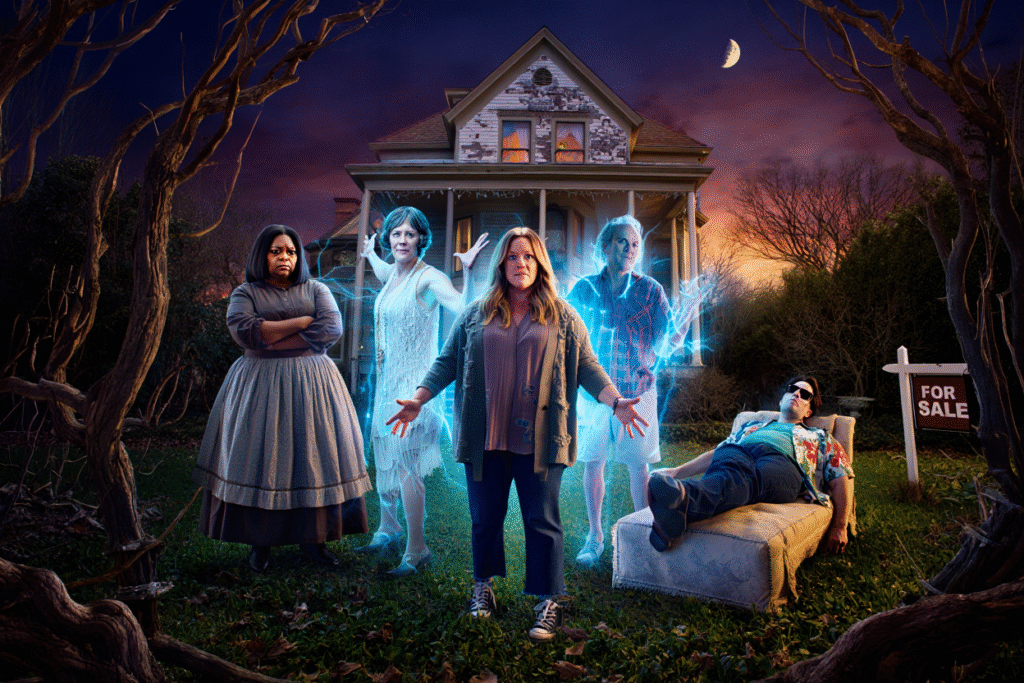
The villainous developer subplot is familiar but effective. While not particularly complex, it serves as a catalyst that unites the living and the dead, reinforcing the film’s central theme: community matters more than convenience. The stakes remain personal, which keeps the story grounded despite its supernatural elements.
Visually, the film opts for cozy over creepy. The house feels lived-in rather than haunted, and the ghosts are stylized to appear expressive instead of frightening. This choice supports the family-friendly tone and allows humor to take precedence over scares.
What sets Ghost with Benefits apart from similar ghost comedies is its emotional throughline. Beneath the jokes is a story about found family, second chances, and the idea that help can come from unexpected places—even from those who’ve already lived their lives.
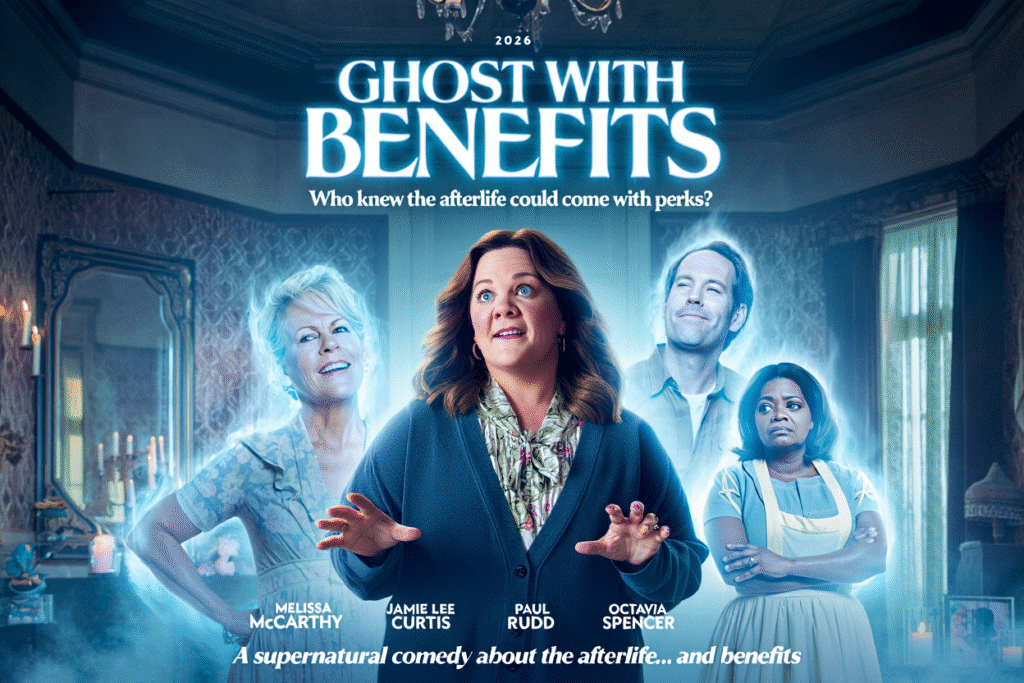
In the end, Ghost with Benefits succeeds because it understands balance. It’s funny without being loud, heartfelt without being sentimental, and supernatural without being scary. The result is a charming crowd-pleaser that proves the afterlife, at least in the movies, can come with surprisingly great perks.