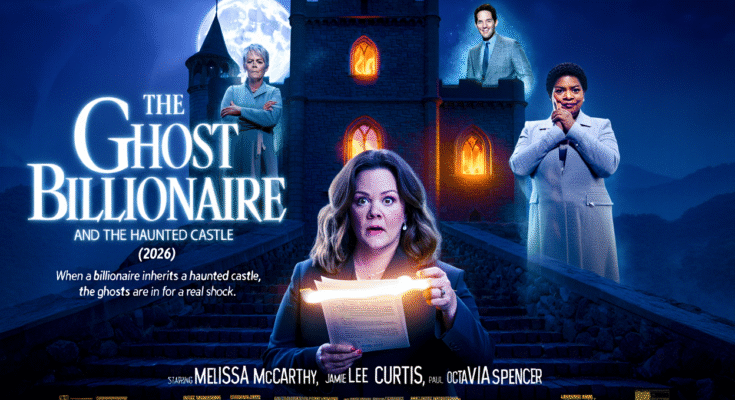
The Ghost Billionaire and the Haunted Castle continues the now-familiar formula of supernatural comedy by pairing an everyday outsider with an extraordinary haunted setting, but it refreshes the trope by making its heroine absurdly wealthy rather than down on her luck. The result is a light, playful family film that leans heavily on charm, ensemble chemistry, and gentle satire about money, belonging, and what really makes a place feel like home.
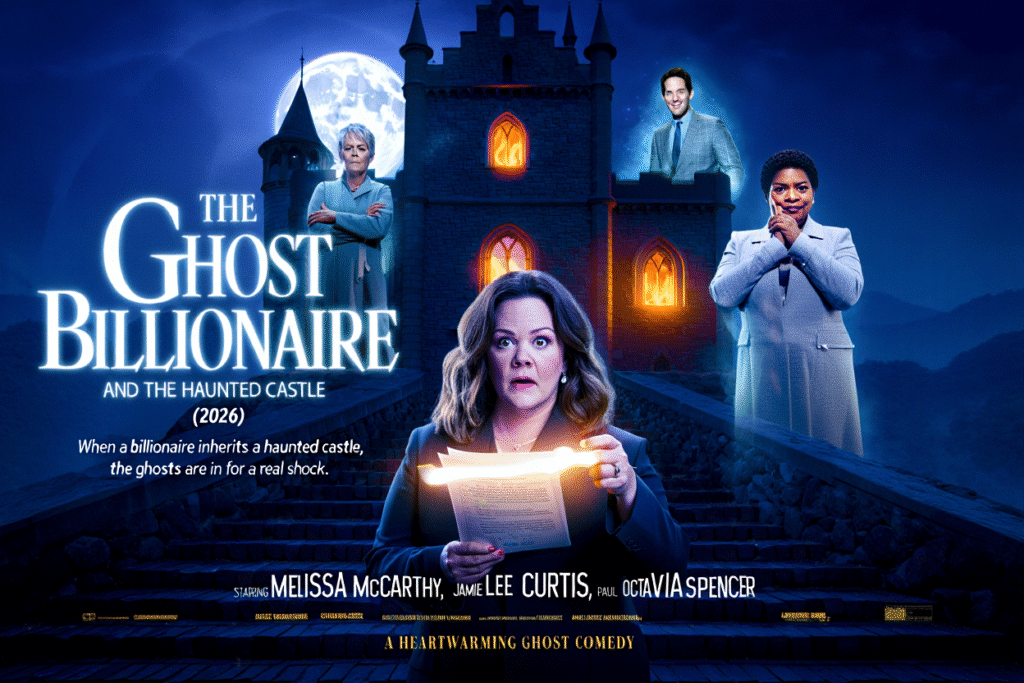
Melissa McCarthy anchors the film as Rachel, a newly minted billionaire whose confidence in boardrooms completely evaporates the moment ghosts start rearranging her furniture. McCarthy smartly avoids playing Rachel as arrogant; instead, she portrays her as overwhelmed, self-aware, and surprisingly lonely. The contrast between her financial power and her total lack of supernatural control becomes one of the film’s most reliable comedic engines.
Jamie Lee Curtis once again steals scenes as Rose, the sharp-tongued ghost who has appointed herself the castle’s eternal manager. Curtis brings precision and bite to the role, delivering deadpan insults and centuries-old grievances with theatrical flair. Rose isn’t just comic relief—she functions as the emotional spine of the ghost ensemble, embodying tradition, memory, and resistance to change.
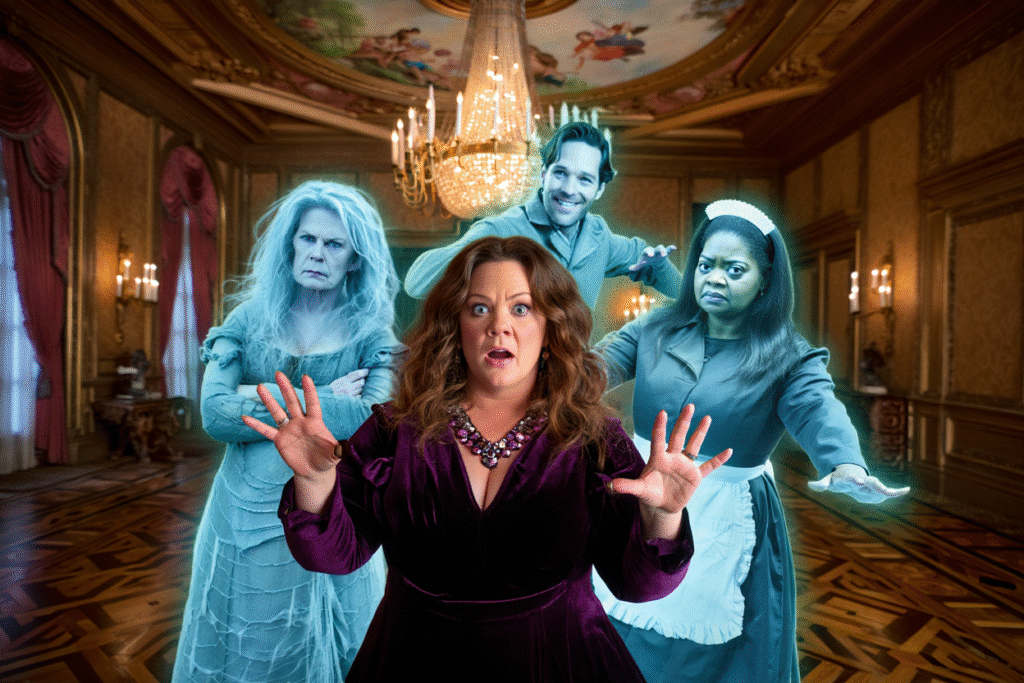
Paul Rudd’s Dave provides the film’s softest humor. His ghost is charmingly unmotivated, having grown far too comfortable haunting without purpose. Rudd’s relaxed delivery and self-aware laziness play beautifully against McCarthy’s frantic energy, and their odd-couple dynamic produces some of the film’s most effortlessly funny moments.
Octavia Spencer’s Clara adds weight and warmth to the story. As the castle’s self-appointed guardian, she’s suspicious of Rachel from the start, and Spencer plays this distrust with quiet authority rather than loud comedy. Her performance grounds the supernatural hijinks, reminding the audience that the castle isn’t just a setting—it’s a legacy worth protecting.
The haunted castle itself is a standout character. Visually, the film embraces gothic whimsy rather than horror, filling its halls with hidden passages, glowing relics, and playful hauntings that feel magical instead of frightening. The production design strikes a careful balance between spooky and cozy, making the castle a place you’d actually want to explore—even if it came with ghosts.
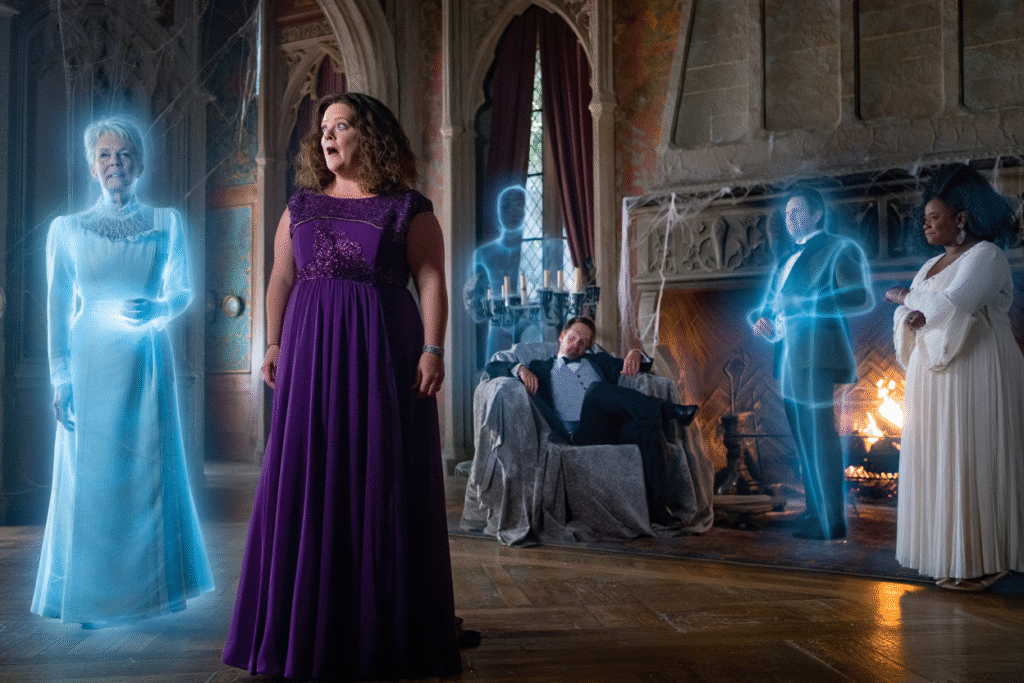
Narratively, the film follows a familiar trajectory, especially once the real estate mogul enters the story. The “evil developer” trope is well-worn, and while the film doesn’t reinvent it, it uses the conflict efficiently to unite the living and the dead. The threat serves more as a catalyst for character growth than a source of genuine tension.
The film’s humor is broad but accessible, favoring situational comedy, verbal sparring, and supernatural sight gags over anything mean-spirited. Importantly, it never undercuts its emotional beats for a cheap laugh. Moments of reflection—about legacy, loneliness, and belonging—are allowed to breathe, giving the film more heart than its premise initially suggests.
Where The Ghost Billionaire and the Haunted Castle truly succeeds is in its theme: money can buy comfort, but not connection. Rachel’s journey isn’t about learning humility so much as learning presence—understanding that value lies in shared history and chosen family, even if that family happens to be dead.
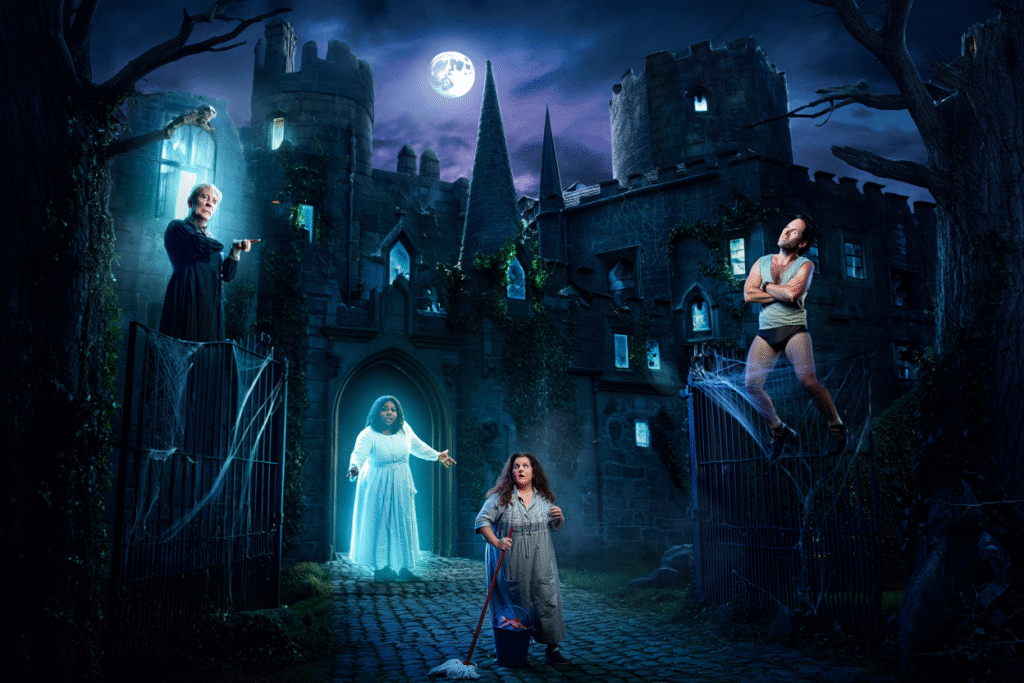
In the end, this is a warm, crowd-pleasing ghost comedy that knows exactly what it wants to be. It doesn’t push boundaries or redefine the genre, but with a likable cast, polished humor, and a surprisingly sincere emotional core, The Ghost Billionaire and the Haunted Castle earns its place as a cozy, rewatchable supernatural family film—proof that even billionaires can’t escape being haunted by what truly matters.