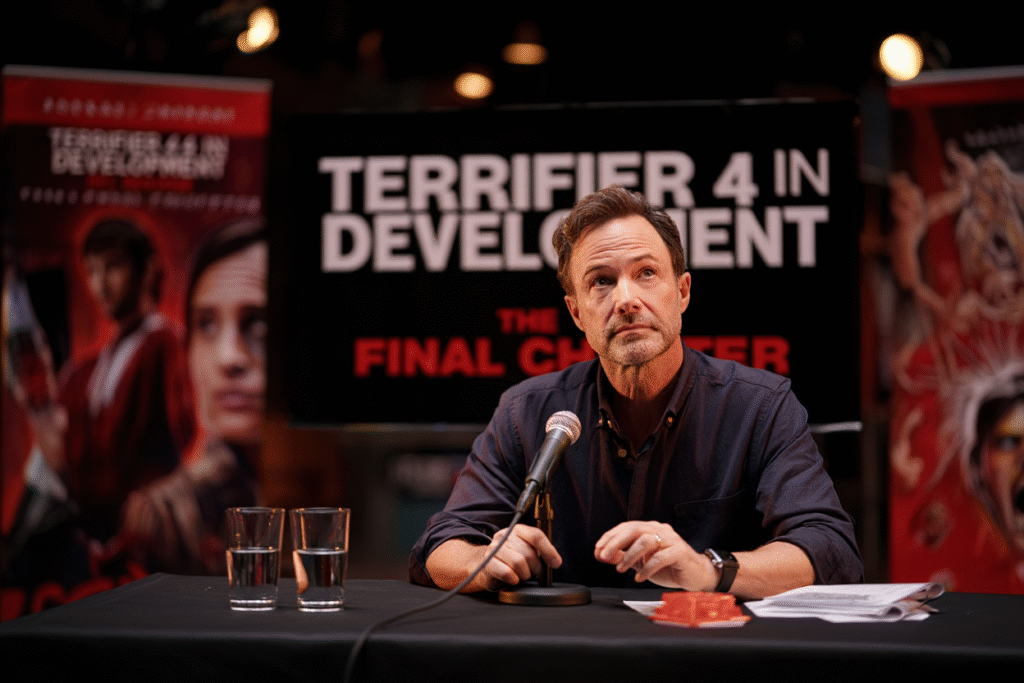
With Terrifier 4 officially in development, director Damien Leone isn’t just promising another chapter — he’s preparing an ending. Described as the “epic closure” to Art the Clown’s saga, this final installment carries the weight of a franchise that has redefined modern slasher horror through sheer brutality, audacity, and an almost mythic commitment to its villain.
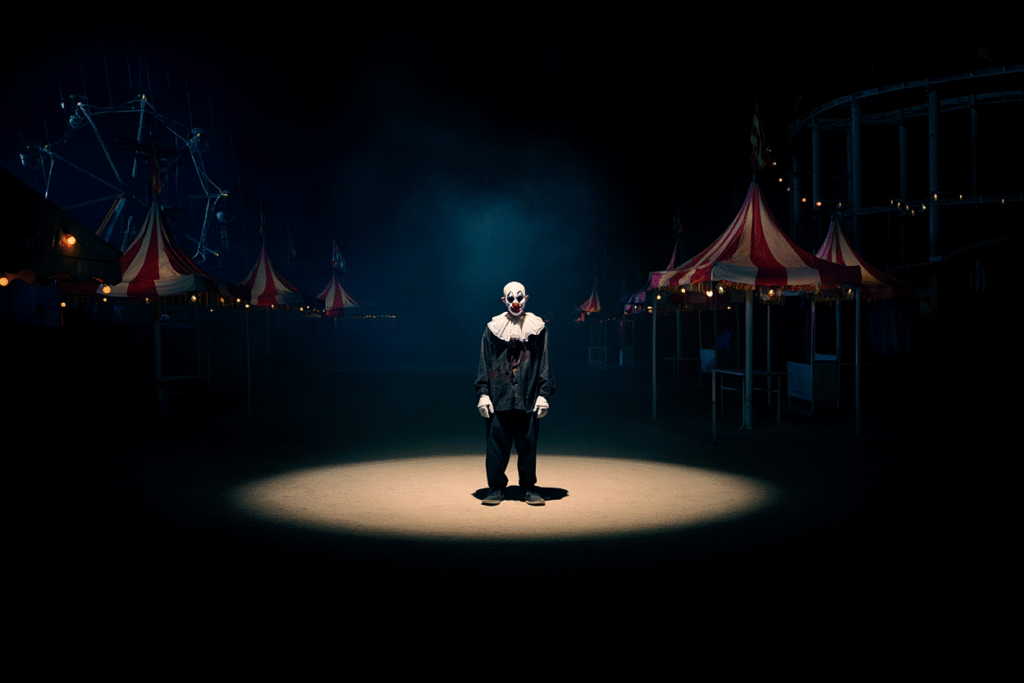
From the beginning, Terrifier has never been about subtlety. It thrives on excess — of violence, of tension, of discomfort — and Art the Clown stands at the center of it all, a silent, sadistic force who has become one of the most disturbing horror icons of this generation. The idea of concluding his story immediately raises one question: how do you end something that feels so unstoppable?
Damien Leone appears fully aware of that challenge. Calling this film an “epic closure” suggests something far more ambitious than a standard slasher finale. It hints at scale, mythology, and perhaps even answers — something the series has deliberately avoided until now. For a character like Art, whose power lies in his unpredictability, offering resolution is a risk… but also an opportunity.
What makes this announcement particularly compelling is the expectation of escalation. Each film has pushed boundaries further than the last, not only in terms of gore, but in endurance — testing both its characters and its audience. Terrifier 4 is poised to go even further, not just to shock, but to leave a lasting impression that feels final.
At the heart of the franchise is the unsettling mystery of Art himself. He is more than a killer, yet never fully explained. Is he human? Something supernatural? A manifestation of pure cruelty? This final chapter may finally explore those questions, or it may choose to leave them partially unanswered — a decision that could define how the character is remembered.
There’s also the matter of legacy. Few modern horror villains have achieved the cult status that Art has in such a short time. Ending his story isn’t just about narrative closure — it’s about preserving that impact. A weak finale risks diminishing the terror he represents; a strong one could cement him as a timeless figure in horror history.
Tonally, the film is expected to maintain the franchise’s signature intensity, but with a sharper focus. Final chapters often shift from chaos to confrontation, from randomness to purpose. If Leone follows that path, Terrifier 4 could transform Art’s violence into something more symbolic — a final, brutal statement rather than an endless cycle.
There’s also an emotional dimension quietly emerging beneath the bloodshed. Previous entries have begun to explore survival, trauma, and resilience, particularly through characters who endure Art’s torment. A true “closure” suggests these threads may finally reach resolution, giving the horror a human anchor.
Visually, expectations are high. The Terrifier films have built a reputation for practical effects that feel disturbingly real, and there’s little doubt that this final installment will push that craftsmanship to its limit. But spectacle alone won’t define it — it’s the atmosphere, the pacing, and the sense of inevitability that will determine its success.
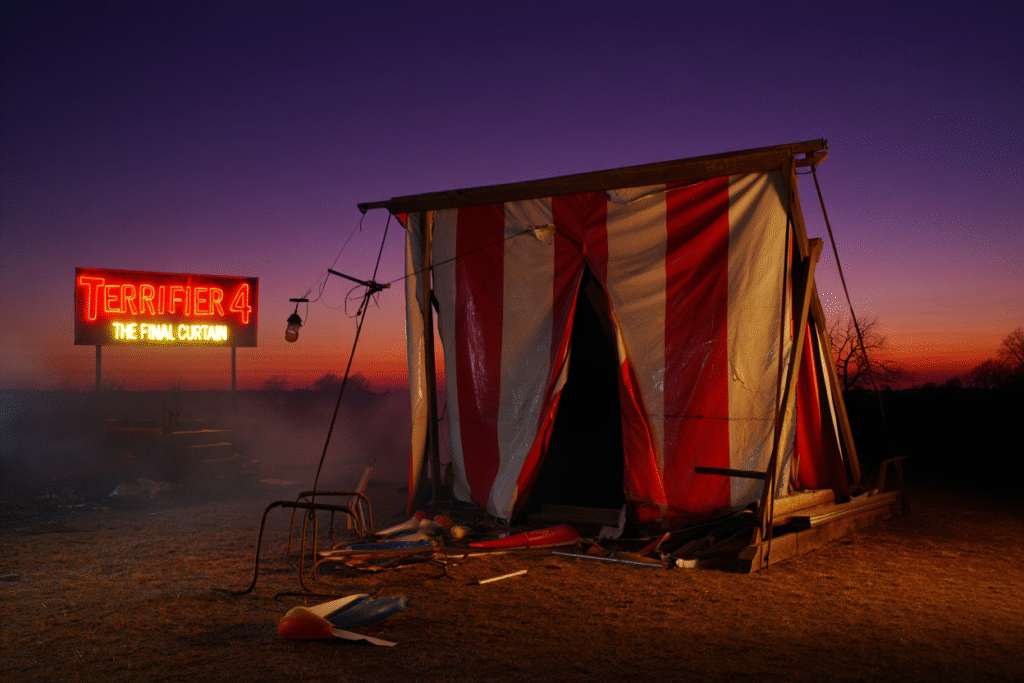
Perhaps the most unsettling aspect of this finale is the idea that even an ending may not feel like one. Art the Clown is not just a character — he’s an experience, a presence. Concluding his story doesn’t necessarily mean erasing his impact. If anything, it may make it linger even longer.