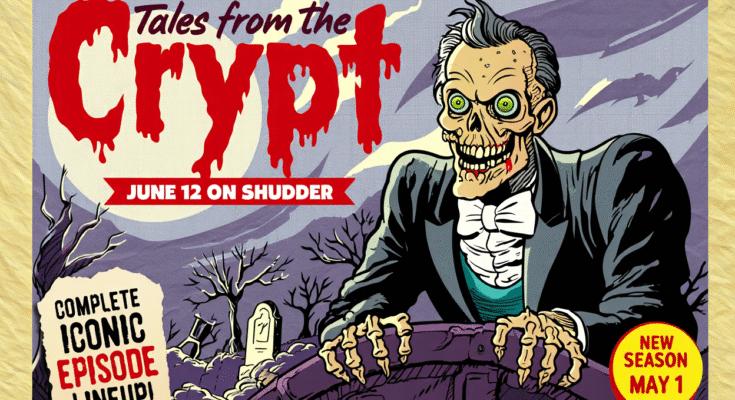
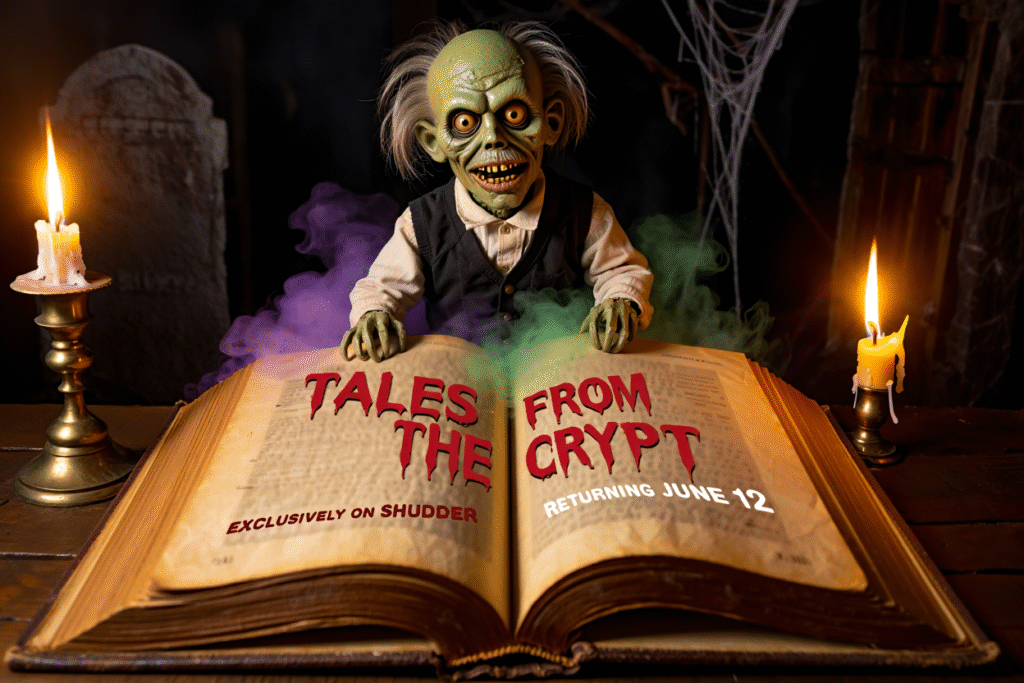
Some horror icons never truly die — they simply wait in the dark for the right moment to return. With Tales from the Crypt officially making its comeback on Shudder, the gates to one of television’s most beloved horror anthologies are opening once again. And with them comes the unmistakable laugh of the Crypt Keeper, ready to torment a whole new generation.
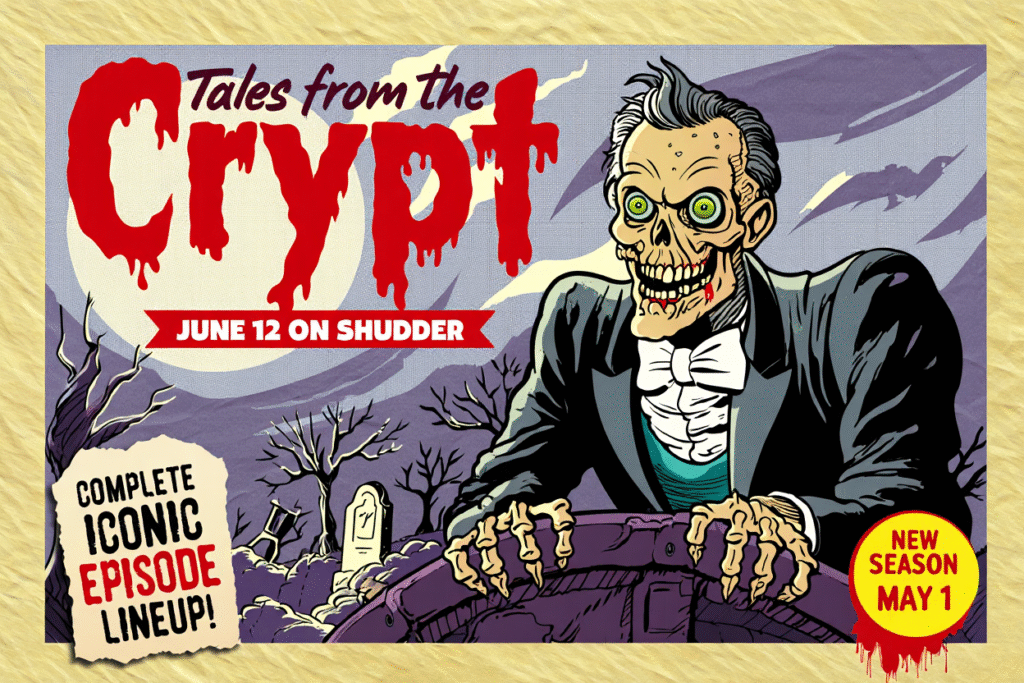
For longtime fans, this revival carries the weight of nostalgia and expectation. The original series thrived because it understood horror could be both terrifying and wickedly fun. It balanced gruesome morality tales with pitch-black humor, delivering stories where greed, betrayal, vanity, and cruelty were often punished in the most ironic ways imaginable. Few anthologies embraced camp and cruelty so confidently.
The decision to launch with a lineup of iconic episodes is a smart one. It reconnects audiences with the show’s roots while reintroducing its twisted DNA to viewers who may never have experienced it before. These episodes were more than simple horror stories — they were cautionary fables wrapped in blood, sarcasm, and unforgettable endings.
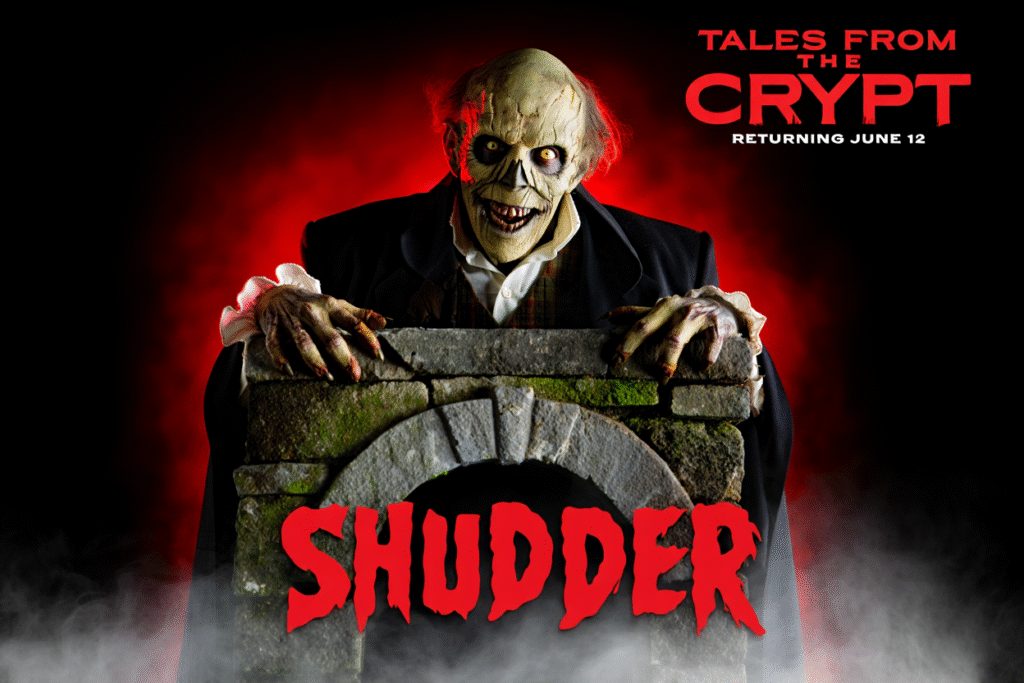
But the true excitement lies in what comes next. With new seasons dropping weekly every Friday, the revival signals a commitment to serialized anticipation — something horror audiences crave. Anthology storytelling thrives when each week becomes a mystery, a fresh nightmare, a new chance to see justice twisted into something grotesque.
The return of the Crypt Keeper is perhaps the most significant element of all. He was never just a host; he was the spirit of the franchise itself. Equal parts ghoul, comedian, and ringmaster of chaos, his presence transformed every episode into an event. His return suggests the revival understands that personality matters just as much as horror.
What made the original Tales from the Crypt iconic was its confidence in tone. It could be ridiculous one moment, vicious the next, then strangely poignant before ending with a knife twist. If the new version captures that same tonal fearlessness, it has the potential to stand apart in a crowded modern horror landscape.
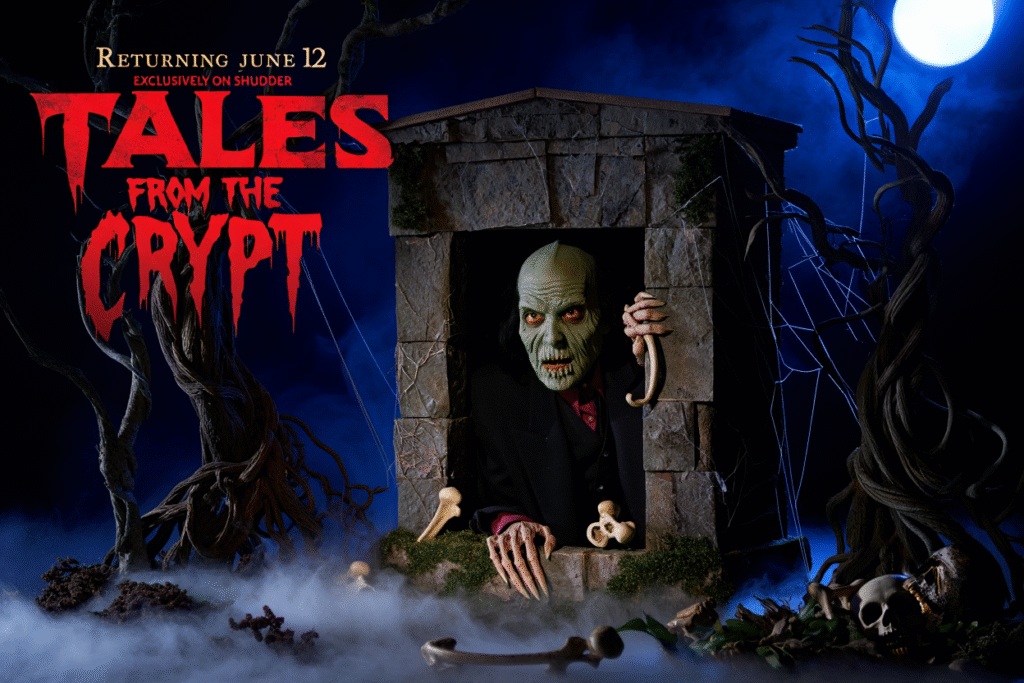
Modern horror elements also open exciting possibilities. Today’s anxieties are different: digital identity, surveillance, obsession, social media vanity, corporate exploitation, isolation masked as connection. The anthology format is perfectly suited to turning these contemporary fears into compact nightmares with the series’ trademark bite.
There is also an opportunity for visual reinvention. The original had practical grit and comic-book energy; a revival can blend that spirit with sharper cinematography and modern effects without losing the grimy charm that made the stories feel dangerous. Style will matter, but atmosphere will matter more.
If successful, the series could become one of the year’s most talked-about horror releases not because of nostalgia alone, but because anthologies remain one of horror’s purest forms. No long commitment, no safety net — just story, tension, punishment, and payoff. Every episode must earn its ending.
The real challenge will be resisting the urge to become too polished or self-serious. Tales from the Crypt worked because it reveled in wicked fun. It laughed while delivering the axe. It winked while digging the grave. That mischievous cruelty is essential.
This return feels timely. In an era where horror often explores trauma and realism, there is room again for gleeful, stylish moral nightmares that entertain as much as they disturb. Tales from the Crypt can offer both.
If the Crypt Keeper truly comes back with sharp stories, brutal irony, and that signature cackle, this won’t just be a revival — it’ll be a resurrection.
And some doors are better left unopened… but far less fun when they stay closed.