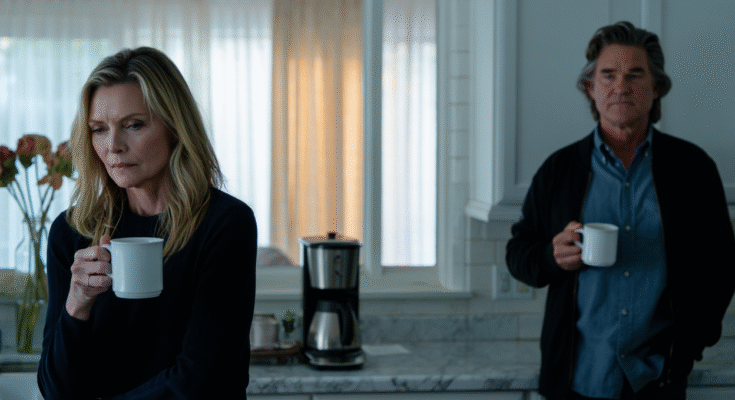
Where Love Ends appears to understand one of romance’s most painful truths: relationships rarely collapse in dramatic explosions. More often, they erode quietly — through routine, avoidance, fatigue, and the slow accumulation of things never said. This teaser promises not melodrama, but emotional realism, and that restraint may be its greatest strength.

Michelle Pfeiffer and Kurt Russell are inspired casting for a story about mature love under strain. Their lived-in screen presence alone suggests decades of shared history. They do not need grand speeches to convey intimacy or distance; a glance, pause, or exhausted silence from actors of this caliber can hold entire chapters of marriage.
At the center is a couple who built a life sturdy enough to survive time, yet perhaps too dependent on habit to survive emotional drift. That distinction matters. Stability can disguise emptiness. Routine can imitate connection long after genuine closeness has weakened. The film seems intent on exploring that subtle tragedy.
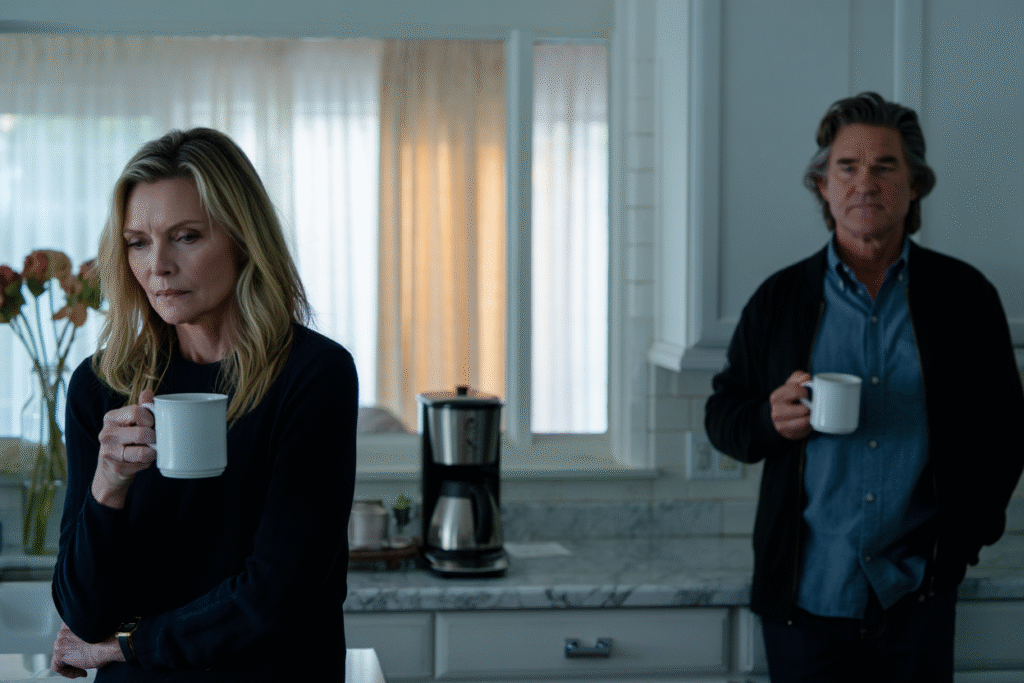
The buried secret is wisely described not as explosive scandal, but something that lingers. That is psychologically sharper. Some truths do not destroy instantly; they alter memory itself. Once revealed, they force people to revisit anniversaries, arguments, tenderness, and sacrifice through a different lens.
This reexamination of shared history could become the film’s most devastating layer. When trust shifts, even happy memories become uncertain. Viewers are not just watching a marriage crack in the present — they are watching the past destabilize.
Kelly Reilly’s presence suggests a secondary storyline rich with emotional intelligence. She often portrays women balancing strength with yearning, making her ideal for a character torn between independence and longing. Her arc likely mirrors the main story from a different stage of life.
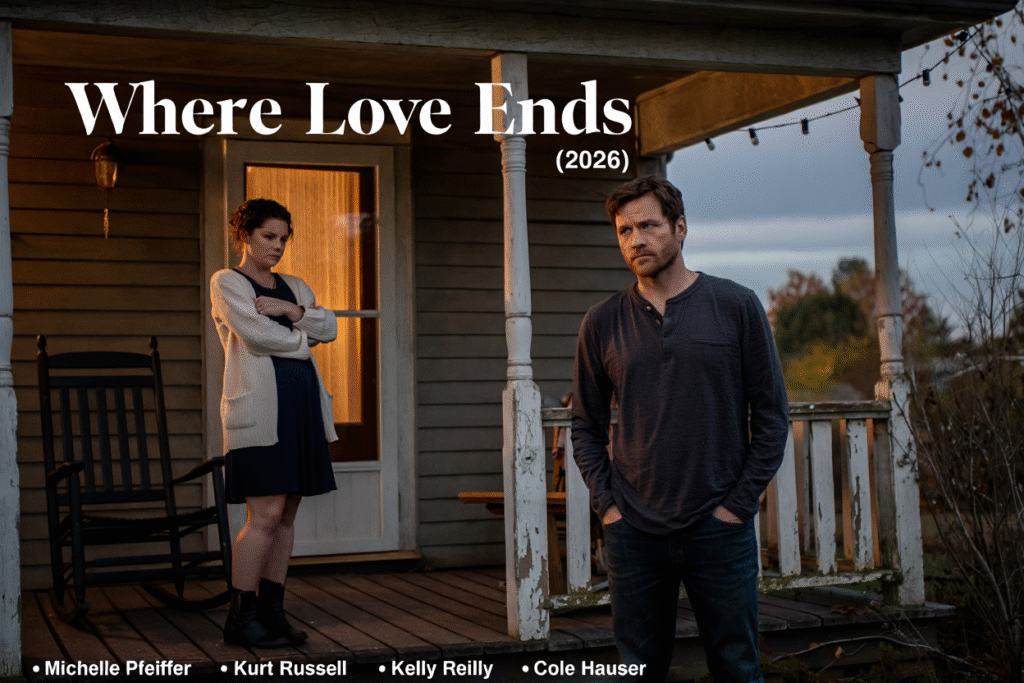
Cole Hauser brings grounded intensity that suits a man wrestling with loyalty and temptation. If written well, his role should avoid cliché and instead explore how emotional hunger can emerge not from selfishness, but from neglect, loneliness, or the desire to feel alive again.
The teaser’s emphasis on quiet rooms, soft lighting, and unsaid things indicates confidence in atmosphere over manipulation. Many films mistake volume for feeling. Where Love Ends seems to trust stillness — the sound of dishes in another room, two people sitting apart, a question left unanswered.
Its central question is profoundly adult: do you fight for love because history deserves effort, or do you accept that love has transformed into something no longer sustaining? There is no easy moral answer. Sometimes endurance is noble. Sometimes letting go is mercy.
What could elevate the film further is refusing villains. Long relationships often end not because one person is monstrous, but because both changed while pretending they had not. That shared human frailty is more heartbreaking than betrayal alone.
By the time the teaser lands on its final idea — that the end of love is realized before it is spoken — it captures a sorrow many recognize but rarely articulate. Goodbye often comes long after the emotional departure.
Where Love Ends has the makings of a subtle, deeply affecting drama. It reminds us that love’s most painful endings are not always sudden losses, but slow awakenings to what has already slipped away.