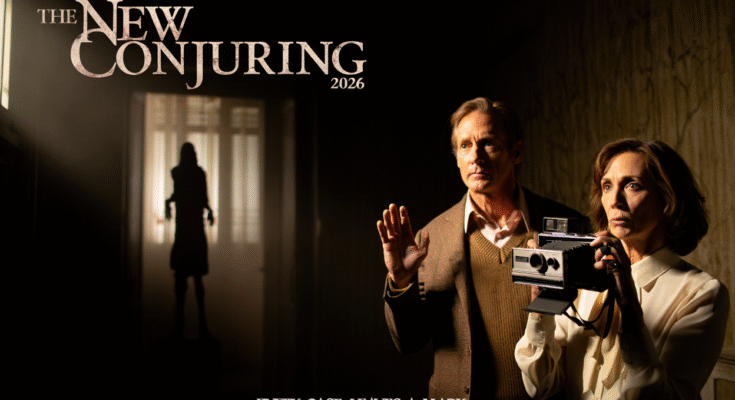
The New Conjuring understands the central challenge facing any long-running horror franchise: fear fades when repetition becomes familiar. The teaser’s smartest move is not promising a louder demon or bigger spectacle, but something more dangerous — a case that was never meant to be reopened. Mystery remains the franchise’s strongest weapon.

Vera Farmiga and Patrick Wilson returning as Lorraine and Ed Warren is still the emotional spine of the series. Many supernatural franchises rely entirely on monsters; The Conjuring succeeded because it anchored terror in a marriage. Their warmth, faith, and mutual devotion gave audiences human stakes amid the paranormal chaos.
Farmiga’s Lorraine has always been especially crucial. She portrays sensitivity not as weakness, but burden — a woman whose gift exposes her to pain others never see. If this new case is deeply personal, Lorraine becomes the natural emotional center.
Patrick Wilson’s Ed balances that intensity with grounded steadiness. His strength has never been invincibility, but persistence. He is most compelling when confronting forces he cannot fully understand yet refuses to abandon those endangered by them.
The tagline — Every case leaves a mark… but this one was never meant to be opened again — suggests trauma rather than simple haunting. That is where the franchise can evolve. Instead of external evil invading a home, the danger may come from something previously buried by the Warrens themselves.
This introduces moral complexity. What did they choose to seal away? What truth was hidden? Horror becomes richer when protagonists are not merely victims or heroes, but participants in the origins of fear.
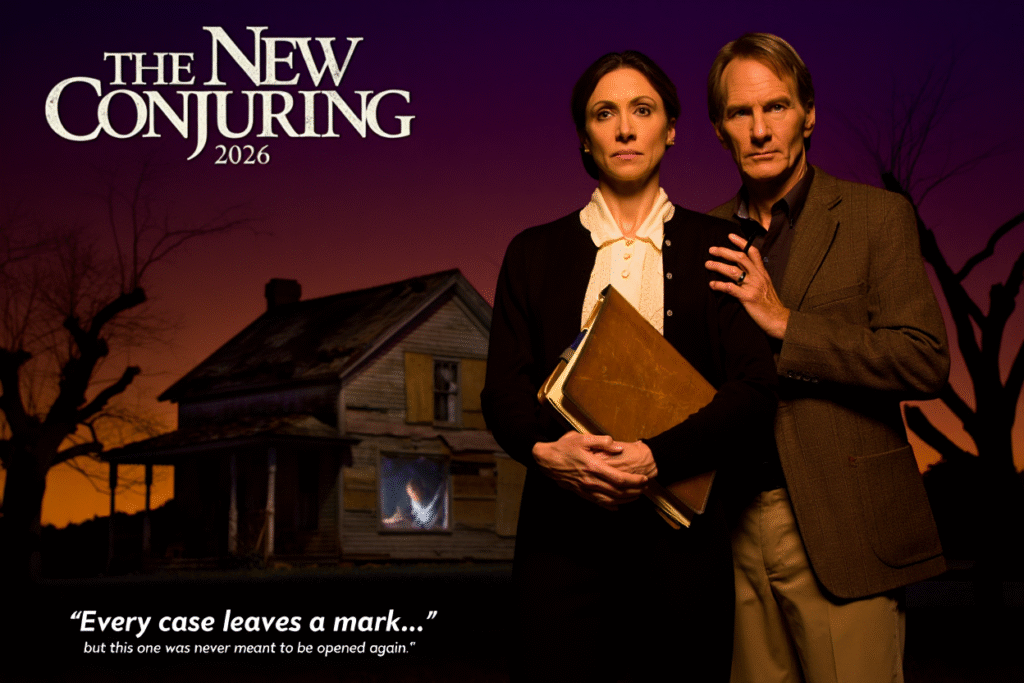
The teaser’s promise of slow-building dread is wise. The Conjuring universe works best through anticipation: footsteps in empty halls, doors moving inches, sounds from rooms no one entered, silence stretched until it becomes unbearable. Terror often lives in what almost happens.
A personal investigation also raises the emotional stakes. If the Warrens are no longer helping strangers but confronting consequences tied to their own history, every supernatural encounter gains psychological weight. Fear is sharper when it knows your name.
There is room here to explore aging as well. Returning to darkness after years of carrying previous scars can be frightening in ways youth cannot understand. Veterans of horror know exactly what can happen — and dread it more.
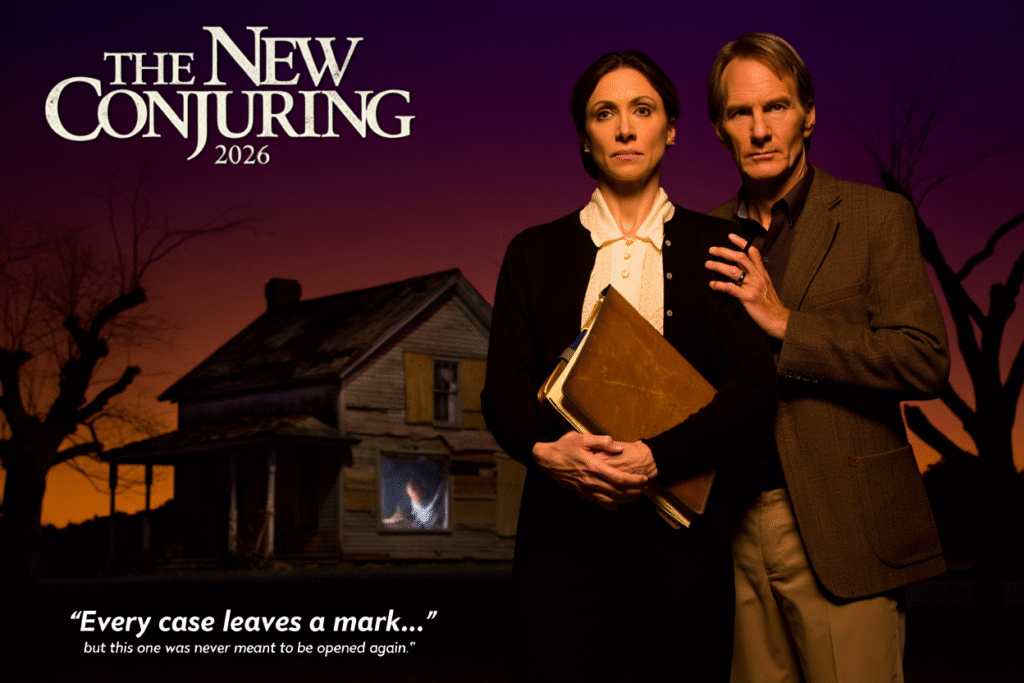
Visually, the franchise’s classic language remains effective: dim corridors, religious iconography, domestic spaces corrupted by unseen presence, and the contrast between ordinary family life and invading malice. Familiar aesthetics can still feel fresh when tied to intimate stakes.
The greatest risk would be overexplaining evil. The strongest Conjuring entries let malevolence feel ancient, patient, and partly unknowable. Once monsters become too mapped, they shrink.
The New Conjuring has the ingredients for a meaningful return: beloved leads, emotional investment, and a premise rooted in unfinished darkness rather than recycled spectacle. It reminds us that some investigations end on paper… but never in spirit.