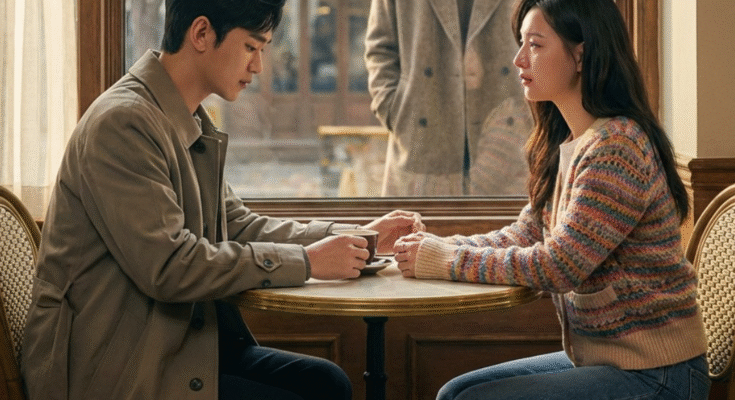
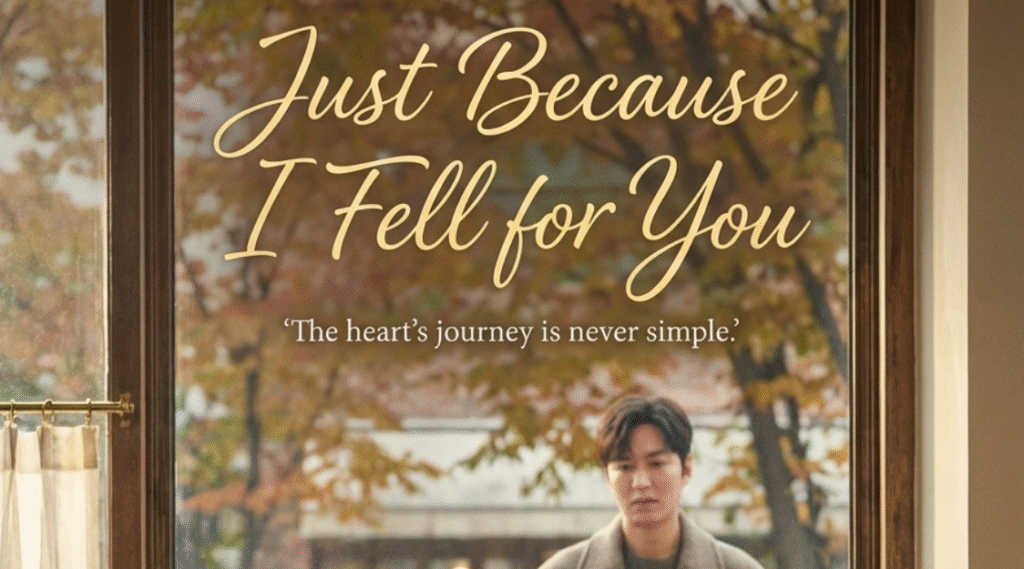
Just Because I Fell for You is the kind of romantic drama that doesn’t rush toward heartbreak — it lets it bloom slowly, beautifully, and inevitably. From its opening moments, the film signals that this is not a story about dramatic declarations, but about the silent weight of emotions we carry when love arrives uninvited.
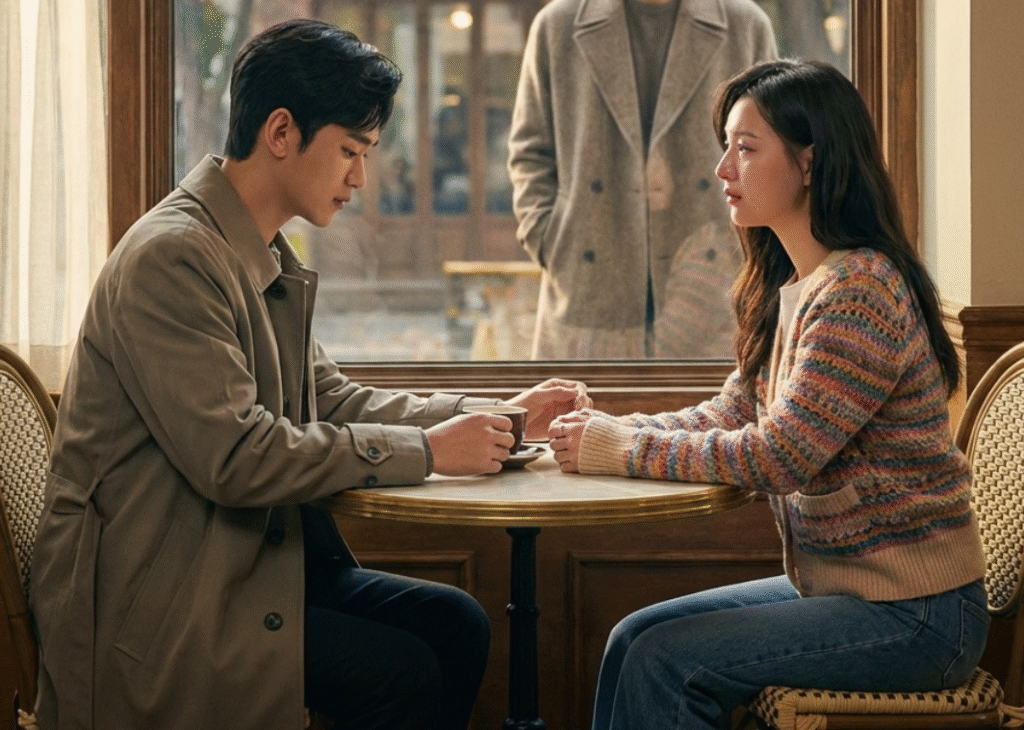
Kim Soo-hyun delivers a deeply restrained performance as Seung-jae, a writer who observes life more than he participates in it. He exists in pauses, unfinished sentences, and thoughts left unsaid. Soo-hyun plays him with an aching subtlety, making every glance and hesitation feel heavier than words. Seung-jae’s loneliness is not loud — it’s familiar, and painfully human.
Kim Ji-won’s Ji-eun enters the story like a breath of fresh air. She is warmth, movement, and spontaneity — the kind of person who disrupts routines simply by existing. Ji-won gives her character an effortless charm, but never lets her become a manic fantasy. Ji-eun feels real, flawed, and emotionally honest, which makes Seung-jae’s love for her feel both inevitable and terrifying.
Their relationship unfolds gently, built on shared silences, late-night conversations, and moments that feel insignificant until they aren’t. The film excels here, capturing how love often grows not through grand gestures, but through comfort. Seung-jae doesn’t fall because Ji-eun saves him — he falls because she sees him.
The emotional balance shifts with the return of Joon-ki, played by Lee Min-ho with confident restraint. Unlike Seung-jae, Joon-ki is direct, expressive, and unapologetically present. Min-ho avoids turning him into a rival stereotype; instead, he portrays a man confronting regret — someone who left too much unsaid and now refuses to repeat that mistake.
What makes the love triangle compelling is its emotional fairness. No one is villainized. Seung-jae’s quiet devotion, Joon-ki’s passionate persistence, and Ji-eun’s confusion all feel justified. The film understands that love isn’t a competition — it’s a collision of timing, history, and courage.
Ji-eun’s internal struggle becomes the emotional core of the film. Torn between a love that feels safe and one rooted in shared history, she is forced to confront what she truly wants versus what she feels obligated to protect. Kim Ji-won portrays this conflict with heartbreaking clarity, letting uncertainty sit uncomfortably rather than resolving it too quickly.
Visually, the film mirrors its emotional tone. Soft lighting, long takes, and quiet cityscapes create an atmosphere of intimacy and melancholy. The camera often lingers just a second too long, emphasizing the emotional weight of moments that characters wish could last — or disappear.
The soundtrack deserves special mention. Its gentle melodies and minimal arrangements amplify the film’s emotional resonance without overwhelming it. Music arrives when words fail, underscoring heartbreak not as tragedy, but as a natural consequence of loving deeply.
As the story progresses, Just Because I Fell for You becomes less about choosing between two people and more about choosing honesty. The film asks difficult questions: Is love enough if it hurts someone else? Is staying kind the same as staying true? And is letting go sometimes the purest act of love?
By the time the final moments unfold, the film leaves viewers not with resolution, but reflection. Just Because I Fell for You lingers long after it ends, like a memory you can’t quite place but feel deeply. It’s a tender, mature meditation on love — not as destiny, but as a choice we make, even when it breaks us.