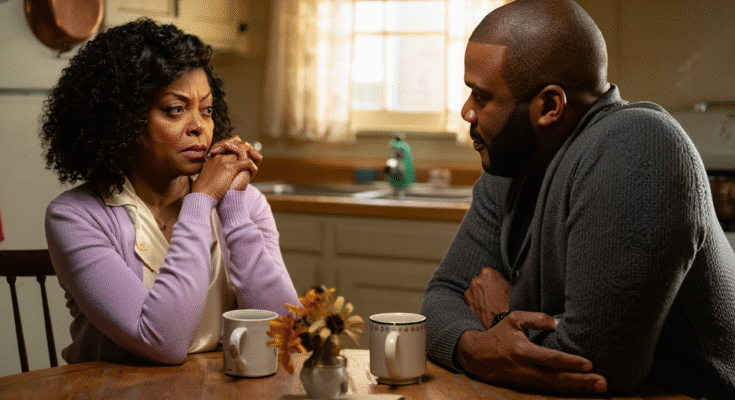
With Finding Joy, Tyler Perry steps into more restrained and emotionally reflective territory, delivering a drama less interested in grand declarations than in the quiet labor of healing. This is not a story about instant redemption or dramatic transformation. It is about the slower, more difficult process of confronting pain honestly and learning how to live beyond it.
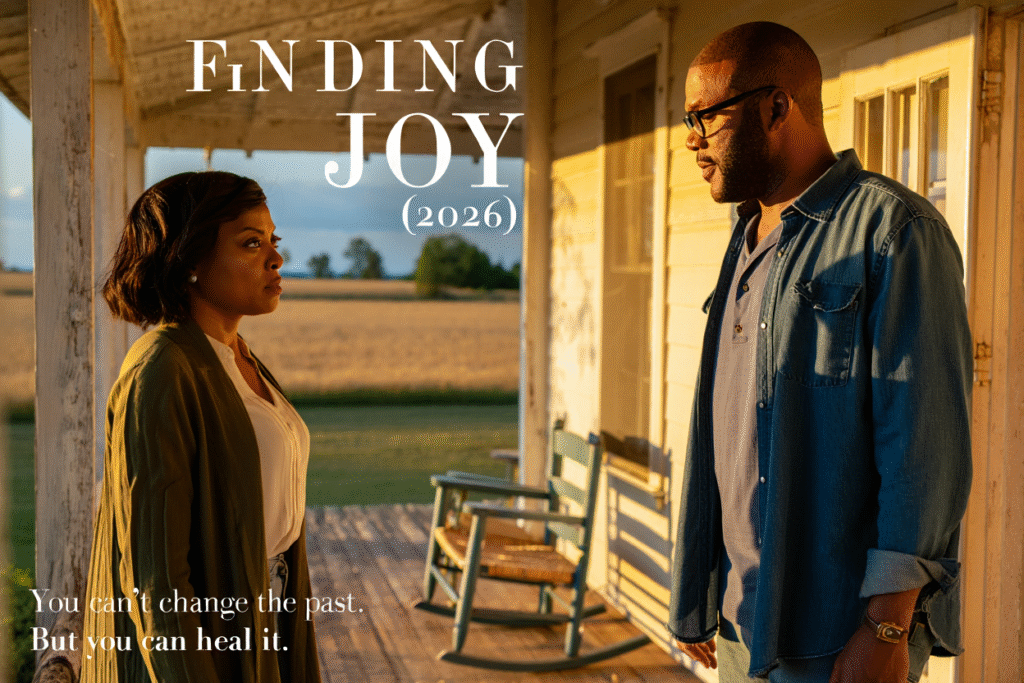
At the center of the film are Joy and David, two people carrying wounds shaped by years of silence, regret, and emotional distance. Their story unfolds with patience, allowing viewers to feel the weight of everything left unsaid. Rather than forcing conflict through spectacle, the film trusts intimate conversations, hesitant gestures, and moments of stillness to reveal what truly matters.
Taraji P. Henson gives the film its emotional pulse. Her performance as Joy is deeply affecting — raw without ever feeling performative, vulnerable without losing strength. She captures the complexity of someone trying to function while carrying unresolved hurt, someone whose resilience has become both shield and burden.
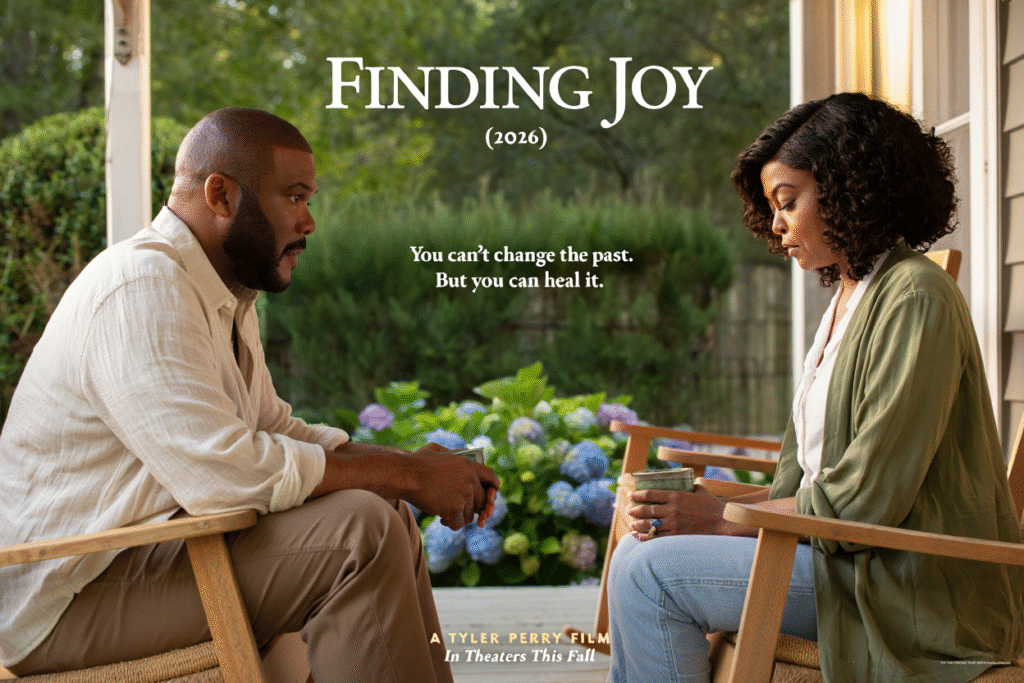
What makes her work remarkable is the detail. A paused breath before answering. Eyes that harden to avoid tears. The way relief and grief can appear in the same expression. Henson turns Joy into a fully lived person rather than a symbolic figure of suffering.
Tyler Perry, both as creator and co-star, shows admirable restraint. David is not written as a savior or villain, but as a flawed man shaped by his own failures and limitations. The film wisely understands that healing rarely comes from one person rescuing another. It comes from truth, accountability, and the willingness to stay present through discomfort.
The screenplay’s greatest strength lies in its realism. Emotional flashbacks are used not for melodrama, but to show how memory lives inside ordinary moments. A room, a phrase, a song — these triggers collapse time, reminding us that the past often survives in the body long after events have ended.
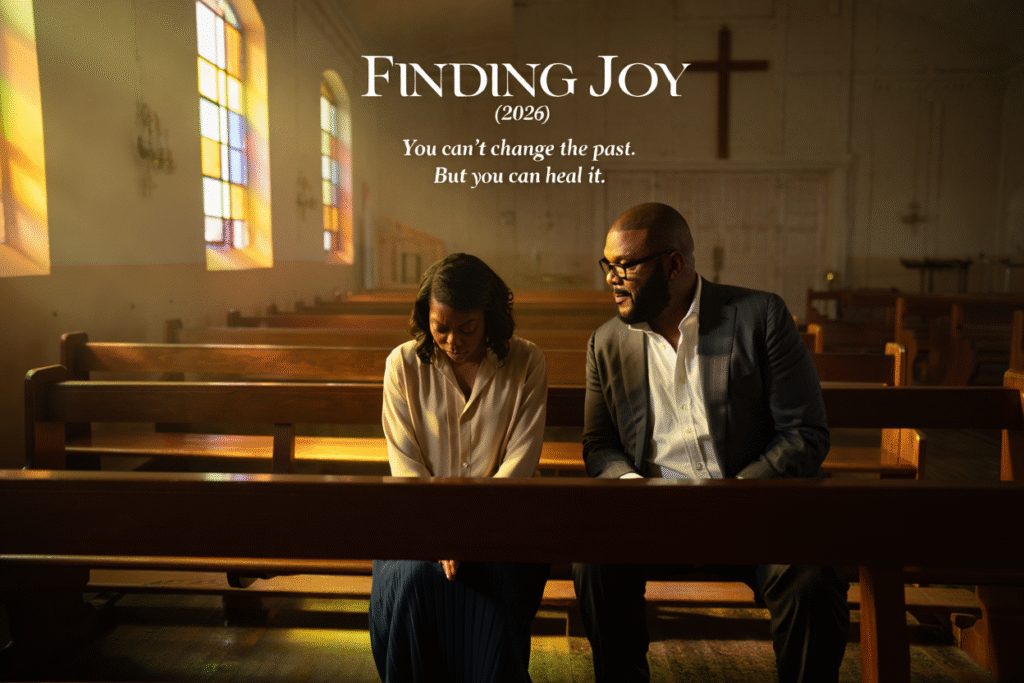
Faith is present throughout the film, but not as simplistic solution. It is portrayed as wrestle rather than certainty, a source of hope complicated by doubt and disappointment. This nuance gives the spiritual dimension authenticity and depth.
Visually, the film embraces warmth and softness. Natural light, lived-in spaces, and unhurried framing reinforce the sense that healing happens in everyday places, not dramatic stages. The camera often lingers, allowing emotion to surface naturally rather than chase it.
There is courage in the film’s refusal to rush forgiveness. Finding Joy recognizes that forgiveness is not forgetting, excusing, or instantly reconciling. Sometimes it begins simply by naming the wound aloud. Sometimes it means boundaries. Sometimes it means staying long enough to understand.
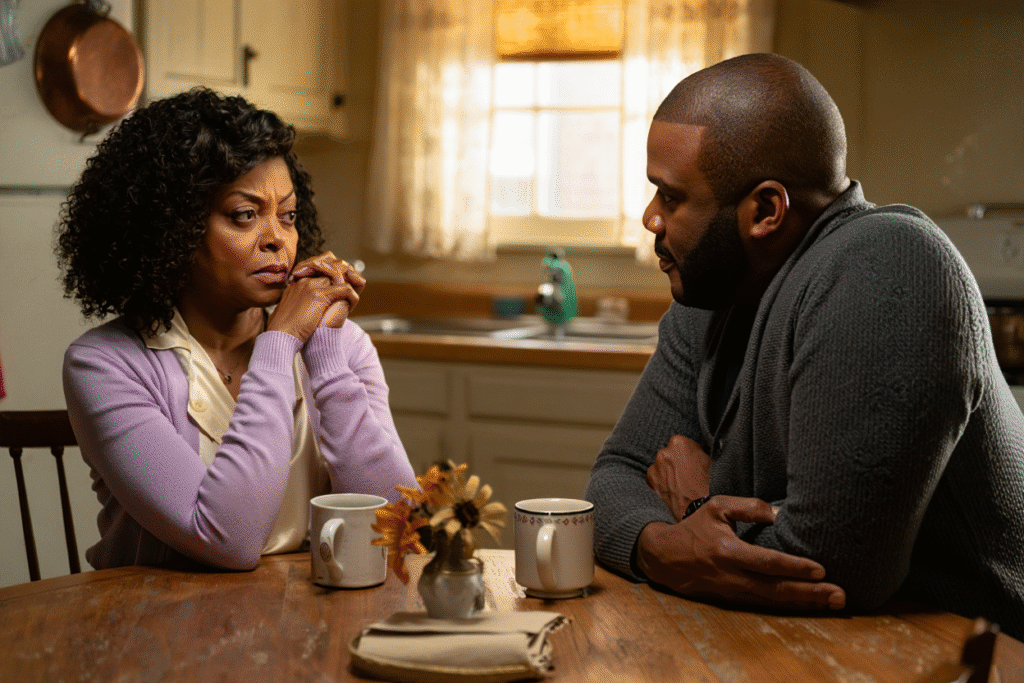
As Joy and David move through their shared history, the narrative gradually shifts from pain to possibility. Not because the past disappears, but because it no longer dictates every breath. That distinction gives the story emotional honesty.
By the final act, the title reveals its full meaning. Joy is not just a character’s name — it is something lost, searched for, and slowly reclaimed. The film suggests that healing does not erase sorrow; it teaches sorrow where to live.
Finding Joy is intimate, soulful, and refreshingly grounded. It stands among Tyler Perry’s most mature works, anchored by a magnificent Taraji P. Henson performance and a compassionate understanding of how people mend. You may not be able to change the past — but this film reminds us that the future can still be gentler than what came before.