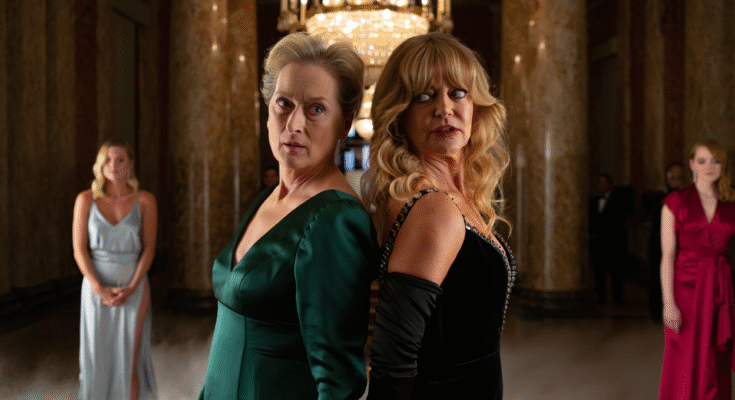
Death Becomes Her: Forever Young returns to one of dark comedy’s sharpest premises: the fantasy of eternal beauty as grotesque punishment. The original film was never merely about vanity—it was about insecurity industrialized into obsession. A sequel arriving in an era of filters, anti-aging empires, curated identities, and algorithmic beauty standards could be devastatingly relevant.
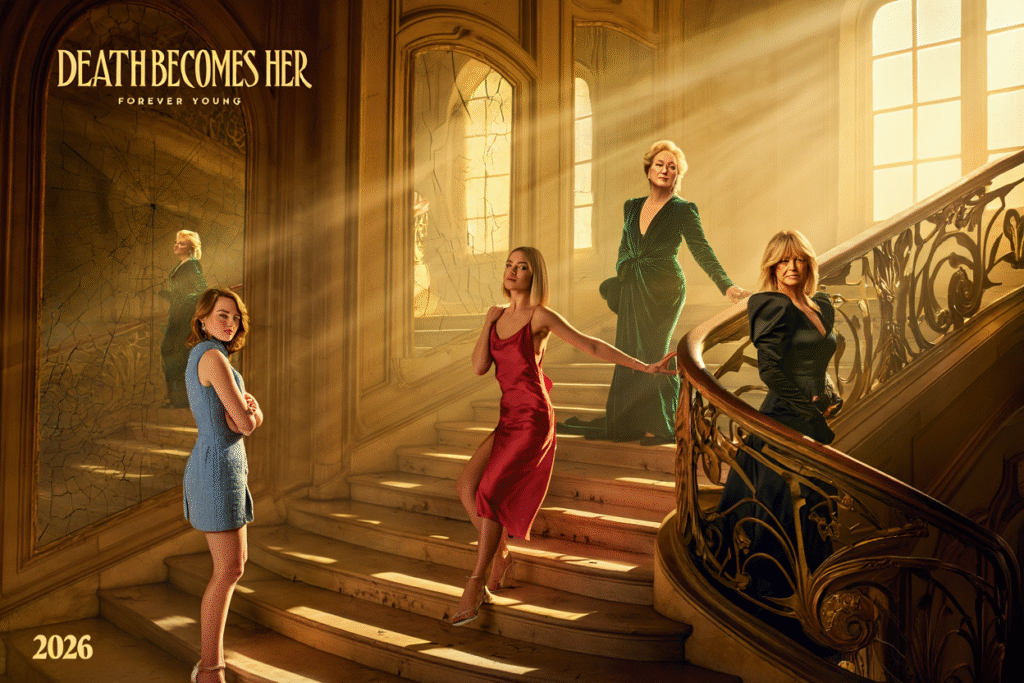
Meryl Streep and Goldie Hawn returning is inspired because time itself becomes part of the joke. These are performers whose charisma has outlasted generations, now playing women who literally refused to age and discovered that permanence is another form of decay.
Their rivalry remains the franchise’s engine. What made the original delicious was that immortality did not heal envy, narcissism, or pettiness—it preserved them. If anything, endless time gave grudges room to mature into art forms.
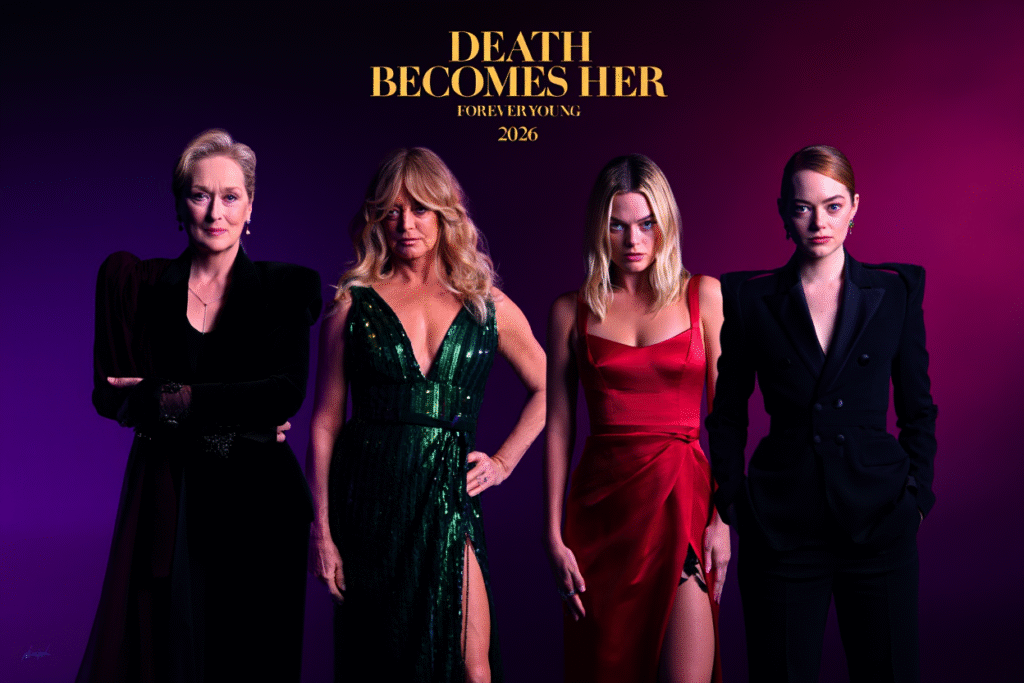
The teaser’s strongest idea is that forever is maintenance. Eternal youth sounds glamorous until bodies become projects, appearances become labor, and identity depends on constant correction. That turns beauty from aspiration into servitude.
Meryl Streep excels at characters whose control masks panic. Goldie Hawn’s comic brilliance lies in making desperation sparkle. Together, they can portray women who still dominate rooms while privately disintegrating under the burden of endless self-preservation.
Margot Robbie and Emma Stone are perfect additions as a new generation who do not worship the icons—they compete with them. Both actresses carry intelligence, wit, glamour, and the ability to weaponize charm. They should not feel like successors, but threats.
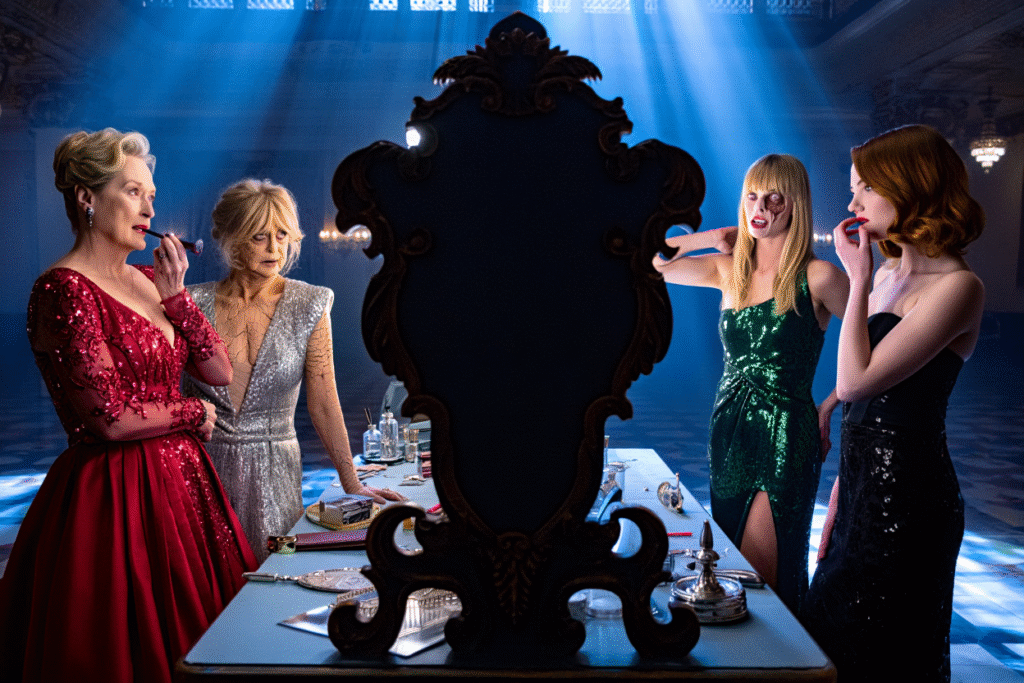
That generational conflict could elevate the sequel. Beauty culture constantly promises renewal while devouring those it once crowned. Younger challengers are not villains; they are the next phase of the same machine. The old guard fears replacement because they once replaced others.
The line beauty becomes a weapon is thematically precise. In satire, attractiveness is never just aesthetic—it becomes currency, leverage, social armor, and battlefield camouflage. If no one can die, humiliation may become the ultimate injury.
Visually, this world should be exquisite and slightly rotten: flawless faces under harsh light, luxury interiors hiding decay, couture concealing fractures, mirrors as instruments of violence. Glamour works best when edged with body horror.
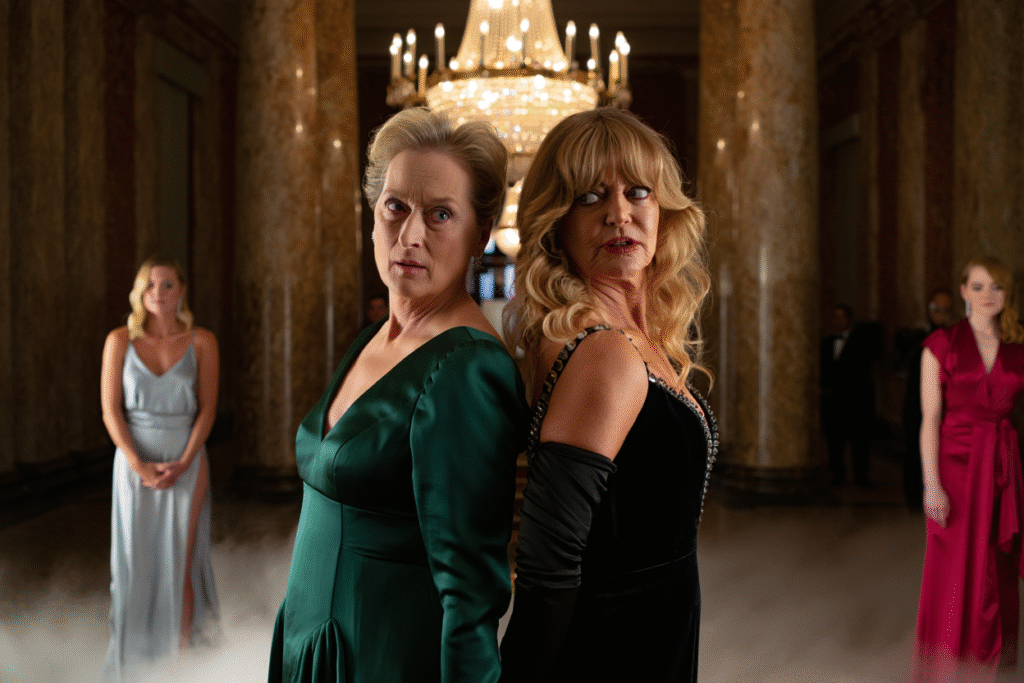
The deepest question here is psychological. If time no longer limits you, what excuses remain? Mortality often gives life urgency, forgiveness, growth. Without endings, people may calcify into their worst habits. Eternity reveals character because there is no deadline left to blame.
The comedy should stay vicious. Sentimentality would weaken the concept. This story thrives when it laughs at the very desires audiences recognize in themselves: youth, admiration, control, being envied, never disappearing.
Death Becomes Her: Forever Young has the potential to be stylish, cruel, and brilliantly contemporary. It reminds us that living forever is not the dream—being unable to escape yourself is the nightmare.